
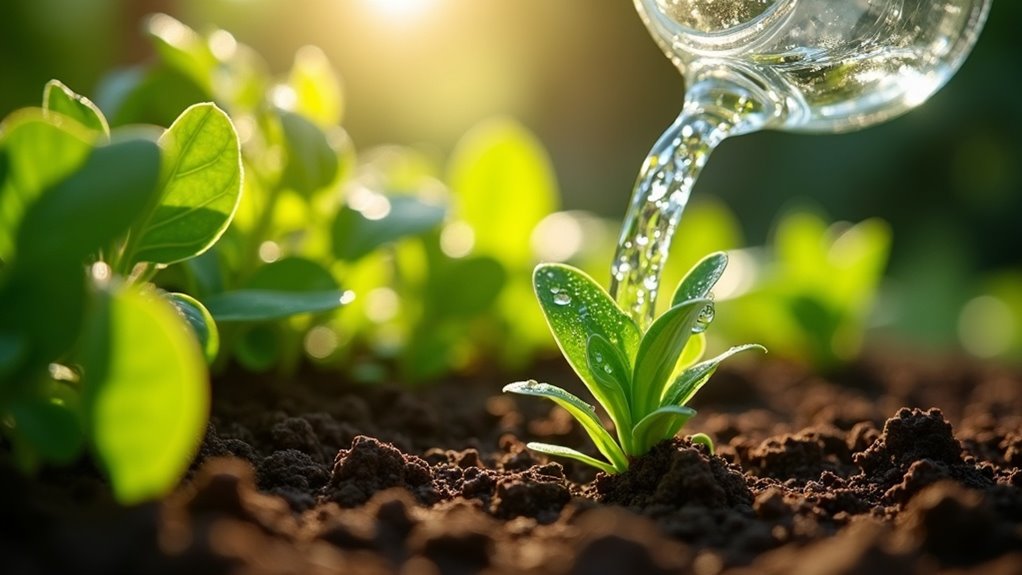
To water plants effectively, water the soil directly, avoiding leaves. Aim for about one inch of water weekly, adjusting for heat. Use soaker hoses for efficiency, and check soil moisture by digging about 3-4 inches down before watering. Young plants need consistent moisture while mature plants require deeper watering, about 15-20 gallons weekly in hot weather. Always guarantee water reaches the root zone, and be aware of common mistakes that can affect plant health. Explore more techniques for effective hydration.
Key Takeaways
- Water soil directly at the base of plants to ensure moisture reaches the roots, avoiding wetting the leaves.
- Aim for about one inch of water per week, adjusting for weather conditions like heat or rain.
- Use soaker hoses or drip irrigation systems to minimize evaporation and deliver water efficiently to plants.
- Check soil moisture by digging down 3-4 inches before watering to determine if plants need hydration.
- Water young plants more frequently for proper root establishment, while mature plants need adjustments based on seasonal needs.
Understanding the Importance of Watering
Watering your plants is essential because, without it, they can’t thrive. Water is critical for transporting nutrients through the stems, supporting growth and overall health.
Water is vital for plant health, enabling nutrient transport and supporting growth essential for thriving gardens.
It plays a pivotal role in photosynthesis, allowing plants to convert sunlight and carbon dioxide into food. Additionally, maintaining adequate soil moisture helps regulate temperature through evaporation, keeping your plants cool during hot weather.
Water-filled cells provide the necessary structural support; without sufficient water, your plants may wilt and suffer irreversible damage.
Consequently, understanding that plants need water is fundamental to their survival and well-being in your garden.
Proper Watering Techniques
To guarantee your plants receive the moisture they need for ideal growth, focus on watering the soil directly instead of the leaves.
Make sure to aim for about one inch of water per week, adjusting for hot weather to prevent stress.
Utilize soaker hoses for efficient watering, as they deliver moisture straight to the soil and reduce evaporation.
Before watering, check if the soil feels dry by digging down 3-4 inches; if it does, it’s time to water.
Early morning is the best time to water, ensuring plants’ roots have adequate moisture throughout the day while minimizing evaporation losses.
Watering Young and Mature Plants
When watering young plants, you need to guarantee they receive consistent moisture, as their roots aren’t fully established yet.
Newly planted trees, for example, should get around 10 gallons of water weekly to support root development, especially in their initial months.
In contrast, while mature plants have deeper roots, they still require regular watering during hot periods to maintain their health.
Young Plant Watering Needs
Young plants have specific watering needs that differ greatly from those of mature plants, primarily due to their underdeveloped root systems.
To guarantee healthy growth, keep these points in mind:
- Water young plants more frequently for consistent moisture.
- Aim for moisture to reach at least 3-4 inches below the soil surface.
- Newly planted trees need around 10 gallons of water weekly.
During hot, dry spells, check if the soil feels dry at the bottom of the pot; they may need more than one inch of rainfall per week to absorb water effectively and thrive.
Mature Plant Care Tips
As plants mature, their watering needs evolve considerably, requiring a different approach compared to young plants. Mature plants, with established root systems, generally need less frequent watering. However, during hot, dry spells, you should provide about 15-20 gallons of water weekly. Always check the soil moisture around the root zone, watering only when it’s dry 3-4 inches deep. Deep watering encourages deeper root growth, enhancing drought resilience.
| Condition | Watering Advice |
|---|---|
| Normal Growth | Water every 1-2 weeks |
| Hot and Dry | 15-20 gallons per week |
| Soil Moisture Check | Dry 3-4 inches deep |
| Root Depth | Encourage deeper growth |
| Health Maintenance | Monitor regularly |
Seasonal Watering Considerations
Understanding the seasonal needs of your plants is essential for their health and growth.
As you care for both young and mature plants, remember to adjust your watering routine based on their unique requirements:
- Young plants need frequent watering to establish roots.
- Newly planted trees require about 10 gallons of water weekly.
- Hot, dry conditions demand additional water for all plants.
- Parkway trees, with limited root space, need regular hydration.
Mulching and Soil Care
To enhance your plant care routine, consider spreading organic mulch around your plants.
This practice not only insulates the soil and retains moisture but also regulates temperature, which is vital during hot spells.
Remember to apply mulch at the right depth—3-4 inches for trees and 1-2 inches for garden beds—to maximize its benefits without compromising soil health.
Organic Mulch Benefits
While many gardeners focus on watering techniques and plant selection, incorporating organic mulch into your gardening routine can yield significant benefits for soil health and plant vigor.
Here are some key advantages of using organic mulch:
- Insulates soil temperatures, keeping roots cooler in summer and warmer in winter.
- Reduces soil evaporation, retaining moisture with a depth of 3-4 inches around trees.
- Enriches the soil as it breaks down, providing essential nutrients to plants.
- Suppresses weed growth, minimizing competition for water and nutrients.
Soil Moisture Retention
Effective soil moisture retention is essential for healthy plant growth, especially during periods of heat and drought.
Spreading organic mulch around your plants insulates the soil, reducing evaporation and keeping it moist. Aim for a mulch depth of 3-4 inches around trees and 1-2 inches in garden beds to optimize moisture retention while ensuring water penetrates the soil.
Regularly assess soil moisture instead of following a fixed watering schedule, adjusting based on current weather. Using a rain gauge helps accurately measure rainfall, allowing you to adapt your watering practices.
Finally, maintain good quality soil with proper drainage to enhance water retention.
Mulch Application Techniques
Proper mulching techniques play an essential role in enhancing soil care and supporting plant health. To effectively apply mulch, follow these guidelines:
- Use organic mulch around trees at a depth of 3-4 inches for insulation and moisture retention.
- Keep mulch in garden beds at 1-2 inches to prevent plant suffocation.
- Guarantee mulch is evenly spread and doesn’t touch plant stems or tree trunks to avoid rot.
- Regularly check and replenish mulch as it decomposes, monitoring soil moisture by digging beneath the layer.
Timing and Techniques for Watering
To guarantee your plants thrive, timing and techniques for watering are essential factors to contemplate.
Water early in the morning to reduce evaporation, ensuring moisture reaches the roots effectively. Avoid watering during the hottest part of the day, as rapid evaporation can leave your plants under-watered. Nighttime watering isn’t recommended, as it encourages disease from prolonged leaf wetness; instead, focus on watering at soil level.
Always monitor weather conditions and adjust your watering frequency accordingly. Establish a consistent schedule based on plant needs and environmental factors, checking soil moisture before each watering to maintain ideal hydration.
Signs of Proper Watering
When you observe specific signs in your plants, it becomes clear that you’ve watered them effectively. Look for these indicators:
- Bubbles at the pot’s surface: They signal dry soil and trapped air escaping.
- Visible drainage: Water seeping from the bottom shows moisture has reached the root zone.
- Wet roots: This indicates successful hydration, meaning your plant has absorbed enough water.
- Vibrant foliage: Healthy growth and color demonstrate proper watering and nutrient uptake.
Ensure the soil feels dry at the bottom before re-watering to maintain root health and avoid overwatering.
Common Watering Mistakes
While watering plants may seem straightforward, many gardeners unknowingly make critical mistakes that can jeopardize their plants’ health.
One common error is stopping too soon, leaving deeper roots dry despite surface moisture. You also might fail to guarantee water reaches the root zone, leading to unhealthy plants.
Overwatering is another frequent mistake; saturating soil can cause root rot if excess water isn’t drained properly.
Additionally, not considering the specific needs of different plants can result in either overwatering or underwatering.
Ignoring soil condition and moisture levels prevents you from understanding when and how much to water effectively.
Effective Watering Techniques
Effective watering techniques are essential for maintaining healthy plants and promoting robust growth. To guarantee your plants thrive, follow these guidelines:
- Water thoroughly until you see drainage from the bottom of the pot, ensuring all roots receive moisture.
- Check soil moisture with a moisture meter or your finger at a depth of 3-4 inches before watering.
- Water in the early morning to reduce evaporation and enhance absorption.
- Apply water directly to the soil, avoiding splashes on leaves to minimize infection risks.
Always discard excess water from saucers to prevent root rot from overly saturated soil.





