
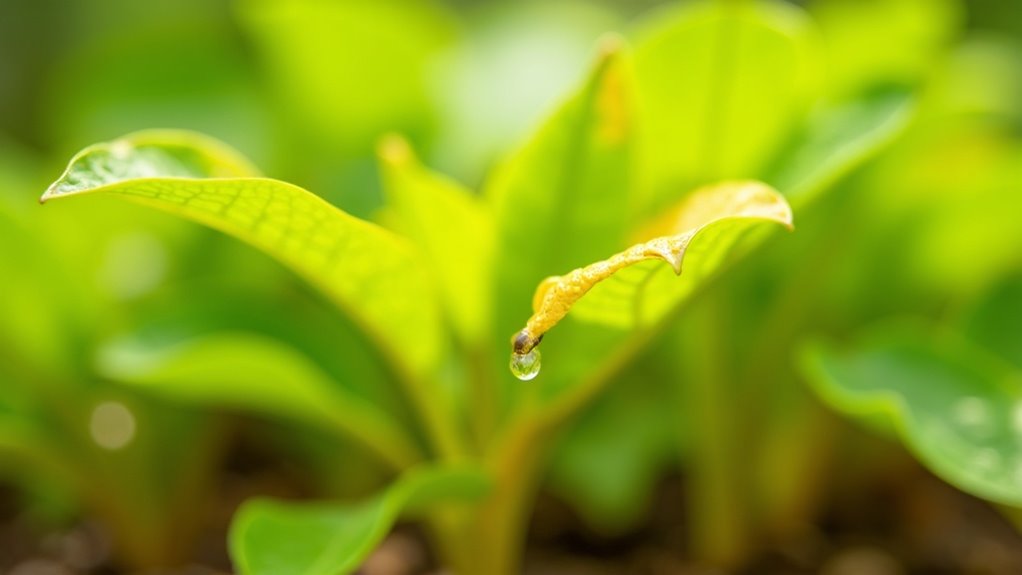
Yellow leaves on your plants can stem from several issues. Nutrient deficiencies, especially nitrogen, potassium, or magnesium, can cause yellowing. Overwatering or underwatering leads to stress, hindering nutrient absorption. Soil pH imbalances and temperature extremes also play a role. Insufficient light limits photosynthesis, further impacting leaf health. Ultimately, pests and diseases can damage tissue and disrupt nutrient flow. By understanding these causes, you can better care for your plants and keep them thriving.
Key Takeaways
- Nutrient deficiencies, particularly nitrogen, potassium, or magnesium, can cause yellowing leaves due to impaired chlorophyll production.
- Overwatering suffocates roots, while underwatering leads to dehydration, both resulting in yellow foliage.
- Poor drainage issues can disrupt nutrient uptake, causing leaves to yellow.
- Temperature extremes and insufficient light can impair photosynthesis and stress plants, leading to yellowing.
- Soil pH imbalances affect nutrient availability, potentially resulting in chlorosis and yellow leaves.
Common Causes of Yellow Leaves
When you notice yellow leaves on your plants, it’s essential to identify the underlying causes quickly to prevent further damage.
Common reasons for yellowing include nutrient deficiencies, particularly nitrogen, potassium, or magnesium, which disrupt healthy growth.
Overwatering or underwatering can also stress plants, hindering their ability to absorb nutrients.
Poor drainage leads to root suffocation, further compromising nutrient uptake.
Additionally, temperature stress from extreme heat or cold affects sensitive species, resulting in yellowing leaves.
Keep an eye out for pests and diseases, as they can damage plant tissue and interfere with nutrient flow, exacerbating these symptoms.
Watering Issues: Overwatering and Underwatering
Watering issues, whether stemming from overwatering or underwatering, are critical factors that can lead to yellowing leaves in plants.
Overwatering suffocates roots, causing nutrient deficiencies and resulting in limp, mushy foliage. Conversely, underwatering dehydrates plants, especially younger leaves, hindering nutrient uptake and causing wilting.
Overwatering leads to root suffocation and limp leaves, while underwatering causes dehydration and wilting in plants.
To prevent these problems, regularly check soil moisture using the finger test; if it feels dry, water, but if it’s overly wet, reduce your watering frequency.
Using quality potting soil enhances drainage and moisture retention, promoting healthy foliage. Aim to let the soil dry slightly between waterings for optimal plant health.
Nutrient Deficiencies and Their Impact
Nutrient deficiencies can greatly impact your plants, often revealing themselves through distinct yellowing patterns on leaves.
For instance, if you notice older leaves turning yellow, it could indicate a nitrogen deficiency, while bright yellow edges may signal a potassium shortage.
Common Nutrient Deficiencies
Understanding common nutrient deficiencies is crucial for maintaining healthy plants, as each essential nutrient plays a specific role in plant growth and development. Here’s a breakdown of key nutrient deficiencies:
| Nutrient | Deficiency Symptoms | Importance |
|---|---|---|
| Nitrogen | General yellowing, older leaves | Chlorophyll production, growth |
| Potassium | Bright yellow edges, browning | Cellular function, stress resistance |
| Magnesium | Yellow patches between leaf veins | Photosynthesis, enzyme function |
| Iron | Young leaves turn yellow with green veins | Chlorophyll synthesis, alkaline soils |
| Calcium | Distorted yellow leaves, crisp texture | Cell wall structure, growth regulation |
Symptoms of Deficiencies
When you notice yellow leaves on your plants, it’s often a sign of underlying nutrient deficiencies that can severely impact their health and growth.
For instance, nitrogen deficiency typically causes the yellowing of the leaves, affecting older leaves first.
Iron deficiency leads to interveinal chlorosis, where new growth turns yellow while veins remain green.
Magnesium deficiency manifests as yellowing along leaf veins, often in lower leaves.
Potassium deficiency results in bright yellow edges on older leaves.
Regular soil testing is essential to identify these nutrient deficiencies and adjust fertilization practices, ensuring your plants receive essential nutrients for ideal health.
Soil Ph and Plant Health
Soil pH plays an essential role in determining nutrient availability for your plants, with most thriving in a pH range of 6.0 to 7.0.
To guarantee ideal health, you should regularly test your soil pH, as this can reveal imbalances that lead to yellowing leaves.
Adjusting the pH using lime or sulfur can restore nutrient uptake and enhance plant vigor.
Importance of Soil Ph
Maintaining the right pH level in your garden’s soil is essential for ensuring that plants receive the nutrients they need to thrive. Soil pH directly influences nutrient availability; most plants flourish in a pH range of 6.0 to 7.0. When pH strays from this range, you may notice yellow leaves, a condition called chlorosis. Adjusting soil pH can enhance nutrient uptake and promote plant health. Here’s a quick overview of pH effects:
| Soil pH Range | Nutrient Availability |
|---|---|
| 4.5 – 6.0 | Acid-loving plants |
| 6.0 – 7.0 | Ideal for most plants |
| > 7.0 | Nutrient deficiencies |
| < 4.5 | Toxicity issues |
Testing Soil Ph
Understanding the pH level of your garden’s soil is essential for maximizing plant health, as it directly influences nutrient availability.
To guarantee your plants thrive, follow these steps to test your soil pH:
- Purchase a soil pH test kit or meter.
- Collect soil samples from various areas of your garden.
- Mix the samples and follow kit instructions to determine pH levels.
- Compare results to the ideal pH range for your plants.
Regular soil tests help you identify issues causing yellowing leaves and poor growth, allowing you to maintain ideal soil pH for enhanced nutrient availability and overall plant health.
Adjusting Soil Ph
After testing your soil pH, the next step is adjusting it to guarantee ideal plant health.
Maintaining a pH between 6.0 and 7.0 is essential for optimal nutrient availability. If your soil pH is too high or low, it can lead to yellow leaves and hinder chlorophyll production.
To lower pH, add sulfur; to raise it, incorporate lime. Regular soil testing helps identify these adjustments.
If you notice symptoms of iron chlorosis, characterized by yellow leaves with green veins, it likely indicates high pH levels that restrict iron availability.
Proper pH management enhances nutrient absorption and promotes vibrant plant growth.
Effects of Temperature and Light Conditions
When temperatures fluctuate dramatically or light conditions are inadequate, yellow leaves can signal underlying stress in your plants.
To maintain healthy plant growth, consider these factors:
- Temperature extremes: Cold drafts can disrupt chlorophyll production, leading to yellowing leaves.
- Insufficient light exposure: Limited light limits photosynthesis, causing stress and yellowing.
- Prolonged heat: High temperatures can burn leaves, especially in cooler-loving plants.
- Cold drafts from AC units: Positioning near air conditioning can create fluctuations, resulting in plant stress and yellowing leaves.
Pests and Diseases Affecting Leaf Color
Yellowing leaves can also indicate the presence of pests or diseases that compromise plant health.
Pests like aphids, spider mites, and whiteflies sap nutrients, causing yellowing leaves due to nutrient deficiencies.
Diseases such as leaf spot and early blight also manifest with yellowing, often accompanied by specific symptoms like curling or brown spots.
Fungal diseases thrive in warm, humid conditions, leading to yellowing and leaf drop if untreated.
Ethylene gas from certain infections accelerates yellowing and leaf fall.
Regular monitoring for pests and diseases, including checks under leaves, is essential for early detection and effective management of yellowing symptoms.





