
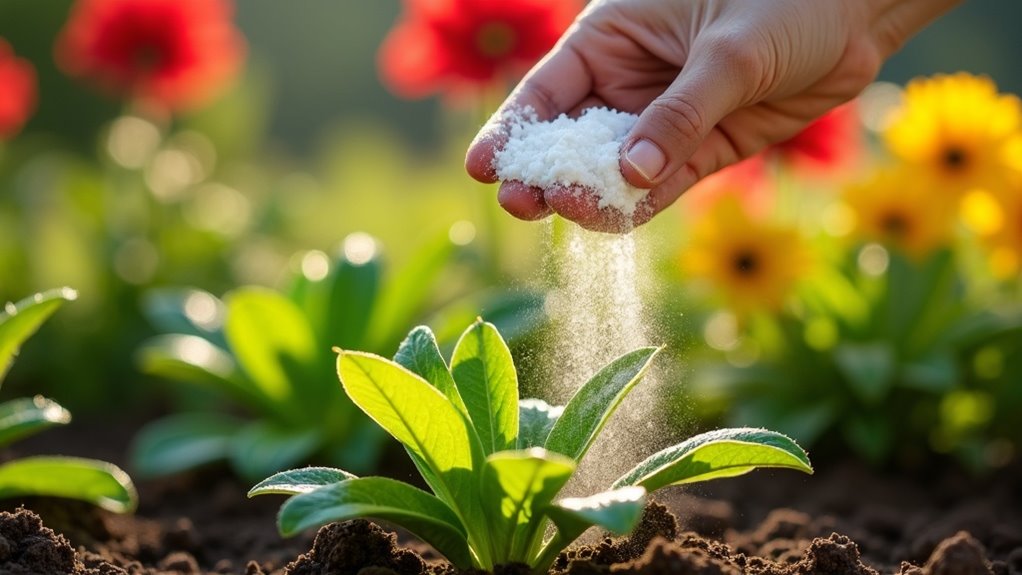
To use diatomaceous earth (DE) on your plants, mix 1 tablespoon of DE with 1 liter of water and a teaspoon of soap for a spray. Apply this in dry conditions, targeting soft-bodied pests like scale and mealy bugs. For severe infestations, dunk your plants in the solution for 30 minutes. Reapply after watering or rain, and monitor your plants regularly to catch any new pests early. Discover the best practices and safety tips for effective applications ahead.
Key Takeaways
- Mix 1 tablespoon of diatomaceous earth (DE) with 1 liter of water and 1 teaspoon of Ecover for an effective spray application.
- Ensure the soil is dry before applying DE to maximize its effectiveness against pests.
- Reapply DE twice a week, especially after watering or rain, to maintain pest control.
- For severe infestations, dunk plants in a DE solution for 30 minutes, repeating twice a week for 2-3 weeks.
- Always test on a sensitive plant leaf first to avoid potential damage before full application.
Why We Recommend Diatomaceous Earth
When you’re looking for an effective and eco-friendly pest control method, diatomaceous earth (DE) stands out as a top recommendation.
This natural substance targets soft-bodied insects like scale and mealy bugs without harmful chemicals, making it safe around children and pets.
You can create a diatomaceous earth mix, either as a dust or a spray solution, enhancing versatility based on your pest issue.
Applying diatomaceous earth consistently not only reduces pest populations considerably—often leaving plants pest-free—but also enriches the soil with essential minerals.
It’s a sustainable choice for promoting healthy plant growth while managing pests effectively.
How Diatomaceous Earth Works
Diatomaceous earth (DE) consists of finely ground fossilized diatoms rich in silica, which serves as an abrasive agent against pests.
Its mechanism of action involves disrupting insects’ exoskeletons, leading to dehydration and death.
For maximum effectiveness, make certain you apply DE in dry conditions and consider mixing it with soap to enhance adherence to plant surfaces.
Composition and Properties
Composed primarily of ground fossilized diatoms, diatomaceous earth (DE) boasts unique properties that make it an effective pest control agent. The silica in DE acts as a desiccant, dehydrating soft-bodied pests like scale and mealy bugs. As a natural pest control solution, it’s eco-friendly and safe around children and pets when applied correctly. However, for peak effectiveness, you should apply DE when dry; moisture diminishes its efficacy. The abrasive particles can irritate, so use protective gear.
| Property | Description |
|---|---|
| Main Component | Fossilized diatoms |
| Key Element | Silica |
| Action on Pests | Dehydrates by damaging exoskeletons |
| Safety | Eco-friendly, but requires precautions |
| Application Condition | Must be dry for effectiveness |
Mechanism of Action
While applying diatomaceous earth (DE) may seem straightforward, understanding its mechanism of action is essential for effective pest control.
DE’s effectiveness hinges on its unique properties:
- Composed of fossilized diatoms, it contains silica that’s abrasive to pests.
- Silica dehydrates soft-bodied insects like scale and mealy bugs, leading to death.
- When applied dry, DE damages pests’ exoskeletons, creating a physical barrier.
- Though a mild irritant, it’s plants safe and eco-friendly when used properly.
Application Effectiveness
How effectively you apply diatomaceous earth (DE) can greatly influence its pest control success. DE works by dehydrating pests, but its effectiveness hinges on dry conditions. For severe infestations, consider a dunking method with a DE solution to enhance results. Combining DE with soap improves adhesion, ensuring better coverage for plant care.
| Method | Effectiveness |
|---|---|
| Dry Application | Best for general pest control |
| Dunking Solution | Significant reduction in pest populations |
| DE with Soap | Enhanced adhesion and coverage |
How to Apply Diatomaceous Earth as a Treatment for Scale and Mealy Bug
To effectively apply diatomaceous earth for treating scale and mealy bugs, you’ll need to follow specific application methods while keeping safety precautions in mind.
It’s essential to monitor the plants regularly and reapply as necessary to guarantee complete pest control.
Understanding these points will help maximize the effectiveness of your treatment.
Application Methods Explained
Applying diatomaceous earth (DE) effectively requires a few key methods tailored to combat scale and mealy bugs. Here’s how to apply it:
- Mix 1 tablespoon of DE with 1 liter of water in a spray and add 1 teaspoon of Ecover washing up liquid. Spray on the plant and soil twice a week.
- For severe infestations, dunk the plant in the DE solution for 30 minutes or swish foliage for 5 minutes.
- Omit soap for sensitive plants; test on one leaf first.
- Confirm soil is dry before application, and monitor plants to reapply as needed after watering or rain.
Safety Precautions Necessary
While treating plants for scale and mealy bugs with diatomaceous earth (DE), it’s important to prioritize safety to protect yourself and your environment.
Always wear a mask and goggles when applying DE to prevent inhalation of fine particles and protect your eyes. Additionally, use food-grade DE to guarantee safety around pets and children.
Apply DE in dry conditions, avoiding windy days to minimize dust dispersal. Monitor air quality and refrain from applying indoors when air purifiers are running.
Finally, keep children and pets away from the treated area until the dust has settled to prevent accidental inhalation or contact.
Monitoring and Reapplication Tips
Monitoring your plants for signs of scale and mealy bugs is essential for determining when to apply diatomaceous earth (DE) effectively.
Keep these tips in mind:
- Monitor plants regularly to catch infestations early.
- Mix 1 tablespoon of DE with 1 liter of water and 1 teaspoon of Ecover for a spray solution.
- Reapply DE twice a week, especially after watering or rain.
- For severe cases, dunk the plant in a DE solution for 30 minutes, twice a week.
Using Diatomaceous Earth as a Bug Spray
Diatomaceous earth (DE) serves as an effective natural insecticide when used as a bug spray, providing a safe alternative for pest control on your plants.
To create this spray, mix 1 tablespoon of DE with 1 liter of water and 1 teaspoon of Ecover washing up liquid. Shake the mixture thoroughly and apply it liberally to the entire plant, including the soil, twice a week for best results.
Remember, DE works best when dry, so apply during dry weather and avoid watering immediately afterward.
For sensitive plants, trial a single leaf without soap before widespread application.
Using Diatomaceous Earth to Treat Heavy Pest Infestations
When dealing with heavy pest infestations, it’s crucial to act quickly and effectively to protect your plants. Here’s how you can use diatomaceous earth (DE) for best results:
- Submerge the affected plant in a DE solution for 30 minutes, twice a week for 2-3 weeks.
- Swish the foliage upside down in the DE solution for thorough coverage if space is limited.
- Mix 1 tablespoon of DE, 1 liter of water, and 1 teaspoon of Ecover to spray on the plant and soil.
- Monitor for pest resurgence and reapply as needed, ensuring the plant is dry for maximum effectiveness.
How to Apply Diatomaceous Earth on Sensitive Plants
Applying diatomaceous earth (DE) on sensitive plants requires careful consideration to avoid any potential damage.
Start by conducting a trial treatment on a single leaf or branch, especially for delicate varieties like curry leaf and orchids.
Mix 1 tablespoon of DE with 1 liter of water, and use a spray bottle for even coverage, avoiding soap to minimize the risk of leaf burn.
Verify the soil is dry before application, as moisture can hinder effectiveness and harm plant tissues.
After applying, monitor your sensitive plants closely for signs of stress, adjusting your method as necessary to maintain their health.
Where to Buy Diatomaceous Earth
Wondering where to find diatomaceous earth for your gardening needs? You’ve got several options that cater to both house plants and larger gardens:
- Garden centers and home improvement stores: Easily accessible and often stocked.
- Online retailers: Amazon and specialized gardening websites offer a variety of products with helpful reviews.
- Health food stores and grocery stores: Find food-grade diatomaceous earth for safe indoor use.
- Local nurseries: Consult knowledgeable staff for tailored advice and recommendations.
With these options, you’ll be well-equipped to choose the best diatomaceous earth for your gardening endeavors.





