
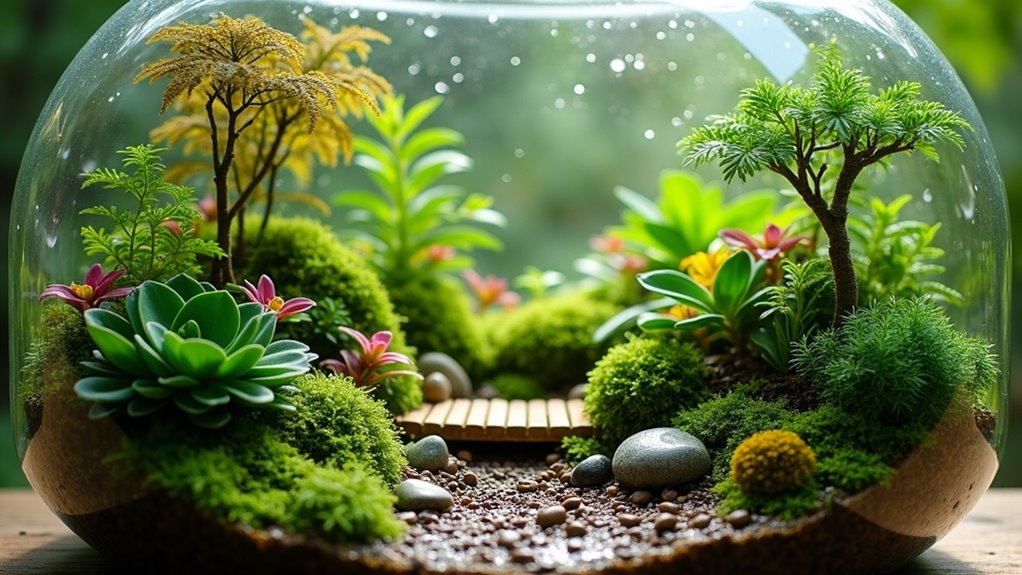
For your terrarium, choose moisture-loving plants for closed environments, like Boston ferns, Fittonia, and mosses. If you’re opting for an open terrarium, succulents and cacti like Echeveria and Aloe Vera work best. Remember to group plants with similar light and water needs, and consider small, slow-growing varieties to maintain balance. Regular pruning is essential to keep your terrarium healthy and visually appealing. To discover more about specific plant options, tips, and care techniques, keep exploring!
Key Takeaways
- For closed terrariums, choose moisture-loving plants like Boston ferns and Fittonia for high humidity environments.
- Open terrariums thrive with succulents and cacti, such as Echeveria and Aloe Vera, that require minimal watering.
- Consider small or slow-growing plants to fit within limited terrarium space and prevent overcrowding.
- Group plants with similar light and water needs to ensure optimal growth and health in the terrarium ecosystem.
- Regular pruning is essential for maintaining plant health, controlling growth, and enhancing the terrarium’s aesthetic appeal.
Best Plants for Closed Terrariums
When it comes to creating a thriving closed terrarium, selecting the right plants is essential for maintaining a balanced ecosystem. You’ll want to focus on moisture-loving plants that thrive in high humidity.
Boston ferns (Nephrolepis exaltata) are forgiving and visually striking, making them ideal for beginners. Fittonia spp. offers vibrant colors and compact growth, perfect for limited space.
Incorporating mosses like Carpet and Cushion Moss enhances moisture retention while providing lush ground cover.
Finally, consider Calathea varieties for their tropical elegance and patterned leaves, all of which flourish in the humid environment of a closed terrarium.
Best Plants for Open Terrariums
Creating an open terrarium presents a different set of opportunities and challenges compared to closed ones. For these setups, succulents and cacti thrive due to their resilience in drier conditions and need for good airflow.
Echeveria and Aloe Vera are popular choices, requiring minimal watering and adapting well to low humidity. Air Plants (Tillandsia) stand out as they absorb moisture from the air and thrive without soil.
Additionally, consider incorporating cacti like Mammillaria, which offer unique shapes and flowers while demanding bright light and infrequent watering.
Ascertain all selected plants share similar light and water needs for a harmonious ecosystem.
Tips for Choosing Terrarium Plants
Choosing the right plants for your terrarium is essential to its overall success, as it not only affects the visual appeal but also the health of the ecosystem.
Selecting the right plants is crucial for your terrarium’s success, influencing both its beauty and ecosystem health.
When selecting plants, consider these tips:
- Opt for small or slow-growing terrarium plants to fit within limited space.
- Group plants with similar light and water needs to thrive in humid conditions.
- Regularly trim plants to prevent overcrowding and encourage healthy growth.
- Pair plants with complementary colors and textures for aesthetic interest.
Best All-Around Terrarium Plant
If you’re looking for a versatile plant that thrives in a terrarium environment, the Fittonia spp., or Nerve plant, stands out as the best all-around choice.
This plant flourishes in closed terrariums, benefiting from high humidity and indirect light. With striking colors—greens, reds, pinks, yellows, and silvers—it adds visual appeal to your setup.
The Nerve plant is easy to care for, forgiving of neglect, and can withstand both overwatering and underwatering. Additionally, it’s simple to propagate via cuttings in moss, allowing you to expand your terrarium garden effortlessly.
Embrace this resilient plant for a thriving display!
Best Fern for Terrariums
For those looking to incorporate ferns into their terrarium, the Boston fern (Nephrolepis exaltata) is an outstanding option. This plant thrives in closed environments with high humidity, making it perfect for terrariums.
The Boston fern is a perfect choice for terrariums, thriving in high humidity and adding lush beauty.
Consider these key benefits:
- Forgiving Care: Ideal for beginners, it adapts well to various conditions.
- Manageable Growth: It grows at a pace that allows for minimal maintenance.
- Cost-Effective Propagation: Easily propagate by splitting the plant.
- Aesthetic Appeal: Its lush, feathery fronds add depth and texture to your terrarium design.
Incorporate the Boston fern for a vibrant, thriving terrarium!
Best Plant for Scenic Terrariums
When creating scenic terrariums, you’ll want to contemplate both aesthetic appeal and plant compatibility.
Pilea libanensis stands out with its unique clover-like leaves, enhancing visual interest while thriving in humid environments.
It pairs well with moss and other small plants, allowing you to craft intricate, layered landscapes without overwhelming the design.
Aesthetic Appeal Factors
While many plants can enhance the aesthetic appeal of scenic terrariums, Pilea libanensis stands out due to its unique clover-like leaves and delicate appearance.
Its characteristics contribute to creating a lush green miniature garden that captivates viewers.
Here are key aesthetic factors to take into account:
- Unique Foliage: The clover-like leaves add visual interest.
- Size: Its small stature allows for effective layering.
- Texture: Pairing with other plants enhances depth.
- Humidity Preference: Thrives in moist environments, perfect for closed terrariums.
Incorporating Pilea libanensis elevates your terrarium’s overall composition beautifully.
Plant Compatibility Considerations
Choosing the right plants for your scenic terrarium is crucial, as compatibility can greatly impact the health and aesthetic of your miniature landscape.
For a tropical, closed terrarium environment, Pilea libanensis stands out due to its lush greenery and unique texture. This plant thrives in humid conditions, making it perfect for retaining moisture.
Its tiny clover-like leaves add intricate layering, while its preference for indirect light guarantees it maintains a delicate appearance without outgrowing the space.
Pairing Pilea libanensis with moss and other small plants enhances the visual charm, creating an enchanting miniature landscape that flourishes harmoniously.
Best Creeping/Vine Terrarium Plant
If you’re looking for the best creeping vine for your terrarium, Ficus pumila stands out for its adaptability to humid conditions and ability to grow vertically or spread across surfaces.
You can creatively arrange its vine-like stems with other decor to enhance the natural aesthetic of your setup.
For ideal growth, make sure it receives indirect sunlight and moderate watering to maintain the humidity essential for its thriving.
Ideal Growing Conditions
When selecting the ideal creeping or vine plant for your terrarium, Ficus pumila, or creeping fig, stands out for its adaptability to humid environments and preference for indirect sunlight.
To guarantee peak growth conditions, consider these factors:
- Humidity: Closed containers maintain the moisture levels creeping figs thrive in.
- Light: Position your terrarium in a spot with bright, indirect sunlight.
- Pruning: Regularly trim the plant to manage growth and encourage healthy development.
- Space: Allow enough room for the plant to spread or climb, enhancing the terrarium’s aesthetic appeal.
These conditions will help your plants flourish beautifully.
Creative Arrangement Techniques
Creating an engaging terrarium layout involves utilizing the climbing and sprawling nature of Ficus pumila. This creeping fig thrives in humid environments, making it perfect for your tropical terrarium in a glass container.
You can train its vine-like stems to climb along the sides of the container or allow them to cascade over rocks and other decor, enhancing depth and movement.
Experiment with creative arrangements by positioning Ficus pumila strategically to fill empty spaces, creating a layered environment.
Maintenance and Care Tips
To maintain a thriving terrarium featuring Ficus pumila, you’ll need to focus on a few key care practices:
- Humidity: Guarantee high humidity levels, ideally around 60-80%, to keep your creeping fig healthy.
- Lighting: Place your terrarium in a spot with indirect sunlight, avoiding harsh direct rays.
- Watering: Water moderately, allowing the soil to dry slightly between sessions to prevent mold.
- Regular Pruning: Prune regularly to control growth and shape, guaranteeing the plant doesn’t overwhelm your design.





