
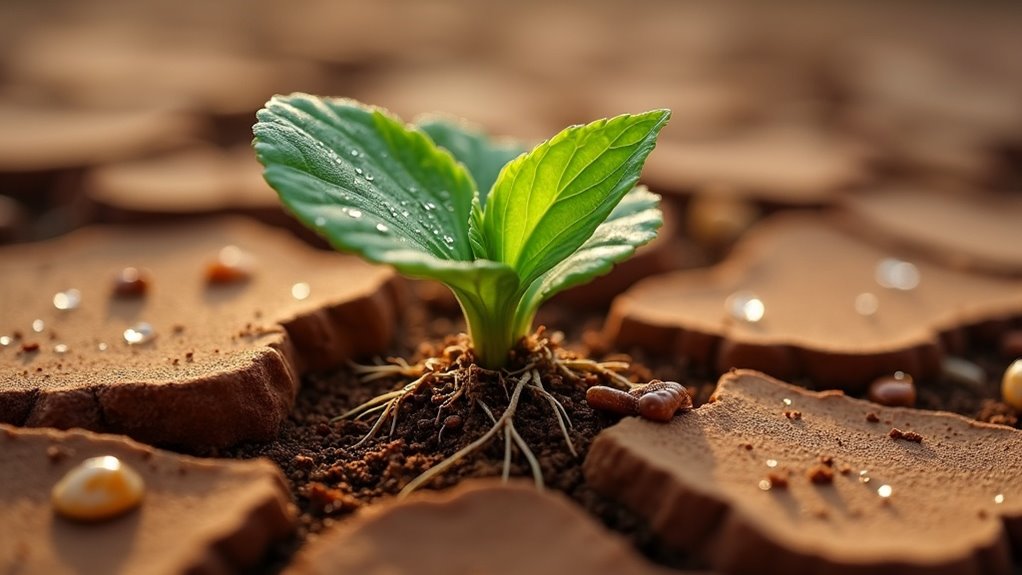
Yes, plants can grow in clay soil, which is rich in nutrients and retains moisture well. However, challenges like compaction and poor drainage may hinder root development. To improve conditions, you can amend the soil with organic matter and guarantee you avoid tilling when it’s wet. By targeting careful planting and maintenance strategies, you can create a thriving garden. Discover more about the plants that excel in clay soil and effective gardening techniques.
Key Takeaways
- Yes, many plants, including perennials and annuals, can thrive in clay soil due to its nutrient-rich composition.
- Clay soil retains moisture, providing a consistent water supply beneficial for plant growth, especially during dry spells.
- While dense and compact, amending clay soil with organic matter improves drainage and encourages root development.
- Selecting suitable plants, like Bee Balm and Daylilies, can maximize growth potential in clay conditions.
- Proper gardening techniques, such as avoiding tilling when wet, can enhance plant establishment in clay soil.
Understanding Clay Soil
Understanding clay soil is essential for successful gardening and landscaping, especially since its unique properties can greatly impact plant health.
Clay soil consists of fine particles that create a dense structure, leading to high water retention but poor drainage. This can hinder plant roots from penetrating the soil effectively.
Clay soil’s dense structure retains water but limits drainage, making it challenging for plant roots to penetrate effectively.
Although nutrient-rich due to its high cation exchange capacity, clay’s compaction can limit air circulation, crucial for root vitality.
To improve your clay soil, amending it with organic matter, like compost, enhances drainage in clay, ultimately promoting better plant growth and overall soil health.
The Benefits of Gardening in Clay Soil
Gardening in clay soil offers significant advantages, particularly its impressive nutrient retention and water-holding capacity.
This means you’ll spend less time watering and fertilizing, as the soil naturally supports a fertile growth environment.
Nutrient Retention Advantages
While many gardeners might shy away from clay soil due to its dense texture, it actually offers significant nutrient retention advantages that can boost plant growth. Its high cation exchange capacity (CEC) guarantees a nutrient-rich environment, while the small particle size prevents nutrient leaching. The dense structure allows for ideal nutrient bonding, enhancing mineral availability. Incorporating organic matter improves nutrient-holding capacity and supports beneficial soil organisms, leading to stronger growth and resilience against environmental stressors.
| Advantage | Description | Benefit |
|---|---|---|
| Cation Exchange Capacity | Retains nutrients effectively | Nutrient-rich environment |
| Water Retention | Prevents leaching during heavy rains | Sustained nutrient access |
| Surface Area | Larger area for nutrient bonding | Enhanced mineral uptake |
| Organic Matter | Improves soil structure and fertility | Supports beneficial organisms |
| Plant Resilience | Enhances growth under stress | Stronger, healthier plants |
Water-Holding Capacity Benefits
Clay soil’s nutrient retention capabilities seamlessly complement its remarkable water-holding capacity, making it a valuable asset for gardeners.
With its tiny pore spaces, clay soil excels in moisture retention, allowing plants to grow well in clay during dry spells. This high water-holding capacity means you won’t need to water frequently, as your plants will access a consistent supply of moisture.
Additionally, the water retention properties enhance nutrient availability, fostering robust plant growth by delivering essential minerals dissolved in the moisture.
Fertile Growth Environment
A fertile growth environment awaits those who embrace the unique properties of clay soil. This nutrient-rich soil boasts a high capacity for holding essential minerals, making it ideal for growing plants. The tiny pore spaces retain moisture, ensuring plants have access to water during dry spells.
Additionally, clay soil’s cation exchange capacity (CEC) bonds effectively with nutrients, enhancing their availability. By incorporating organic matter, you can improve soil structure, promoting better aeration and root growth potential.
The Challenges of Gardening in Clay Soil
Gardening in clay soil presents unique challenges that can greatly affect plant health and growth. The dense texture of heavy clay limits root growth, making establishment difficult.
Compaction often occurs when you work the soil while it’s wet, damaging its structure and further hindering root development. Additionally, clay soil’s high water retention capacity can create waterlogged conditions, leading to root rot if not managed properly.
To counter these issues, incorporating organic matter is vital to improve drainage and enhance soil quality. Understanding these challenges of gardening in a clay soil garden is significant for successful plant cultivation.
Gardening Techniques for Clay Soil
While managing clay soil can be challenging, employing effective gardening techniques can greatly improve plant health and growth.
To enhance soil structure, add sand and incorporate organic matter like compost or peat moss. Avoid tilling when wet to prevent compaction. Use mulch to maintain moisture and reduce runoff, gradually improving soil quality.
Enhance your clay soil by adding sand and organic matter, avoiding wet tilling, and using mulch for moisture retention.
When planting in clay, dig holes 2 to 3 times larger than necessary, mixing compost with the excavated soil to promote healthy root systems.
Finally, monitor moisture levels carefully, watering deeply but less frequently to encourage robust root growth and prevent over-saturation.
Improving and Managing Clay Soil
To successfully improve and manage clay soil, it’s essential to focus on enhancing its structure and drainage capabilities.
Start by incorporating organic matter, like compost, which enriches the soil and prevents compaction. Regularly adding compost not only improves texture but provides nutrients for plants.
Mixing in gypsum can enhance aeration and drainage by breaking up dense particles. Use proper planting techniques, digging holes larger than necessary and mixing removed soil with compost to foster root growth.
Finally, apply a 3-4 inch layer of mulch to retain moisture and gradually improve soil quality as it decomposes, enhancing overall drainage.
Suitable Plants for Clay Soil
When selecting plants for clay soil, it’s important to take into account perennials, annuals, and shrubs that thrive in these conditions.
Hardy options like Aster and Black-eyed Susan not only adapt well but also support local wildlife.
Understanding the best choices for clay soil will help you create a vibrant and sustainable garden.
Best Perennials for Clay
What makes certain perennials thrive in clay soil? The best plants for clay, like Aster and Black Eyed Susan, adapt to its dense texture while delivering vibrant blooms that attract pollinators.
Bee Balm flourishes in clay, offering medicinal properties alongside its flowers that entice hummingbirds and butterflies.
Daylilies are a low-maintenance option, providing color all summer.
Coneflowers, with their pink-purple hues, tolerate moisture retention and also draw various pollinators.
Annuals Thriving in Clay
Many annuals excel in clay soil, demonstrating remarkable adaptability to its unique challenges. These plants thrive in moisture-retentive conditions, benefiting from clay’s nutrient retention.
Here are some suitable options:
- Petunia
- Verbena
- Salvia
- Coneflower
- Zinnias
Additionally, annuals like Marigolds and Cosmos feature deep root systems that penetrate dense clay, improving soil structure.
Incorporating organic matter while planting enhances drainage and aeration, fostering better root development. Moreover, many of these annuals attract pollinators, enriching your garden’s biodiversity.
Shrubs for Clay Soil
Numerous shrubs excel in clay soil, offering robust options for gardeners seeking resilience and beauty.
For instance, the Rose of Sharon and Viburnum thrive due to clay’s nutrient retention and moisture-holding capacity. Spirea showcases remarkable adaptability, flourishing in dense, clay-rich environments.
The hardy Hydrangea produces large, colorful clusters and performs well across USDA zones 3-9, making it suitable for these conditions.
Additionally, ornamental grasses like Eulalia require minimal maintenance while thriving in clay.
Finally, Goldenrod not only prospers in clay soil but also attracts pollinators, enhancing biodiversity and supporting a vibrant ecosystem in your garden.
Getting a Full Season of Blooms in the Clay Soil Garden
While cultivating a vibrant garden in clay soil may seem challenging, you can achieve a full season of blooms by strategically selecting plants that thrive in these conditions.
- Early spring: Bearded Irises, Creeping Phlox
- Late spring to early summer: Indian Pink, Daylilies
- Shady areas: Hostas, Astilbes
- Peak summer: Panicle Phlox, Black Eyed Susans, Bee Balm
- Autumn: Sedum, Asters, reblooming Bearded Iris
Additional Resources for Clay Soil Gardening
To successfully navigate the challenges of gardening in clay soil, utilizing additional resources can greatly enhance your understanding and approach.
Start with a soil test to identify soil types and pH levels, essential for determining the right plants and amendments.
Begin your gardening journey with a soil test to understand soil types and pH, guiding your plant choices and amendments.
The Gardeners Idea Book offers valuable insights into soil improvement techniques tailored for clay conditions.
Proven Winners provides access to local garden centers, ensuring you find suitable plants.
Additionally, articles on soil types deepen your knowledge, while community newsletters and gardening forums connect you with experienced gardeners who share tips for thriving in clay soil.
Leverage these resources for success.





