
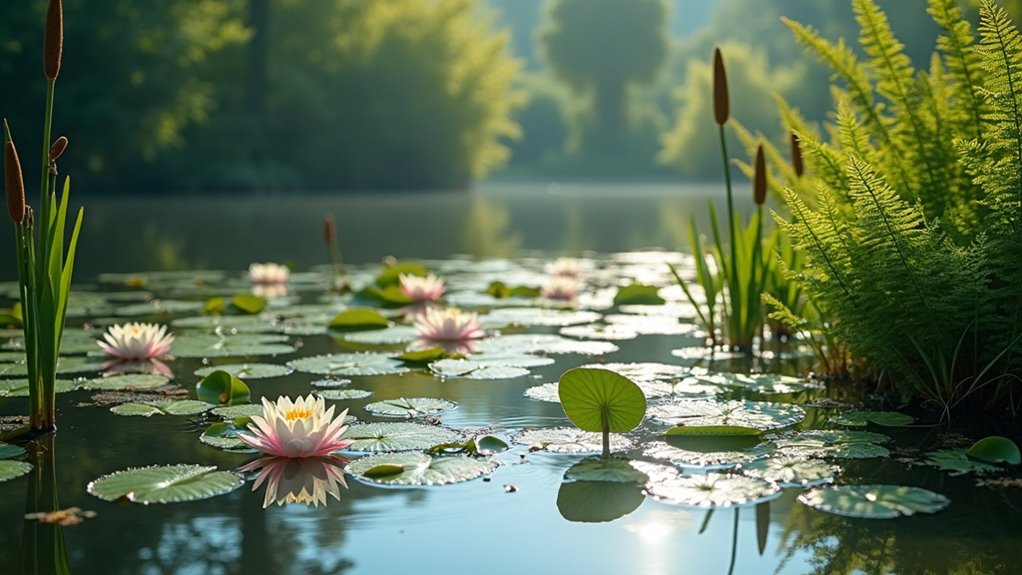
In a pond, you’ll find a variety of aquatic plants like vibrant water lilies, eye-catching blue flag iris, and lively pickerel plants. These plants not only beautify your pond but also enhance its health. They oxygenate the water, filter pollutants, and provide shade, regulating temperature for fish. Fostering a mix of these species creates a thriving ecosystem, benefiting local wildlife. There’s much more to discover about how these plants work together for your pond’s success.
Key Takeaways
- Common aquatic plants include water lilies, blue flag iris, pickerel plants, and creeping Jenny, each contributing to pond aesthetics and ecology.
- Aquatic plants help oxygenate water, filter pollutants, and improve water clarity, essential for a healthy pond ecosystem.
- Floating plants, emergent plants, and submerged plants serve different roles in maintaining water quality and providing habitats.
- Choosing a diverse mix of native plants enhances biodiversity and attracts wildlife while ensuring optimal growth conditions.
- Seasonal care, including monitoring water quality and protecting sensitive species, is vital for maintaining a thriving pond environment.
Common Aquatic Plants in Ponds
When you explore the world of ponds, you’ll discover a variety of common aquatic plants that play essential roles in the ecosystem.
Water lilies, with their stunning blooms in various colors, provide shade and enhance the beauty of water gardens.
Water lilies add breathtaking beauty and essential shade to water gardens with their vibrant blooms.
Blue flag iris showcases striking blue-purple flowers, attracting pollinators while thriving in wet soils.
Pickerel plants, featuring heart-shaped leaves and long-lasting spiked flowers, add vibrant displays to your pond.
Creeping Jenny, a low-growing perennial, softens rocky edges and produces bright yellow flowers in summer.
Together, these pond plants create a thriving habitat and contribute to the ecological balance of aquatic environments.
Benefits of Aquatic Plants
Aquatic plants offer a multitude of benefits that go beyond their aesthetic appeal in ponds. They play a crucial role in oxygenating water, essential for maintaining a healthy ecosystem.
Acting as natural filters, these plants absorb excess nutrients and pollutants, greatly improving water clarity and reducing algae growth. Floating varieties provide shade for fish, regulating water temperature and creating a comfortable habitat.
Emergent plants like cattails offer shelter and breeding grounds for wildlife, while others, such as arrowhead, serve as biofilters. Together, aquatic plants enhance pond health, ensuring a balanced environment for diverse aquatic life.
Types of Pond Plants
Understanding the different types of pond plants is essential for creating a thriving aquatic ecosystem.
Floating plants, like water lilies, provide shade and absorb excess nutrients, competing with algae for sunlight.
Emergent plants, such as cattails, pickerel weed, and blue flag iris, grow above the water surface, offering habitat for wildlife and enhancing water filtration.
Submerged plants, including eelgrass and hornwort, live entirely underwater, improving water clarity and creating hiding spots for fish.
Each type has specific sunlight and water depth requirements, so selecting the right varieties for your pond guarantees peak health and growth for this delicate ecosystem.
Planting and Care Tips
To create a thriving pond environment, it’s crucial to implement effective planting and care strategies. Consider these tips for your water garden:
- Choose a mix of floating, emergent, and submerged native plants to enhance aesthetic appeal and support aquatic health.
- Regularly monitor nutrient levels and water quality to curb algae growth, ensuring your green foliage thrives.
- Pay attention to plant placement, considering sunlight exposure and water depth for ideal growth and wildlife attraction.
Enhancing Biodiversity With Pond Plants
Incorporating native pond plants is vital for enhancing biodiversity and supporting wildlife habitats.
These plants not only provide essential food sources and shelter for various aquatic organisms but also create a thriving ecosystem that attracts pollinators and beneficial insects.
Native Plant Benefits
While many might overlook the significance of native pond plants, their role in enhancing biodiversity is profound.
By integrating these species, you can achieve multiple benefits for your ecosystem:
- Habitat Creation: Native plants like Blue Flag Iris provide essential habitats for birds and aquatic life.
- Water Quality Improvement: Species such as Sweet Flag filter water, reducing algae and enhancing overall water quality.
- Pollinator Attraction: Native pond plants draw in pollinators, supporting ecosystem health and benefiting surrounding flora.
Incorporating native pond plants leads to vibrant ecosystems, promoting biodiversity and ensuring resilient habitats in moist soils.
Supporting Wildlife Habitats
As you cultivate a diverse array of pond plants, you’ll find that these species not only enhance the beauty of your landscape but also play a crucial role in supporting wildlife habitats.
The Pickerel Plant and Cardinal Flower attract pollinators, while Cattails and Blue Flag Iris provide shelter for fish and amphibians, ensuring safe spawning grounds.
Water Lettuce and Lotus filter water, promoting aquatic life health.
Emergent plants like Sweet Flag and Arrowhead act as biofilters, fostering clean water and habitats for insects.
Seasonal Considerations for Pond Plants
As spring approaches, you should consider planting a variety of species that bloom at different times to maximize your pond’s beauty throughout the season.
In colder regions, you’ll need to prepare for winter by protecting sensitive plants from frost, ensuring they thrive year after year.
Monitoring water quality and maintaining plant health is essential as seasonal changes impact growth and nutrient availability.
Spring Planting Strategies
Spring is the perfect season for planting aquatic plants in your pond, as the warming temperatures encourage robust growth and blooming.
To guarantee a successful spring planting, consider these strategies:
- Choose hardy varieties like water lilies and blue flag irises for Zones 3-7, while tropical species thrive in warmer Zones 8-11.
- Plant midlevel shelf plants at depths of 4-12 inches to promote strong root systems.
- Monitor water quality regularly to prevent algae blooms and support healthy growth of aquatic species, creating visual interest with a mix of early and late bloomers throughout the season.
Winter Plant Care Tips
When winter arrives, it’s crucial to adjust your care routine for pond plants to guarantee their survival through the colder months.
For tropical plants like Taro, bring them indoors, as they can’t withstand frost.
Winter hardy varieties, such as Waterlilies, should remain submerged, ensuring their roots stay below the frost line.
Cut back and remove dead foliage from perennial plants like Cardinal Flower to prevent disease.
Submerged plants are imperative for oxygenation, but trim them to avoid overcrowding.
Regularly monitor water levels, especially in shallow water, to prevent freezing issues that can endanger your aquatic plants.





