
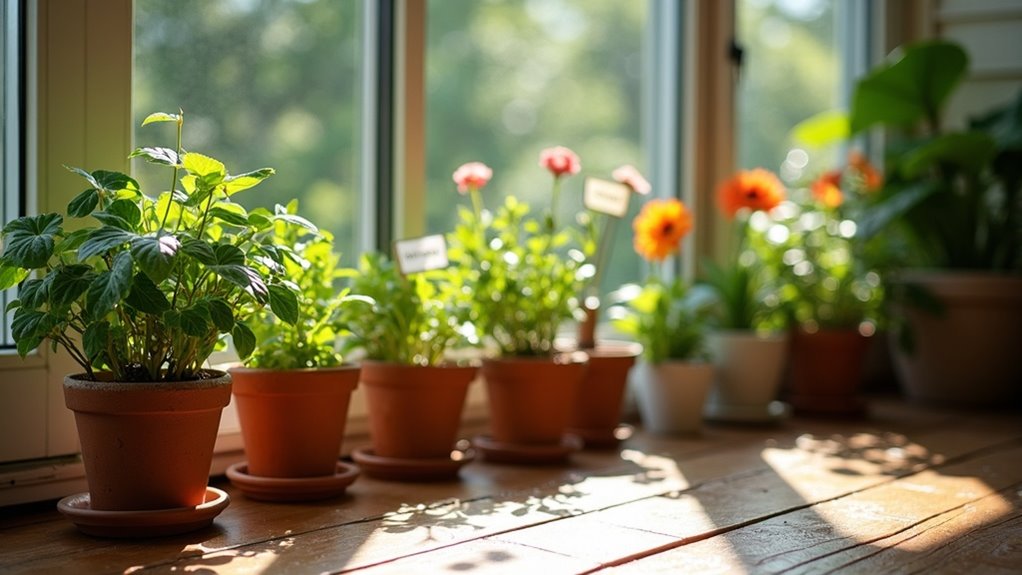
To acclimate your plants after shipping, gently unwrap them and inspect for damage. Check the soil moisture; water if it’s dry, but wait if it’s damp. Trim any broken stems or unhealthy leaves with sanitized scissors. Place your plants in a semi-shady spot with filtered sunlight and keep the temperature stable between 65-82°F and humidity around 50-75%. Monitor their response closely, as new growth is a sign of acclimation success—there’s more to optimize their care.
Key Takeaways
- Gently unbox the plants, inspect for damage, and trim any broken stems or unhealthy leaves to promote recovery.
- Check soil moisture; water dry soil and allow damp soil to dry out before watering again.
- Place plants in a semi-shady area with filtered sunlight to reduce stress during acclimation.
- Maintain stable temperatures between 65-82°F and humidity levels between 50-75% for optimal growth.
- Monitor for new growth and signs of stress, adjusting care as needed based on plant response.
Unboxing Your New Plants
When you receive your new plants, how can you guarantee a smooth unboxing experience?
Start by gently unwrapping the protective sleeves, taking care not to damage the leaves or stems. Inspect for any minor damage, as broken stems or bent leaves can often recover with proper care.
Watch an unboxing video for visual guidance on handling techniques. Check the soil moisture; if it’s dry, water immediately, but if damp, wait before watering again.
Finally, place your plants in a suitable location away from direct sunlight to help them acclimate to their new environment and promote healthy roots.
Assessing and Managing Damage
Evaluating the condition of your plants after shipping is essential for their recovery and long-term health. Start by examining any damage and addressing it promptly to promote robust growth.
Assessing your plants post-shipping is crucial for their recovery and future well-being. Promptly address any damage to encourage healthy growth.
Here’s what to look for:
- Inspect for broken stems or bent leaves.
- Note that a few roughed-up leaves are normal; don’t panic.
- Check soil moisture: damp soil needs drying, while dry soil requires watering.
- Trim broken stems and unhealthy leaves with sanitized scissors to redirect energy.
- Allow at least two weeks for roots to adjust to their new environment.
With patience and care, your plants can thrive again.
Soil Moisture and Watering Needs
Understanding soil moisture and watering needs is essential for your plants’ successful acclimation post-shipping.
Upon arrival, check the soil moisture; if it feels damp, let it dry before watering again. Conversely, if it’s dry, provide enough water to rehydrate. Avoid overwatering, as this can lead to root rot.
Use a moisture meter or your finger to assess the top 1-2 inches of soil, watering only when dry.
Monitor environmental conditions, like temperature and humidity, since they impact soil moisture levels. Adjust your watering schedule based on your plant’s response to its new environment over the first few days.
Trimming, Pruning, and Potting
After addressing soil moisture and watering needs, it’s time to focus on trimming, pruning, and potting your newly arrived plants.
Start with these steps:
- Use sanitized, sharp scissors to trim broken stems and unhealthy leaves.
- Prune only damaged or wilted foliage; healthy leaves are essential.
- Inspect roots for rot or damage, trimming unhealthy ones carefully.
- Repot in a clean pot with fresh planting media, ensuring roots are well-supported.
- Place the plant in a humid environment to aid acclimation and monitor for new growth.
This process enhances recovery, ensuring your plants thrive in their new home.
Creating an Ideal Acclimation Environment
Creating an ideal acclimation environment is essential for helping your newly shipped plants recover and thrive after their journey. Aim for a stable temperature between 65-82°F, as extreme temperatures can cause stress.
Maintain humidity levels between 50-75% to prevent wilting; consider using a humidity dome or plastic bag for moisture retention.
For the first 2-3 days, place your plants in a semi-shady area with filtered sunlight to ease them into outdoor conditions. Guarantee good airflow around the plants to prevent mold while stabilizing humidity.
Monitor for signs of stress, adjusting sunlight and humidity as necessary for a smooth changeover.
Monitoring Growth and Adjusting Care
As your plants settle into their new environment, keeping a close eye on their growth is essential for ensuring they adapt successfully.
Monitor your plants closely as they adapt to their new environment to ensure successful growth.
Here are key points to monitor:
- Observe for new leaves; their emergence indicates healthy acclimation.
- Check for signs of stress, like wilting or blackening leaves.
- Regularly assess soil moisture; avoid extremes of dryness or wetness.
- Maintain a consistent watering schedule, allowing the top inch of soil to dry.
- Keep temperatures between 65-82°F to support ideal growth.





