
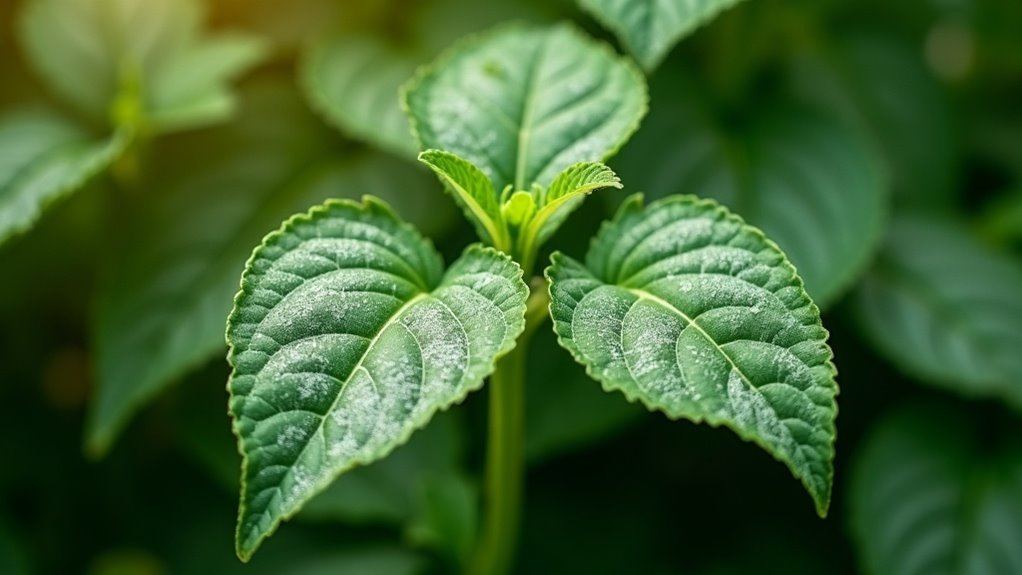
Downy mildew is a serious fungal disease caused by oomycetes that affect various plants. It thrives in cool, humid conditions, leading to significant crop damage. You’ll notice symptoms like yellow spots and fuzzy growth under leaves, which can cause leaves to wilt and drop early. The disease spreads rapidly, completing its life cycle in just 4-10 days under the right conditions. To combat this threat effectively, understanding its life cycle and control measures is essential.
Key Takeaways
- Downy mildew is a fungal disease caused by oomycetes, requiring living plants and thriving in cool, humid conditions.
- Symptoms include yellow spots, brown lesions, wilting leaves, and a fuzzy, mold-like growth on the underside of leaves.
- The disease can lead to premature leaf drop, stunted growth, and reduced yield potential if not managed properly.
- Effective prevention includes selecting resistant cultivars, maintaining good air circulation, and using drip irrigation to keep leaves dry.
- Early detection and treatment with fungicides are crucial, as downy mildew can complete its life cycle in just 4-10 days.
What Is Meant by Downy Mildew?
Downy mildew is a plant disease caused by oomycetes, a group of fungus-like organisms primarily from the Peronosporaceae family. This disease requires living plants for its life cycle and manifests through distinct symptoms, such as yellow spots on upper leaf surfaces that evolve into brown lesions, along with a fuzzy, grayish growth beneath infected leaves.
Downy mildew thrives in cool, humid conditions, with ideal temperatures between 50-75°F and humidity levels exceeding 85%.
To control its spread, you should focus on improving air circulation and using resistant plant cultivars, as fungicides are only effective as a preventive measure, not for existing infections.
Is Downy Mildew Harmful?
The impact of downy mildew on plants can be severe, transforming a thriving crop into a struggling one in a matter of days. This obligate parasite can devastate yields and quality, particularly in high humidity and favorable environmental conditions.
To understand its harm, consider:
- Rapid spread among infected plants.
- Choking of vascular systems, hindering water transport.
- Mildew symptoms like yellow spots and fuzzy growth leading to tissue damage.
- Significant economic losses in crops like basil, cucumbers, and grapes.
Effective strategies to control downy mildew are essential to prevent these devastating plant diseases from taking hold.
Symptoms
Symptoms of downy mildew can manifest quickly and dramatically, often catching gardeners and farmers off guard.
Initially, symptoms include large, angular yellow areas on the upper leaf surface, which subsequently turn brown as the disease advances. Infected leaves may also exhibit wilting and shriveling, contributing to premature leaf drop.
Symptoms start with large yellow areas on leaves, turning brown as the disease progresses, leading to wilting and premature leaf drop.
The early stages of infection may reveal oily spots, while the underside of infected leaves often shows a fluffy mold-like growth, appearing bluish, gray, or purple.
If untreated, downy mildew can lead to extensive damage, potentially killing affected plants within a week. Vigilance is essential for early detection and management.
Life Cycle
Understanding the life cycle of downy mildew is essential for effective management.
It begins with overwintering stages, where mycelium or oospores persist until the right environmental conditions trigger germination.
Once conditions are favorable, the infection cycle can unfold rapidly, impacting plant health greatly.
Overwintering Stages Explained
While downy mildew can pose a significant threat to your plants, its overwintering stages reveal a remarkable survival strategy.
Understanding these stages is essential for effective management:
- Mycelium: Downy mildew survives in infected plant debris as mycelium or oospores.
- Dormancy: Oospores remain dormant during adverse conditions, waiting for ideal humidity.
- Environmental Factors: Ideal temperatures (50-75°F) and over 85% humidity trigger spore production.
- Germination: In spring, dormant oospores germinate, producing sporangiophores that release zoospores, beginning the life cycle anew.
Recognizing these stages helps you mitigate the impact of downy mildew on your plants.
Infection Cycle Timeline
The infection cycle of downy mildew unfolds rapidly, often completing in just 7 to 10 days under ideal conditions. It begins when mycelium or oospores germinate at temperatures between 50-75°F and relative humidity above 85%. Within 4-10 days, you’ll notice visible symptoms as sporangiophores emerge from plant stomata, releasing zoospores that spread via wind and water to infect new host plants. Early detection is essential for effective management strategies.
| Time Frame | Activity | Outcome |
|---|---|---|
| Days 0-2 | Germination of spores | Initial infection |
| Days 3-5 | Sporangiophore emergence | Zoospore release |
| Days 6-10 | Visible symptoms appear | Infection spread |
| Ongoing | Management strategies implementation | Disease control |
Environmental Conditions Impact
Environmental conditions greatly influence the life cycle of downy mildew, dictating its growth and infection patterns.
Understanding these factors can help you manage outbreaks effectively:
- Optimal Temperatures: Downy mildew thrives best between 50-75°F.
- Humidity Levels: High humidity around 85% is essential for spore germination.
- Extended Leaf Wetness: Wet weather promotes infection through prolonged moisture on leaf surfaces.
- Overwintering Capability: The pathogen can persist for up to five years in infected plants, even in warmer climates.
Important Strains of Downy Mildews
In understanding downy mildew, it’s essential to recognize significant strains impacting key crops.
*Pseudoperonospora cubensis* threatens cucurbit crops, particularly squash and cucumbers, while *Peronospora farinosa* poses a serious risk to basil.
Knowing these strains helps you implement effective management strategies to mitigate crop losses.
Cucurbitaceae Downy Mildew
While cucurbit crops are essential for many agricultural systems, they’re particularly vulnerable to downy mildew caused by Pseudoperonospora cubensis. This pathogen leads to severe economic impacts, and you need to be vigilant.
Here’s what to watch for:
- Yellow spots on upper leaf surfaces.
- Grayish, fuzzy growth on undersides of leaves.
- Rapid symptom spread under high humidity conditions.
- Infection thrives in temperatures between 50-75°F.
Implement management strategies, including crop rotation and resistant cultivars, to mitigate risks.
Early detection and prompt intervention are vital to protect your crops from this destructive disease.
Basil Downy Mildew
How can basil growers effectively combat the threat of basil downy mildew caused by Peronospora belbahrii?
First, monitor humidity levels, as high humidity above 85% promotes rapid disease spread.
Remove infected plants immediately to prevent further contamination.
Enhance air circulation around your basil to reduce leaf wetness, which fosters the pathogen.
Consider applying fungicides, particularly copper-based products, but use them preventively.
Additionally, investing in resistant varieties can greatly improve plant health and yield.
Prevention
To effectively prevent downy mildew on your plants, select resistant cultivars whenever possible.
Implement these strategies for ideal downy mildew control:
- Maintain good air circulation by spacing and selectively pruning plants to reduce humidity.
- Avoid overhead watering; use drip irrigation to keep leaves dry and minimize moisture.
- Regularly scout for early symptoms like yellow spots and fuzzy growth; promptly remove infected plants to curb spread.
- Practice crop rotation to limit the buildup of downy mildew pathogens in the soil, as they can persist in plant debris.
These measures will greatly enhance your prevention efforts.
Control for the Home Garden
Controlling downy mildew in your home garden requires prompt action and a strategic approach.
Start by removing and disposing of infected leaves immediately to prevent further spread of spores. Guarantee good air circulation around your plants by spacing them adequately and practicing selective pruning, which helps lower humidity levels that promote downy mildew disease.
Avoid overhead watering; instead, use drip irrigation to keep foliage dry. For effective control, apply fungicides like chlorothalonil or copper fungicides early in disease development.
Finally, consider planting resistant varieties and monitor regularly for symptoms, as early detection is essential for managing mildew effectively.
Treatment
When downy mildew strikes, timely treatment is critical to minimize damage and prevent further spread. Follow these steps for effective management:
- Confirm the diagnosis before using systemic fungicides, as they target early development, not existing infections.
- Apply fungicides, like copper or broad-spectrum protectants, according to label instructions during high humidity.
- Consider organic options, such as Bacillus subtilis, to manage the disease sustainably.
- Remove and destroy infected plants immediately to eliminate living hosts and curb pathogen spread.
Regular monitoring guarantees you catch downy mildew early, preventing a complete infection cycle in just 4-10 days.





