
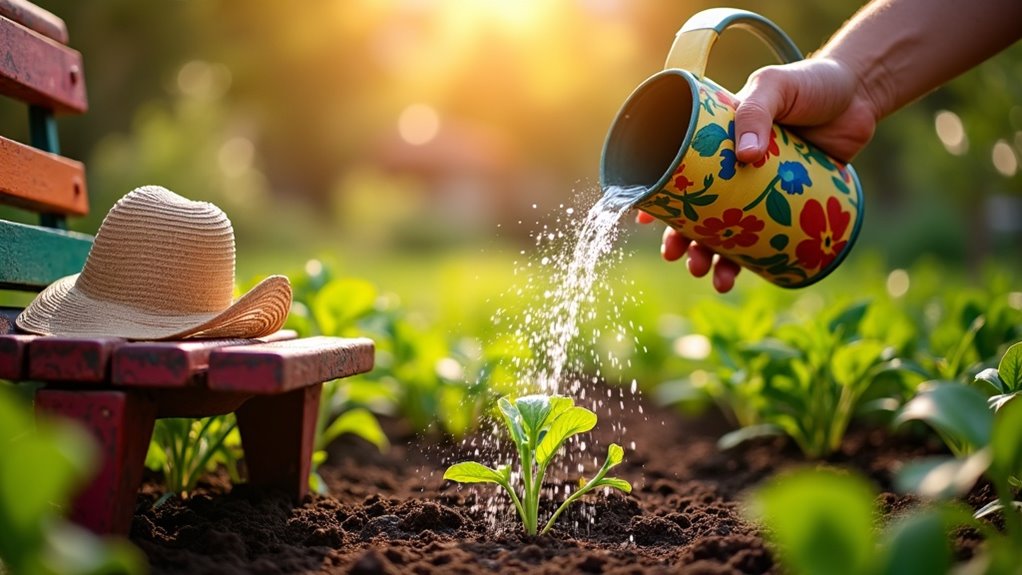
To water your plants safely during a heatwave, do it early in the morning or late in the evening to reduce evaporation. Focus on deep hydration, watering for 30-60 minutes to reach the root zone, especially for container plants. New plantings need extra care, so check soil moisture frequently. Avoid fertilizing during high temperatures to prevent stress. For more tips on specific plant care and practices, stick with us for valuable insights!
Key Takeaways
- Water your plants early in the morning to maximize moisture absorption and minimize evaporation.
- Use deep watering techniques, aiming for at least 6 inches to ensure roots are well-hydrated.
- Monitor soil moisture regularly; water when the top 2 inches of soil feel dry.
- Protect newly planted flowers and shrubs with shade cloth during peak sun hours to prevent heat stress.
- Avoid fertilizing during heatwaves to reduce plant stress and maintain hydration levels.
Timing Your Watering
When you’re trying to keep your plants healthy during a heatwave, timing your watering is essential.
Watering early in the morning, between 5 a.m. and 9 a.m., maximizes moisture absorption and minimizes evaporation.
Water your plants early in the morning to ensure optimal moisture absorption and reduce evaporation.
In the evening, from 5 p.m. to 8 p.m., you can also water, but be cautious to avoid prolonged moisture on foliage that can lead to fungal infections.
Avoid watering during the hottest part of the day; this causes rapid evaporation and can scorch leaves.
Regularly check soil moisture levels and adjust your schedule according to your plants’ needs and the heatwave’s severity.
Deep and Consistent Hydration
To keep your plants thriving during a heatwave, deep and consistent hydration is vital. Water your plants in containers deeply, allowing for a slow soak of 30-60 minutes to guarantee moisture reaches the root zone. Aim for a depth of at least 6 inches to promote robust root growth.
Utilizing drip irrigation or soaker hoses helps provide targeted hydration while minimizing evaporation. Check soil moisture by inserting your finger 2-3 inches deep; if it feels dry, it’s time to hydrate.
Established plants should be watered 1-2 times a week, focusing on deep soaking to prevent stress and promote health.
Protecting New Plantings
Although newly planted flowers and shrubs may seem resilient, they require extra care during a heatwave to guarantee their survival and growth.
Prioritize deep watering sessions lasting 30-60 minutes, 2-3 times a week, to keep moisture levels high in the root zone. Use soaker hoses or drip systems for effective delivery.
Deep watering for 30-60 minutes, 2-3 times a week, ensures moisture stays high in the root zone.
To mitigate heat stress, shield new plantings with shade cloth during peak sun hours. Regularly check soil moisture, ensuring the top 2 inches remain damp.
For newly planted trees, consider tree bags to retain moisture, but remove them between waterings to prevent waterlogging.
Container Care During Heat
As temperatures soar during a heatwave, container plants require extra attention to thrive. You might need to water daily, sometimes even more than once, since the soil dries out faster in container gardening.
To help retain moisture, move smaller containers to shaded areas or place hanging baskets on the ground during extreme heat. Always thoroughly water your potted plants until water drains from the bottom, ensuring deep hydration.
Regularly monitor moisture levels by checking the top 2 inches of soil. Consider using self-watering pots or drip irrigation systems to maintain consistent moisture levels for your container plants.
Watering Established Plants
During a heatwave, established plants need your careful attention to thrive. To water your plants effectively, aim for deep soaking 1-2 times a week, applying water for 30-60 minutes to guarantee the moisture reaches the entire root system.
Water in the early morning or late evening to minimize evaporation and heat stress. Use mulch around your plants to retain soil moisture and regulate temperature, reducing the need for frequent watering.
Regularly check soil moisture at a depth of 2-3 inches to guide your watering decisions and adjust based on specific plant needs for peak health.
Caring for Vegetables and Fruits
How can you guarantee your vegetables and fruits thrive in a heatwave?
Start with consistent watering—aim for at least 1 inch weekly, increasing to 2 inches in dry climates. During extreme heat, some plants may need daily watering.
For leafy greens, misting or watering helps prevent bolting. To avoid Blossom End Rot in tomatoes, maintain regular moisture and consider applying lime and Fertilome Yield Booster for added resilience.
Remember to apply any sprays only when temperatures are below 85°F to avoid damaging your plants.
Keeping these tips in mind will help your garden flourish even in harsh conditions.
Maintaining Humidity Around Plants
To keep your plants healthy and thriving in a heatwave, maintaining humidity around them is essential. Here are three effective strategies:
Maintaining humidity is crucial for plant health during a heatwave; consider these effective strategies for success.
- Group plants together: This creates a microenvironment that boosts humidity and reduces heat stress.
- Use mulch: It retains soil moisture and regulates soil temperature, providing a more humid environment for roots.
- Place water trays: Position these near your heat-sensitive plants to increase humidity levels.
Additionally, misting and placing container plants under larger plants can further enhance humidity and shade, ensuring your plants stay hydrated and protected during extreme heat.
Nutrient Management During Heatwaves
During a heatwave, you should avoid fertilizing your plants, as the stress from high temperatures can lead to root burn and increased water needs.
Instead, focus on keeping your plants hydrated, since healthy moisture levels help them absorb nutrients effectively.
If you must fertilize, use a half-strength organic liquid fertilizer when the soil is moist to reduce stress.
Fertilizing Limitations in Heat
While managing your garden in a heatwave, it’s essential to recognize the limitations of fertilizing under extreme temperatures.
Here are three key points to keep in mind:
- Wait for Cooler Temps: Fertilizing during heat stress can overwhelm plants, so delay until it cools down.
- Use Organic Fertilizers: If necessary, apply a half-strength organic liquid fertilizer when the soil is moist to prevent root burn.
- Prioritize Hydration: Focus on keeping your plants hydrated, as increased water needs can exacerbate heat stress and affect overall plant health.
Soil Temperature Considerations
As temperatures rise, high soil temperatures can greatly impact your plants’ health and nutrient uptake.
During a heatwave, soil temperatures above 75°F can stress roots, making it hard for plants to absorb water and nutrients. To combat this, monitor soil moisture consistently and water deeply to maintain even moisture levels.
Avoid fertilizing in extreme heat, as it can worsen stress and lead to root burn. If needed, consider using half-strength organic liquid fertilizers when soils are adequately moist.
This approach helps prevent overwhelming heat-stressed plants while ensuring they receive essential nutrients without additional strain.





