
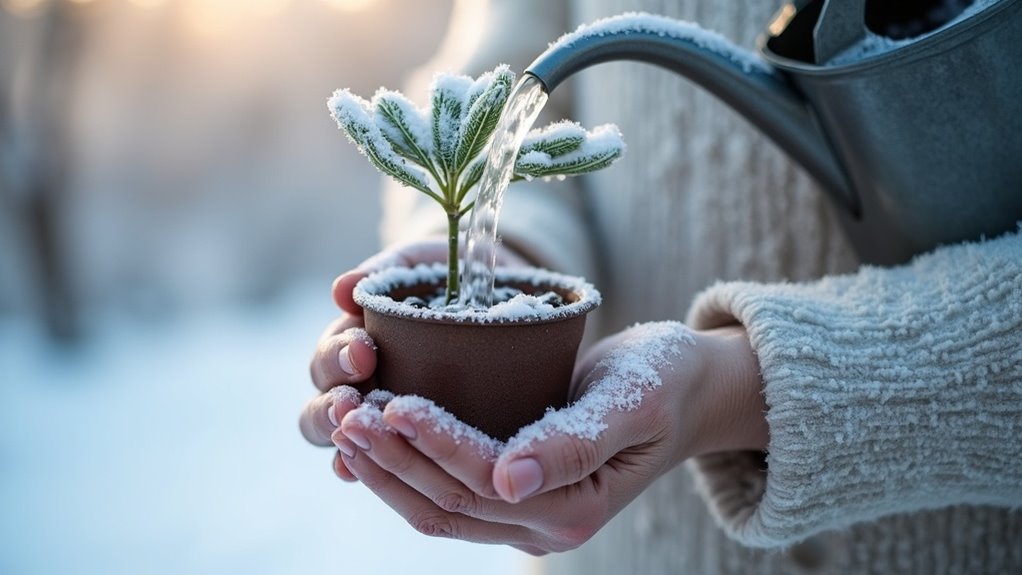
To water plants during their winter dormancy, check the soil moisture before applying water, as dormant plants require less. Look for signs like drooping leaves or dry soil beneath mulch. Water when temperatures exceed 40-50°F, avoiding freezes. Container plants need more attention since they dry out faster. Always maintain slightly moist soil, and be cautious of overwatering, which can lead to root rot. For more detailed guidance on watering techniques, continue exploring our insights.
Key Takeaways
- Check soil moisture before watering, as dormant plants require less water due to lower metabolic rates.
- Look for drooping leaves and dry soil beneath mulch as signs that dormant plants may need water.
- Water only when temperatures are above 40-50°F to ensure better absorption and avoid freezing conditions.
- Monitor container plants closely, as they dry out faster than those in the ground, requiring more frequent checks.
- Adjust watering frequency to every 7 to 10 days as new growth appears in spring, while avoiding overwatering.
Understanding Plant Dormancy and Water Needs
When you understand plant dormancy, you can better manage their water needs during winter. Dormant plants generally require less water, as their metabolic rates decrease considerably.
It’s crucial to check soil moisture before watering; overwatering can lead to root rot, jeopardizing healthy plants. In low desert areas, you might need to water every two weeks during unseasonably warm spells, but avoid this during freezing temperatures.
Look for signs like drooping leaves or dry soil, which may indicate a need for water despite their reduced needs. Adjust the frequency to every 7 to 10 days as new growth begins in spring.
Signs That Your Dormant Plants Need Water
How can you tell if your dormant plants need water? Look for signs of thirst, such as drooping leaves or dry soil.
Check the soil moisture beneath any mulch or surface layers; dormant plants typically don’t need water until you observe new growth in spring.
In warmer areas, you may need to water every two weeks, but avoid doing so during freezing conditions to prevent root rot.
Container plants require closer monitoring, as they dry out faster. Maintaining slightly moist soil without sogginess is essential for healthy root development during winter dormancy, ensuring your plants thrive when spring arrives.
Techniques for Effective Winter Watering
Recognizing when dormant plants need water sets the stage for effective winter watering techniques. During warm spells, check the soil surface for dryness, confirming it’s dry beneath mulch before watering. Aim to water when temperatures exceed 40-50°F for ideal absorption. For container plants, regular checks are essential; soak thoroughly if the soil feels dry. Avoid watering during cold weather when the ground’s frozen, as absorption is ineffective.
| Conditions | Action |
|---|---|
| Warm Spells | Water when temperatures rise above 40°F |
| Dry Soil | Confirm soil is dry before watering |
| Freezing Weather | Delay watering until the ground thaws |
Common Mistakes to Avoid When Watering Dormant Plants
While you might think that dormant plants need frequent watering, overwatering is a common mistake that can lead to root rot.
It’s essential to monitor soil moisture carefully, as dormant plants typically require minimal water.
Here are some pitfalls to avoid:
- Watering during freezing temperatures, which prevents absorption.
- Neglecting to check for moisture, leading to unexpected dryness.
- Assuming all dormant plants have the same watering needs.
Adjusting Your Watering Routine as Spring Approaches
As temperatures rise and signs of life emerge, it’s time to adjust your watering routine for dormant plants. Increase watering frequency to every 7 to 10 days once new growth appears, ensuring outdoor plants get adequate moisture. Keep an eye on soil moisture, especially as warm weather accelerates evaporation.
| Signs of Growth | Watering Frequency | Additional Care |
|---|---|---|
| No Growth | Every 2-4 weeks | Check moisture |
| New Growth | Every 7-10 days | Use Root Stimulator |
| Unseasonably Warm | Adjust as needed | Monitor closely |
Avoid overwatering to prevent root rot, and embrace the early spring awakening!





