
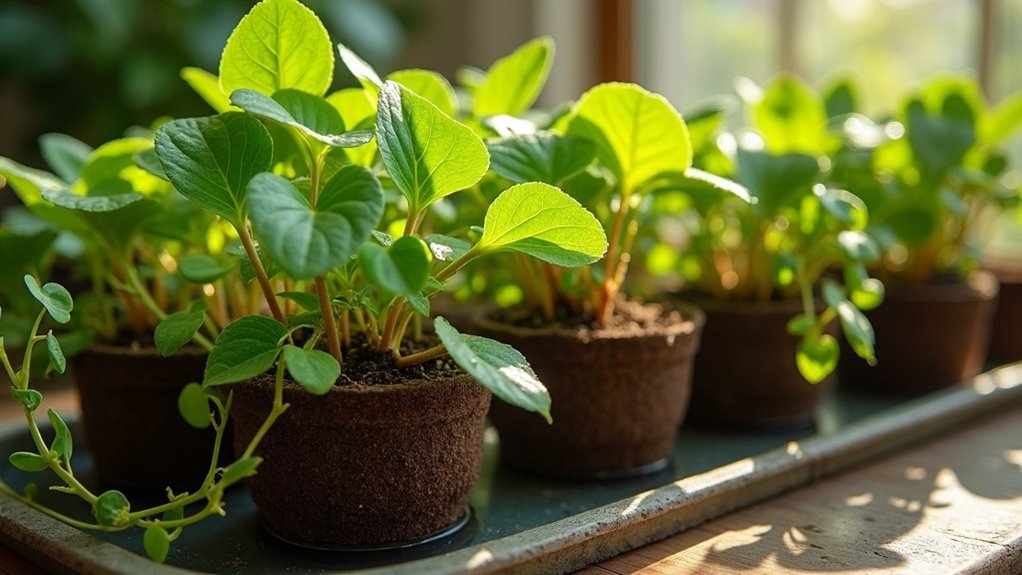
To bottom water your plants, start by filling a tray with ½ to ¾ inches of room-temperature water. Place the pot in the tray, ensuring the water’s below the rim. Let it soak for 15 to 30 minutes, checking soil moisture as it absorbs. After soaking, remove the pot and drain any excess water. This technique encourages strong roots and even moisture. Keep going to discover which plants thrive best with this method and more tips for success.
Key Takeaways
- Prepare a tray with ½ to ¾ inches of room-temperature water and place the potted plant in it.
- Soak the plant for 15 to 30 minutes, allowing it to absorb water through the drainage holes.
- Check soil moisture periodically to prevent over-soaking and root rot.
- Remove the plant and drain any excess water to protect the roots from standing water.
- Ensure the pot has drainage holes and occasionally top water to flush out excess salts.
Benefits of Bottom Watering
When you choose bottom watering for your plants, you’re not just providing hydration; you’re fostering healthier growth. This method encourages strong root systems by allowing roots to grow downward toward the water source.
It guarantees even moisture distribution, reducing the risk of overwatering and root rot. Plus, by preventing excess moisture on the soil surface, bottom watering deters pests like fungus gnats, which thrive in wet conditions.
Your plants can absorb water at their own pace, promoting better hydration management. Especially for sensitive plants like African violets, this technique minimizes leaf wetness, reducing the chance of disease and promoting vigor.
Step-by-Step Bottom Watering Process
To effectively bottom water your plants, start by preparing a tray or saucer with ½ to ¾ inches of room-temperature water.
Place your potted plant in the tray, ensuring the water level stays below the pot rim to prevent waterlogging.
Allow the plant to soak for about 15 to 30 minutes, checking periodically for soil moisture.
This bottom watering technique encourages the plant to absorb water through drainage holes, helping to flush out excess salts.
After soaking, remove the plant and drain any excess to avoid root rot.
Document your observations to refine your future watering techniques.
Plant Types That Thrive With Bottom Watering
Certain plant species thrive with bottom watering, making it a great technique for your indoor garden.
Tropical plants like ferns and peace lilies enjoy consistently moist soil, while sensitive species, such as African violets, benefit from reduced leaf exposure to water, minimizing fungal risks.
Ideal Plant Species
Many plant enthusiasts find that specific species thrive exceptionally well with bottom watering techniques.
Tropical plants like ferns and calatheas prefer consistently moist soil without the risk of wet leaves. Succulents also benefit from bottom watering, as it controls hydration and prevents waterlogged soil.
Houseplants with dense root systems, such as snake plants and pothos, enjoy this method, promoting strong downward root growth.
Additionally, African violets, which are sensitive to leaf moisture, thrive with bottom watering, reducing the risk of fungal diseases.
Even herbaceous perennials like hostas flourish, enjoying even moisture distribution and minimizing surface evaporation.
Sensitive Species Benefits
Bottom watering offers significant advantages for sensitive plant species that can easily suffer from excess moisture on their leaves.
Plants like African violets and peace lilies thrive with this technique, as it prevents overwatering and encourages proper moisture levels.
Ferns enjoy bottom watering since it maintains consistent humidity levels in the soil, essential for their growth.
Snake plants benefit, too, by allowing their roots to absorb only the moisture they need, avoiding waterlogged conditions.
Additionally, many hybrid orchids flourish through bottom watering, promoting healthy root growth while minimizing leaf exposure to water.
This method supports the well-being of sensitive plants effectively.
Common Mistakes to Avoid
When watering your plants, it’s essential to avoid over-soaking them, as this can lead to waterlogged soil and root rot.
Always check the soil moisture before watering; if the top inch feels dry, it’s time to water.
Neglecting these steps can harm your plants in the long run.
Over-soaking Plants
Over-soaking plants can easily lead to serious issues like root rot and fungal diseases if you’re not careful. To prevent these problems, limit soaking time to 15-30 minutes and check for waterlogged soil.
Excessive moisture can block oxygen from reaching the roots, harming your plants’ health. Regularly monitor the weight of the pot; if it feels excessively heavy, you may be over-soaking plants.
Additionally, guarantee that water levels in the tray stay below the rim of the pot to avoid excess absorption. By following these guidelines, you’ll keep your plants healthy and thriving.
Ignoring Soil Moisture
Many plant owners overlook the importance of checking soil moisture before watering, which can lead to significant problems like over-soaking.
Always assess the soil by inserting your finger about two inches deep; if it’s dry, it’s time to water my plants. If the soil is moist, bottom watering may not be necessary.
Pay attention to the pot’s weight; a lighter pot often means dry soil. Using a moisture meter can provide accurate readings, preventing root rot caused by letting plants sit in water too long.
Consistent monitoring guarantees your watering routine meets each plant’s specific needs.
Practical Tips for Successful Bottom Watering
To achieve successful bottom watering, it’s crucial to start with the right setup; ensuring your planter has drainage holes is a must.
Use a shallow dish to hold water, filling it halfway. Place the pot in the dish and let it soak for 15 to 30 minutes. Watch the water level and check the potting soil moisture before removing it.
Monitor the pot’s weight after watering to develop a consistent schedule. Avoid letting your plant sit in standing water, as this can harm strong roots.
Occasionally, top water to flush out soluble salts and promote ideal plant health.
How to Tell When Your Plants Need Water
How can you tell when your plants are thirsty? Start by checking the moisture level; insert your finger about two inches deep into the potting mix. If it feels dry, it’s time to water.
You can also weigh your pot; a lighter pot means it needs watering.
Weighing your pot can be a simple way to determine if your plants need watering; a lighter pot indicates thirst.
Observe your plants’ leaves—some, like peace lilies, droop when they’re thirsty.
Keep track of how long it’s been since the last watering, as regular routines help meet their water needs.
For precision, use a moisture meter to gauge the moisture level, ensuring effective bottom watering and healthy organic material.





