
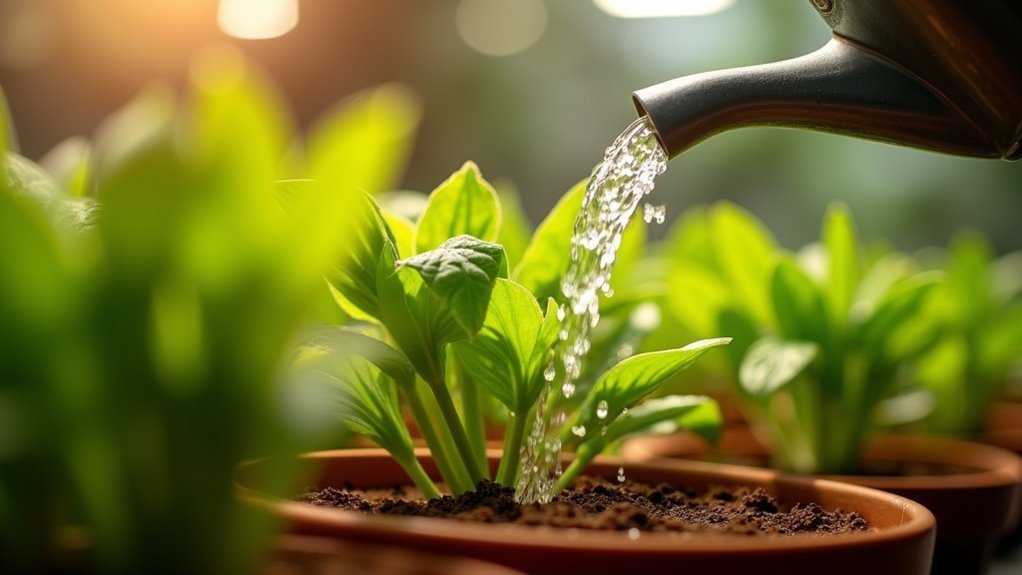
To water plants under grow lights, check soil moisture frequently as LED lights dry it out faster. Use the “Finger Test” or a moisture meter to determine when to water. Watering methods like top watering or bottom watering help maintain consistent moisture. Make sure you use filtered or rainwater, adjusting the pH to between 6.0-6.5 for ideal nutrient absorption. Monitor plant health for signs of stress, and adjust your watering frequency based on light intensity and season. More insights follow.
Key Takeaways
- Check soil moisture daily using the “Finger Test” or moisture meters due to faster drying under grow lights.
- Water more frequently, about every 3-5 days, especially during the growing season when light intensity is high.
- Use top watering to moisten soil directly while preventing water on leaves to minimize fungal risks.
- Consider bottom watering to encourage healthier root systems by allowing soil to absorb moisture from the bottom.
- Ensure water quality is optimal by using filtered or rainwater and maintaining pH levels between 6.0-6.5 for nutrient absorption.
Understanding Watering Needs Under LED Grow Lights
When you grow plants under LED grow lights, understanding their watering needs is essential for robust health and growth.
These lights emit less heat, causing soil to dry out faster and necessitating a more frequent watering schedule. Factors like plant type, growth stage, container size, temperature, and humidity influence your approach.
Regularly check soil moisture with the “Finger Test” or use moisture meters for precise readings. This helps you avoid underwatering or overwatering, both critical issues under artificial lighting.
Remember to adjust your watering schedule seasonally, especially in warmer months when light and growth rates increase.
Watering Methods for Optimal Growth
To achieve ideal growth for your plants under grow lights, selecting the right watering method is essential.
Top watering directly moistens the soil while avoiding leaves to minimize fungal risks. Alternatively, bottom watering allows the soil to absorb moisture, promoting healthier root systems.
Consider drip irrigation systems for consistent moisture delivery, maintaining peak soil moisture levels.
Regularly monitor soil moisture levels, as grow lights can dry soil faster. Adjust your watering frequency seasonally, increasing during warmer months and reducing in cooler months.
Using moisture meters guarantees your plants thrive by preventing both underwatering and overwatering.
Water Quality and Ph
Quality water is vital for the health of plants grown under grow lights. It’s essential to take into account both water quality and pH to guarantee your plants thrive.
Here are three key points to remember:
- Use filtered or rainwater: Tap water may contain chlorine and minerals that harm plant health.
- Maintain pH levels: Most houseplants prefer a slightly acidic pH of 6.0-6.5 for ideal nutrient absorption.
- Regular testing: Use pH meters or test strips to monitor water pH and make adjustments as needed for balanced nutrient delivery under grow lights.
Monitoring Plant Health
Monitoring your plants’ health is crucial, especially under grow lights where conditions can change rapidly.
Regularly check for distress signs like yellowing or wilting leaves; these indicate overwatering or underwatering, respectively. Use the Finger Test by inserting your finger into the soil—dry soil means it’s time to water, while wet soil suggests no need for moisture.
Consistently monitor soil moisture levels, as indoor plants under grow lights may need more frequent watering due to higher evaporation rates.
Keep an eye on new growth; robust growth indicates proper watering, while stunted growth may signal an imbalance needing attention.
Adjusting Watering Frequency Based on Light Intensity
As light intensity increases under grow lights, the need for adjusting your watering frequency becomes essential.
As light intensity rises with grow lights, adjusting your watering frequency becomes crucial for plant health.
Higher light levels can dry soil faster, impacting moisture levels. To maintain ideal soil moisture, consider these guidelines:
- Daily Checks: Monitor soil moisture daily, especially under high-output grow lights.
- Watering Schedule: Expect to water every 3-5 days during the growing season, adjusting as needed.
- Use a Moisture Meter: Employ a moisture meter for accurate readings and to prevent underwatering or overwatering.





