
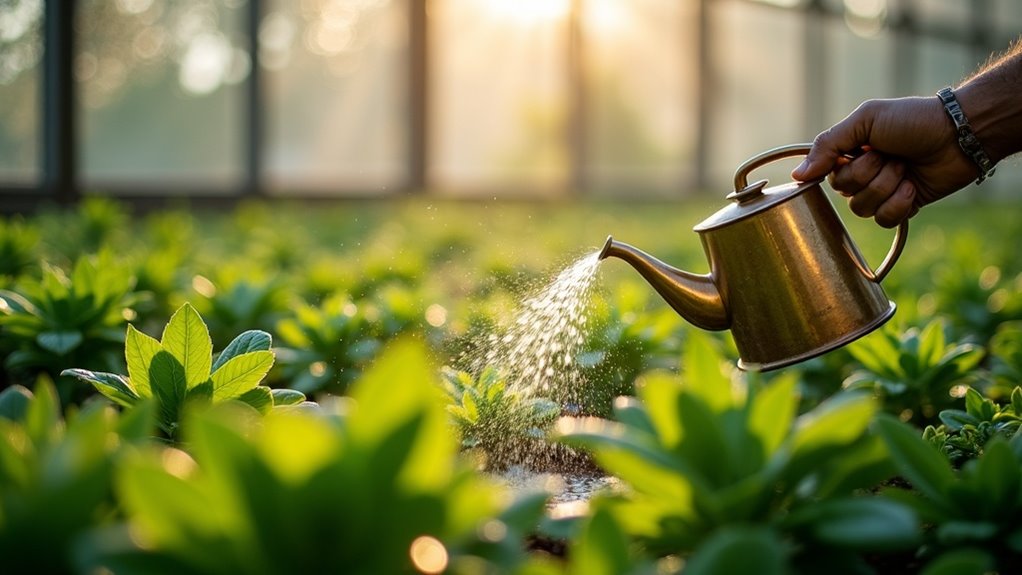
To water plants in greenhouses and manage humidity effectively, water early in the day using hand watering or drip irrigation for precise moisture control. Monitor soil moisture with tools like moisture meters and adjust your watering frequency based on seasonal needs. Maintain humidity levels at 80% during the day and 65-75% at night by ensuring proper airflow with fans and vents. Implementing these techniques can greatly reduce fungal disease risks while promoting healthy plant growth, and additional strategies will enhance your results.
Key Takeaways
- Water early in the day to reduce humidity and prevent fungal diseases like Botrytis and powdery mildew.
- Utilize hand watering or drip irrigation for precise moisture control and to minimize excess moisture accumulation.
- Regularly monitor soil moisture levels and adjust watering frequency based on seasonal needs and crop growth stages.
- Ensure proper air circulation and ventilation to reduce humidity levels after watering.
- Use soil amendments like peat moss to improve water retention and support healthy humidity management.
Understanding the Importance of Humidity Management
When you manage humidity in your greenhouse, you’re not just maintaining a comfortable environment; you’re actively preventing the onset of fungal diseases like Botrytis and powdery mildew.
Keeping humidity levels around 65-75% at night and 80% during the day is fundamental for healthy plant growth. Monitor moisture with hygrometers to guarantee you’re within this ideal range.
Implementing a robust ventilation system allows for the exchange of moist air with drier outside air, essential for disease prevention.
Additionally, early watering minimizes excessive moisture accumulation, further aiding in humidity management and supporting your plants’ overall health and importance.
Ideal Watering Techniques for Greenhouses
To optimize plant health in your greenhouse, focus on effective watering timing and methods.
Watering early in the day helps reduce humidity and prevents fungal diseases, while hand watering or drip irrigation allows for precise moisture control.
Regularly monitoring soil moisture levels guarantees your plants receive the right amount of water based on their seasonal needs.
Watering Timing Strategies
Understanding the best times to water your plants in a greenhouse is essential for their health and productivity.
Employ effective watering timing strategies by watering early in the day, allowing plants to absorb moisture before evening, which helps manage humidity and temperature.
Adjust your watering frequency based on the season; increase it during warmer months and reduce it in late fall and winter.
Use an irrigation system or hand watering to deliver water directly to the roots, ensuring efficient moisture use.
Monitor soil moisture with probes to determine the most effective watering times, catering to the specific needs of various crops for maximum growth.
Effective Watering Methods
Watering techniques play a significant role in maximizing plant health and productivity in greenhouses.
To implement effective watering methods, consider the following:
- Hand water with pond water for nutrient enrichment and precise control, minimizing excess humidity.
- Water early in the day to guarantee plant surfaces dry before evening, reducing fungal disease risks.
- Use drip irrigation systems for consistent soil moisture while lowering evaporation rates.
- Incorporate compost tea or banana water for hydration and nutrients without increasing humidity in a greenhouse.
These strategies help you maintain the temperature and humidity balance essential for thriving plants.
Monitoring Soil Moisture Levels
Monitoring soil moisture levels is essential for optimizing plant health in greenhouses. Use soil probes or moisture meters to assess moisture at various depths, ensuring accurate readings.
You can also perform a finger test; if the soil feels dry to your second knuckle, it’s time to water. Adjust your watering frequency based on the crop and season—more often in late spring and summer, less in late fall and winter.
Enhance water retention by incorporating compost and amendments like peat moss or coco coir. Regular monitoring, especially during critical growth stages, helps prevent pest issues and stress on your plants.
Timing Your Watering Schedule
When planning your watering schedule, timing plays a crucial role in promoting healthy plant growth and preventing disease. Here are key considerations:
- Water early in the day to allow surfaces to dry, minimizing humidity buildup.
- Increase watering frequency in late spring, summer, and early fall as plants need more moisture.
- Adjust watering for specific crops: legumes during flowering, tomatoes, and squash during fruiting.
- Monitor local weather to avoid watering before rain, preventing excess moisture in the air.
Tools for Measuring Soil Moisture
Effective management of soil moisture is essential for the health of your greenhouse plants, and using the right tools can make all the difference.
Soil probes allow you to assess moisture levels at various depths, indicating when to water. Moisture meters gauge the electrical conductivity of the soil; higher conductivity signals moisture presence, guiding your irrigation decisions.
Soil probes and moisture meters help determine watering needs by assessing moisture levels and conductivity for better irrigation decisions.
Finger tests offer a quick way to check for dryness by inserting your finger into the soil. Test moisture in multiple spots to account for variations.
Regular monitoring prevents overwatering or underwatering, promoting healthier plants and enhancing humidity management in your greenhouse.
Strategies to Reduce Excess Humidity
To effectively reduce excess humidity in your greenhouse, focus on proper watering techniques, effective ventilation practices, and soil drainage solutions.
Water your plants early in the day and utilize drip irrigation to minimize moisture accumulation.
Additionally, guarantee proper air circulation by using fans and opening vents, which enhances evaporation and keeps humidity levels in check.
Proper Watering Techniques
While maintaining ideal humidity levels in a greenhouse is essential for plant health, employing proper watering techniques can considerably mitigate excess moisture.
Here are some effective strategies to manage high humidity and reduce humidity levels:
- Water early in the day to allow plant surfaces to dry before evening.
- Guarantee adequate plant spacing for improved airflow and moisture evaporation.
- Use well-drained floors to prevent puddling, reducing evaporation and condensation.
- Adjust watering frequency seasonally, watering less in late fall and winter.
Effective Ventilation Practices
How can you guarantee your greenhouse remains a thriving environment for your plants?
Effective ventilation is key for greenhouse growers, as it allows moist air to escape and drier air to enter, maintaining humidity levels between 50% and 80%.
Utilize roll-up doors and windows during midday to enhance moisture discharge and prevent humidity buildup.
Combining ventilation with heating optimizes temperature and humidity control while preventing chilling.
Implement small fans for continuous air movement, minimizing condensation on leaves and reducing pathogen risks.
Regularly monitor humidity with hygrometers to make timely adjustments, ensuring a healthy growing environment for your plants.
Soil and Drainage Solutions
Ventilation alone won’t solve all humidity issues in a greenhouse; managing soil and drainage is equally important for creating a thriving environment.
Here are four strategies to effectively reduce excess humidity:
- Implement well-drained floors using gravel or concrete to prevent puddling.
- Incorporate soil amendments like compost and worm castings to enhance soil structure and manage moisture.
- Utilize raised beds to improve drainage and minimize waterlogging.
- Maintain proper spacing between plants for better air circulation and evaporation.
Regular soil testing for moisture levels helps prevent overwatering, ensuring your greenhouse remains a healthy environment for plants.
Cultural Practices for Healthy Soil
To achieve healthy soil in your greenhouse, it’s vital to recognize the pivotal role that living organisms play in nutrient availability and soil structure.
Amending your soil with organic materials like compost and mycorrhiza enhances moisture retention and provides essential nutrients.
Make sure you regularly test your soil’s moisture retention ability; this helps identify when amendments are necessary to combat hydrophobic conditions.
Incorporating peat moss and coco coir can greatly improve water retention, supporting better moisture management.
These practices not only promote healthy soil but also reduce humidity levels, creating an ideal environment for your plants’ growth.
The Role of Air Movement in Humidity Control
Maintaining healthy soil is just one aspect of creating an ideal greenhouse environment; effective air movement plays a significant role in controlling humidity levels.
Proper air flow is essential for reducing humidity inside your greenhouse. Here are key benefits of air movement:
- Promotes evaporation from plant surfaces, minimizing fungal diseases.
- Prevents localized humidity pockets, ensuring uniform moisture distribution.
- Facilitates continuous air circulation with fans, optimizing relative humidity.
- Enhances efficiency by combining heating and ventilation strategies.
Best Practices for Monitoring Humidity Levels
How can you guarantee ideal humidity levels in your greenhouse? Start by using a sling psychrometer to measure both wet-bulb and dry-bulb temperatures. Regular checks with hygrometers should aim for about 80% humidity during the day and 65-75% at night. Monitor fluctuations multiple times per hour, especially at night. Implement recording hydrothermographs for continuous data, enabling precise adjustments. Additionally, use moisture meters to assess soil moisture, ensuring balanced levels that contribute to overall humidity management.
| Tool | Purpose |
|---|---|
| Sling Psychrometer | Measure humidity accurately |
| Hygrometers | Regular humidity level checks |
| Moisture Meters | Assess soil moisture for balance |





