
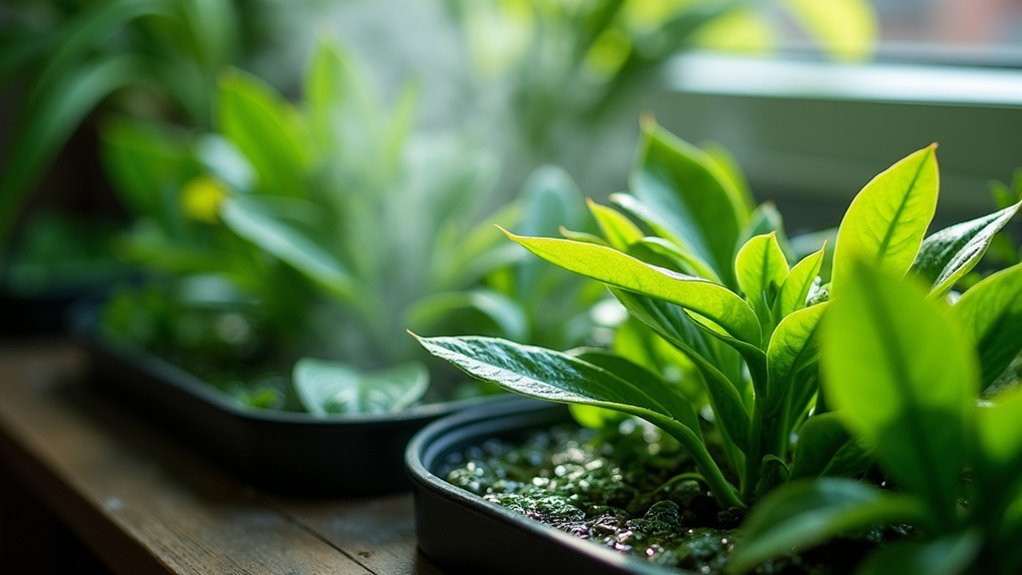
To water plants using humidity trays, start by filling a water-tight tray with pebbles and add water just below the top of the pebbles. Place your plant pot on the pebbles, ensuring the drainage hole stays above the waterline to prevent root rot. Check the water level regularly and refill as needed, especially during hot weather. This method boosts humidity, benefiting tropical plants that thrive in moisture. Keep going to discover more tips for plant care!
Key Takeaways
- Place the plant pot above the waterline in a pebble tray to allow for proper drainage and prevent root rot.
- Fill the pebble tray with water, ensuring it doesn’t touch the plant pot to maintain humidity levels.
- Regularly check and refill the water in the tray to keep humidity consistent, especially in hot weather.
- Monitor the plant for signs of low humidity, such as browning tips or curled leaves, to adjust water levels as needed.
- Clean the tray periodically to prevent algae buildup and ensure optimal humidity for your plants.
What Is a Pebble Tray for Plants?
A pebble tray is a simple yet effective tool for boosting humidity around your houseplants. To create one, fill a water-tight tray with an even layer of pebbles and add water, ensuring the plant pot sits above the waterline.
As the water evaporates, it releases moisture to the air, increasing the humidity level around your plants. This method is particularly beneficial for humidity-loving varieties, like monstera and orchids.
Remember to regularly check and refill the water, especially during hot weather when evaporation rates rise. Just avoid using pebble trays for succulents, as they thrive in drier conditions.
Types of Plants That Benefit From a Pebble Tray
Humidity-loving plants thrive in environments that mimic their tropical origins, making pebble trays an excellent addition to your plant care routine.
Monstera, philodendron, and orchids flourish with increased moisture, so placing them on a pebble tray can enhance their health. If you notice browning leaf tips, crispy edges, or wilted foliage, your plants might be suffering from low humidity.
Tropical plants generally prefer humidity levels between 50% and 80%, and a pebble tray can help maintain these conditions. However, avoid using pebble trays for succulents, which thrive in drier environments and may suffer from excess moisture.
Instructions for Making a Pebble Tray
Creating a pebble tray is a straightforward process that can greatly enhance the humidity around your plants. Here’s how to make one:
| Step | Action | Purpose |
|---|---|---|
| Select a tray | Choose a water-tight tray larger than the pot | Accommodate the pot |
| Add pebbles | Fill with pebbles, leaving space | Elevate the pot above water |
| Pour water | Add water above the pebbles | Maintain humidity levels |
| Check regularly | Monitor and refill the water level | Guarantee consistent humidity |
This simple setup will effectively add humidity, promoting healthy plant growth.
Maintaining the Pebble Tray
To maintain an effective pebble tray, you’ll need to regularly monitor the water level, especially during hot weather.
Refill the tray with water at least once a week, or more often in summer, to guarantee it continues to increase humidity.
Make sure the drainage hole of your plant pot stays above the dry pebbles; this prevents root rot from excess moisture.
Ensure your plant pot’s drainage hole remains above the dry pebbles to avoid root rot from excess moisture.
Periodically clean the pebble tray to avoid algae growth, adjusting the water level without submerging the pebbles to secure proper drainage.
Consistent maintenance keeps your plants thriving and benefits from the humidity you’ve created.
Other Ways to Add Humidity
While maintaining a pebble tray is an effective method for increasing humidity, there are several other strategies you can employ to create a more humid environment for your plants.
Misting your plants can introduce water vapor, but be careful not to soak the leaves to prevent mold.
Grouping plants together fosters a microclimate, enhancing moisture through shared transpiration.
Consider placing plants in naturally humid areas, like bathrooms, to take advantage of steam.
Finally, using a humidifier benefits both your plants and indoor air quality.
These tips for creating humidity will help keep your plants thriving year-round.
Signs Your Plants Need More Humidity
If you notice your plants showing signs of distress, it’s essential to assess their humidity levels.
Look out for browning leaf tips and crispy edges, which indicate they’re struggling with dry air. Wilted foliage and curled leaves also suggest your plants need more moisture.
Browning leaf tips and curled foliage are signs your plants are craving more moisture in dry air.
Tropical plants, in particular, thrive at humidity levels around 80%, so low readings can hinder their growth. Additionally, flowers may prematurely dry up or fail to bloom, signaling a lack of humidity.
Using a hygrometer can help you monitor these levels, ensuring that your green friends receive the ideal environment they need to flourish.
Benefits of Using Pebble Trays for Plant Health
Using pebble trays can greatly enhance humidity levels around your plants, making them thrive, especially if you have humidity-loving varieties.
This added moisture not only promotes healthier growth but also helps prevent stress symptoms like browning leaf tips and wilting.
Enhanced Humidity Levels
Creating a localized humid environment for your plants is essential, especially for humidity-loving species like monstera and orchids.
Pebble trays help achieve this by allowing water to evaporate from the pebbles, increasing humidity levels around your plants by up to 10-20%. This is particularly beneficial in drier indoor conditions, alleviating issues like browning leaf tips and wilting foliage.
Plus, pebble trays are a cost-effective alternative to humidifiers, requiring no electricity or complex setups.
Just make sure your plant pot doesn’t touch the water in the tray to avoid root rot while enjoying the enhanced humidity for healthier plants.
Improved Plant Growth
While many factors contribute to plant health, incorporating pebble trays into your routine can lead to noticeable improvements in growth. These trays create a humid environment that’s perfect for humidity-loving plants like monstera and orchids. As the water evaporates, it boosts moisture levels, reducing stress and promoting improved growth. Plus, it’s a cost-effective alternative to humidifiers, ensuring consistent humidity without overwatering risks.
| Benefit | Description | Impact on Plants |
|---|---|---|
| Enhanced Humidity | Increases moisture around plants | Healthier, vibrant growth |
| Stress Reduction | Minimizes effects of dry conditions | Better flowering results |
| Disease Prevention | Lowers risk of humidity-related diseases | Ideal plant health |
Prevention of Stress Symptoms
When you incorporate pebble trays into your plant care routine, you can effectively prevent stress symptoms that often plague indoor greenery.
These trays create a microclimate that boosts humidity, which is crucial for plant health.
Here are some benefits:
- Reduces browning leaf tips and crispy edges
- Alleviates wilting foliage and curled leaves
- Enhances growth and flowering potential in tropical plants
- Minimizes the risk of diseases like root rot





