
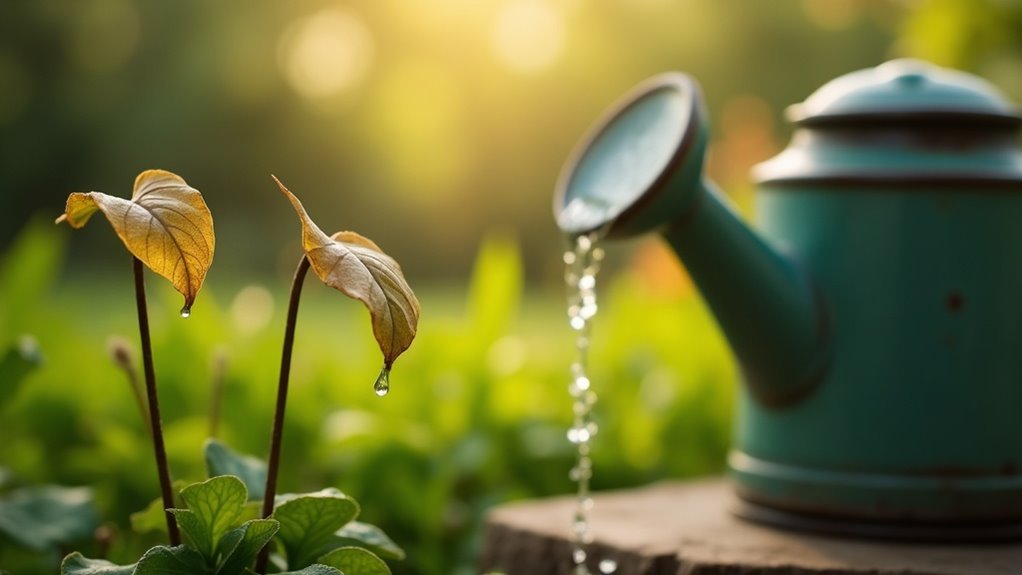
When your plants’ leaves droop from thirst, check the top inch of soil for dryness. If it’s dry, water your plants thoroughly until you see moisture draining from the bottom. Use room temperature water for even absorption. Make sure your pots have good drainage to avoid waterlogging. Keep an eye on environmental factors like heat and sunlight, as they can increase water loss. Want to know more tips for keeping your plants healthy?
Key Takeaways
- Check the top inch of soil for dryness to determine if watering is needed.
- Use the finger method to assess moisture by inserting your finger up to the second knuckle.
- Lift the pot; a lightweight pot indicates that the plant requires water.
- Water when the top inch of soil feels dry, ensuring even moisture distribution.
- Monitor environmental factors like heat and sunlight that can increase water loss in plants.
Understanding the Causes of Drooping Leaves
When you notice drooping leaves on your plants, it often means they’re struggling to maintain hydration, as water loss is outpacing water uptake.
This can be particularly concerning for plants with large, thin leaves, which are less effective at conserving moisture. High temperatures can exacerbate this issue by increasing evapotranspiration rates, leading to wilting even when soil moisture seems adequate.
It’s important to assess your plants’ root systems before deciding it’s time to water. Chronic wilting can result in irreversible damage, so addressing drooping leaves promptly is necessary for maintaining plant health and vigor.
Assessing Soil Moisture Levels
How can you guarantee your plants get the right amount of water? For house plant lovers, evaluating soil moisture is essential.
Start by checking the top inch of soil; if it’s dry, it’s time to water. Use the finger method—insert your finger up to the second knuckle to feel for moisture. Alternatively, lift the pot; a lightweight pot indicates it needs water.
For a more precise reading, consider investing in a soil moisture probe. Remember, wilting leaves mightn’t always mean thirst; check the soil first to avoid confusion with issues like root rot.
Techniques for Effective Watering
To water your plants effectively, you need to find the right balance between frequency and moisture assessment.
Start by checking the soil moisture using your finger or the lift pot method to determine when to water.
Optimal Watering Frequency
Understanding ideal watering frequency is essential for keeping your plants healthy and thriving. To determine how often to water, follow these guidelines:
- Check the top inch of soil; water when it feels dry to the touch.
- Use the lift pot method; a light pot indicates your plant needs watering.
- Reduce watering during winter, as plants require less moisture in their dormant phase.
Remember to use room temperature water and water until it drains from the bottom for even moisture distribution.
Monitoring these factors will help you establish a consistent and effective watering routine.
Soil Moisture Assessment Techniques
Effective soil moisture assessment is essential for ensuring your plants receive the right amount of water.
Start with the finger method: insert your finger up to the second knuckle; if it feels dry, it’s time to water.
Alternatively, use the lift pot method—lifting the pot lets you gauge its weight; a light pot usually means the soil is dry.
For precise readings, consider soil moisture probes that measure moisture levels throughout the soil profile.
Remember, checking topsoil alone isn’t enough; moisture may settle deeper.
Regularly monitor your plants’ response to watering to adjust frequency and promote healthy roots.
Signs of Overwatering and Underwatering
While caring for your plants, it’s important to recognize the signs of overwatering and underwatering, as both can severely impact their health.
Here are key indicators to watch for:
- Overwatering: Yellowing leaves, root rot, and persistent sogginess in the soil signal excess moisture, risking root suffocation.
- Underwatering: Crispy leaf edges, curled leaves, and dry, cracked soil indicate your plant is thirsty and struggling to conserve moisture.
- Leaf Behavior: Dropping or curling leaves can point to either issue, making regular soil moisture monitoring vital for your plants’ well-being.
The Importance of Proper Container Size
Choosing the right container size for your plants plays an important role in their overall health and growth. A larger pot allows roots to expand, improving moisture retention and overall vigor.
If your container is too small, it restricts root development, making it hard for plants to absorb water, which leads to drooping leaves. Strong root systems thrive when they can access both moisture and air, so aim for a pot that facilitates this wet/dry cycle.
Don’t forget to confirm adequate drainage holes; preventing waterlogged conditions is crucial for keeping roots healthy and avoiding wilting during dry spells.
Environmental Factors Affecting Plant Health
Understanding the environmental factors that affect plant health is essential for maintaining vibrant and thriving greenery. Here are three key factors to evaluate:
Evaluating environmental factors is crucial for ensuring the health and vitality of your plants.
- Temperature: High temperatures increase evapotranspiration, leading to rapid water loss and droopy leaves.
- Leaf Structure: Plants with large, thin leaves struggle to conserve water, making them more prone to wilting in heat.
- Sunlight Exposure: Direct sunlight can exacerbate water loss, causing plants to drop leaves or adjust their positioning.
Regularly monitor soil moisture levels, especially during heat spells, to prevent chronic stress and irreversible damage to your plants.
Tips for Promoting Strong Root Development
To promote strong root development, it’s essential to let the soil dry out completely between waterings, as this encourages roots to dig deeper in search of moisture.
Using larger containers can also aid growth by preventing root crowding. Implementing wet/dry cycles helps roots thrive, so don’t be afraid to let the soil dry occasionally.
Make sure your pots have adequate drainage holes to prevent root rot, which weakens the structure. Regularly check soil moisture with the lift pot technique or finger testing to maintain ideal conditions.
These practices will help you cultivate a robust and healthy root system for your plants.





