
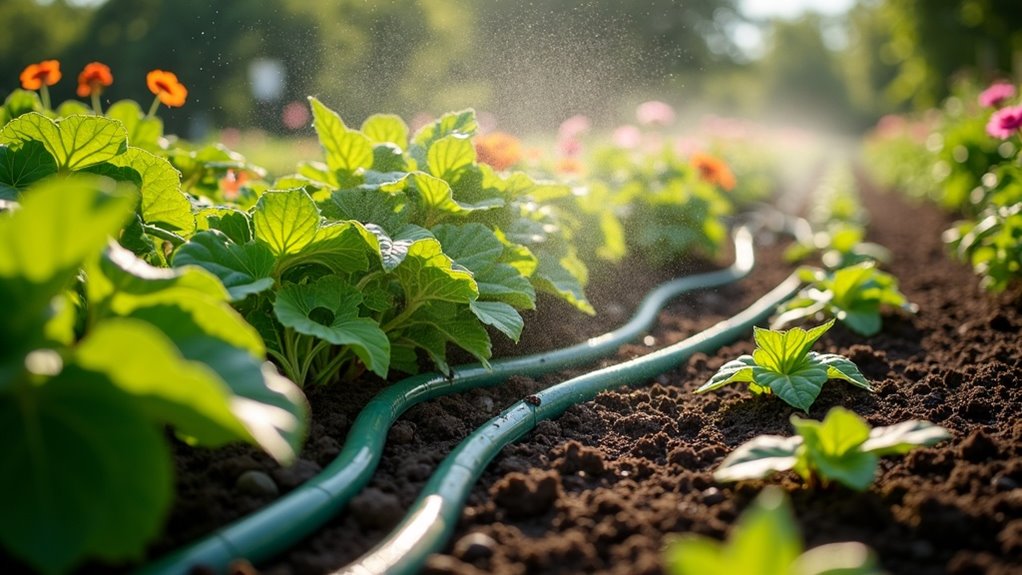
To water plants using soaker hoses for even coverage, lay hoses 2 inches from plant stems, spacing them 1 foot apart in sandy soil or 2 feet in clay. Secure hoses with garden pegs and cover them with 2-3 inches of mulch to retain moisture. Manage water pressure by limiting hose length to 150 feet and using a pressure reducer. Water two to three times a week, adjusting for soil type and rainfall. Discover more tips for ideal soaker hose use.
Key Takeaways
- Lay soaker hoses 2 inches from plant stems and ensure they are spaced 1 foot apart in sandy soil or 2 feet apart in clay.
- Cover hoses with 2-3 inches of mulch to reduce evaporation and maintain consistent moisture levels around plants.
- Secure hoses with garden pegs and trim excess length to ensure proper placement and water coverage.
- Limit the hose length to 150 feet from a single water source to maintain optimal water pressure for even distribution.
- Water early morning or late evening for effective moisture retention and adjust duration based on soil type and rainfall.
Understanding Soaker Hoses and Their Benefits
When you want to efficiently water your garden, understanding soaker hoses and their benefits is essential.
Soaker hoses are porous tubes that seep water along their length, ensuring effective water distribution directly to the soil. This method minimizes water waste, as it reduces evaporation and runoff, allowing you to use 30-50% less water compared to traditional methods.
Operating effectively at lower water pressures, they provide a slow, steady drip that targets plant roots. By preventing water from splashing on leaves, soaker hoses also lower the risk of fungal diseases, promoting healthier plants and higher yields in your garden.
Installation Guidelines for Soaker Hoses
When installing soaker hoses, you’ll want to take into account various hose layout patterns and guarantee proper spacing for ideal plant coverage.
Secure the hoses in place using garden pegs, and trim any excess length to enhance the system’s efficiency.
Following these installation guidelines will help you achieve effective watering while maintaining consistent water pressure.
Hose Layout Patterns
Successful installation of soaker hoses requires careful consideration of hose layout patterns to guarantee effective watering. You can lay hoses in straight lines for linear plantings or use a wavy design for irregular beds. Keep a maximum distance of 40 cm (16 inches) between hoses and plant stems to water evenly throughout.
| Soil Type | Hose Spacing |
|---|---|
| Sandy | 1 foot apart |
| Clay | 2 feet apart |
| Newly Planted | 12-18 inches apart |
| Regular Beds | Straight lines |
| Irregular Beds | Wavy design |
Secure hoses with garden pins and cover with mulch to maintain moisture.
Proper Spacing Guidelines
After determining the ideal hose layout patterns, it’s important to focus on proper spacing guidelines for effective installation of soaker hoses.
Maintain a maximum distance of 40cm (16 inches) between the hoses and established plant stems to guarantee superior water coverage.
For sandy soil, space hoses about 1 foot apart; in clay or loamy soil, increase the spacing to 2 feet.
When planting new plants, position hoses 12-18 inches apart to cater to shorter root systems.
For plants needing extra moisture, create loops around them and secure hoses with garden pins, covering them with 2-3 inches of mulch to enhance moisture retention.
Secure Installation Techniques
Securing your soaker hoses properly is essential for effective watering and ideal plant health.
Lay out your soaker hose in desired patterns, keeping it about 2 inches from plant stems for maximum coverage. Use garden pegs to secure the hoses in place, and cover them with 2-3 inches of mulch to reduce evaporation and maintain moisture.
Trim any excess hose length to fit your garden layout, ensuring water flow isn’t compromised. Connect hoses with appropriate adapters to maintain consistent pressure and prevent leaks.
Finally, unwind and warm hoses in the sun before installation to avoid kinks that impede water flow.
Proper Placement of Soaker Hoses in the Garden
To guarantee your plants receive adequate moisture, it’s crucial to place soaker hoses correctly within your garden.
Position your hoses about 2 inches from established plant stems and closer for new plants to guarantee effective moisture delivery.
Space hoses 1 foot apart in sandy soil and 2 feet apart in clay or loamy soil to optimize water flow.
Lay hoses straight for linear plantings or snake them around irregular beds for maximum coverage.
Make additional loops around thirsty plants, and secure hoses with garden pins.
Finally, cover them with 2-3 inches of mulch to reduce evaporation and maintain consistent soil moisture levels.
Managing Water Pressure for Optimal Performance
Since managing water pressure is key to the effective use of soaker hoses, it’s essential to keep it low to avoid damaging the hoses and guarantee even moisture distribution.
For ideal performance, consider these tips:
- Limit your soaker hose length to 150 feet from a single water source to maintain water pressure.
- Install a pressure reducer at the water source for a slow, steady drip instead of a spray.
- If using multiple hoses, only one restrictor disk should be at the water source, removing others to control pressure throughout the system.
Regularly monitor and adjust water pressure for consistent delivery.
Timing and Frequency of Watering With Soaker Hoses
To effectively water your plants with soaker hoses, you’ll need to take into account both the ideal duration and frequency of watering.
Typically, a five-eighths-inch hose takes about 200 minutes to deliver one inch of water, so plan your sessions accordingly.
Aim to water your garden two to three times weekly, adjusting for soil type and recent rainfall to guarantee proper hydration without overwatering.
Optimal Watering Duration
How often should you water your garden with soaker hoses for best results? To achieve ideal watering duration, consider the following:
- A five-eighths-inch soaker hose needs about 200 minutes to deliver one inch of water to the soil.
- Most gardens thrive on two inches of water weekly, equating to roughly 400 minutes of soaker hose watering.
- Adjust watering duration based on soil type: sandy soils require more frequent, shorter sessions, while clay soils benefit from longer intervals.
Always monitor local weather conditions and plant needs to guarantee effective moisture distribution throughout your garden.
Weekly Watering Frequency
Maintaining the right weekly watering frequency with soaker hoses is essential for promoting healthy plant growth. Most yards need about two inches of water weekly, and soaker hoses can deliver this effectively. Adjust your watering based on soil type and temperature, regularly monitoring soil moisture levels to prevent either under or overwatering. Ideally, water in the early morning or late evening to reduce evaporation loss.
| Soil Type | Watering Duration (minutes) |
|---|---|
| Sandy | 120 |
| Loamy | 180 |
| Clay | 240 |
| Mixed | 200 |
Maintaining and Troubleshooting Your Soaker Hose System
While using a soaker hose system can simplify your watering routine, regular maintenance is essential to confirm peak performance.
Follow these steps to guarantee ideal water flow and soil moisture levels:
- Check for clogs: Regularly inspect your soaker hose for blockages that can disrupt water distribution.
- Adjust water pressure: Verify the pressure isn’t too high or low, as this affects soaking efficiency.
- Monitor soil moisture: Use a trowel to gauge soil dampness, adjusting soaking durations based on your findings.





