
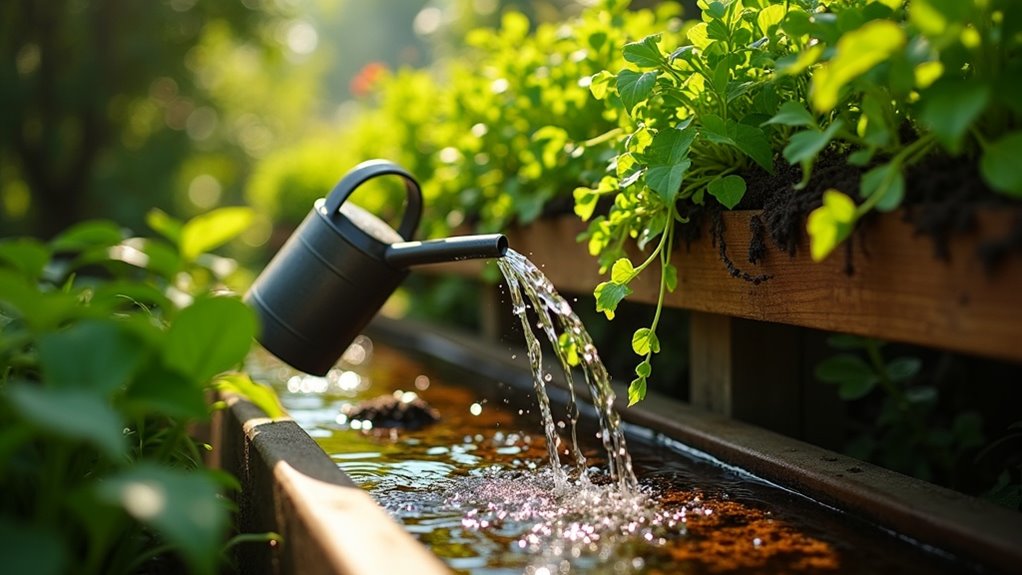
To water plants in vertical gardens without runoff, use a well-designed drip irrigation system that delivers water directly to each plant’s base. Incorporate grey disks to regulate flow and enhance capillary action for efficient absorption. Ascertain proper drainage with angled trays and slot drain systems to prevent clogging and excess water accumulation. Regularly monitor soil moisture levels with meters to adjust your schedule based on plant needs. By focusing on these techniques, you can optimize your vertical garden’s health and efficiency.
Key Takeaways
- Utilize a drip irrigation system to deliver water directly to plant bases, minimizing runoff.
- Implement grey disks to control water flow and enhance absorption through capillary action.
- Design an angled tray and gutter system to guide excess water runoff effectively.
- Regularly monitor soil moisture levels to adjust watering frequency and avoid overwatering.
- Schedule watering during cooler times to reduce evaporation and runoff.
Understanding Vertical Garden Watering Needs
When considering how to effectively water your vertical garden, it’s crucial to understand the unique watering needs these structures present.
A well-designed watering system, featuring a center funnel, guarantees even distribution across all tiers. This minimizes runoff and promotes healthy absorption.
To keep the soil moist, you should monitor moisture levels frequently, adjusting your watering frequency based on plant type and environmental conditions.
Implementing grey disks helps control the flow, allowing for a steady drip that enhances absorption through capillary action.
This approach not only optimizes water usage but also keeps your vertical garden thriving without excess runoff.
The Importance of Proper Drainage
Proper drainage is essential for maintaining the health of your vertical garden, as it prevents root rot caused by excess water accumulation.
Effective drainage techniques, like using grow mats and perforated trays, guarantee your plants thrive. Implementing angled trays and gutters guides water runoff, promoting even nutrient distribution and preventing waterlogging.
Additionally, slot drain systems minimize clogging from plant matter, enhancing drainage efficiency and reducing contamination risks.
Regularly monitoring and cleaning your irrigation system can prevent standing water accumulation, which attracts pests and diseases.
Choosing the Right Watering System
After establishing effective drainage strategies, selecting the right watering system becomes a key factor in nurturing your vertical garden.
Opt for drip irrigation systems, as they deliver water directly to the base of each plant, minimizing runoff and ensuring efficient water usage. Incorporate grey disks to control water flow, maintaining consistent moisture without oversaturating top tiers.
A reservoir system can help evenly distribute water across all levels, ensuring adequate hydration. Additionally, consider a slot drain system to prevent clogs and facilitate proper drainage.
Finally, establish a watering schedule that meets your plants’ specific needs, balancing the amount of water to avoid stress.
Implementing Drip Irrigation Techniques
Implementing drip irrigation techniques effectively targets the roots of plants in vertical gardens, guaranteeing they receive the precise amount of water needed for ideal growth. Using button drippers with good water pressure helps prevent over-saturation and runoff. Arrange tubing both vertically and horizontally to achieve uniform water distribution. Here’s a quick overview:
| Component | Importance |
|---|---|
| Button Drippers | Control water release |
| Tubing Layout | Guarantees even distribution |
| Timer | Automates watering schedule |
| Regular Maintenance | Prevents clogs and optimizes health |
| Monitoring | Always need to watch for efficiency |
This system maximizes efficiency and minimizes waste.
Utilizing Capillary Action Materials
While many traditional watering methods can lead to runoff and uneven moisture distribution, utilizing capillary action materials offers a more efficient solution for vertical gardens.
These materials, like capillary mats and wicking fabrics, draw moisture from a reservoir or lower soil layers, ensuring that plant roots receive adequate water without surface over-saturation.
By maintaining consistent moisture levels, you can reduce the frequency of watering, using less water overall.
Properly designed capillary action setups guarantee that all plants, regardless of their vertical position, enjoy equal access to water, minimizing waste and preventing runoff effectively.
Monitoring Soil Moisture Levels
How can you guarantee your vertical garden plants receive the right amount of water? Start by monitoring soil moisture levels regularly with a moisture meter. This guarantees your plants get consistent hydration without the risk of runoff.
During germination, keep soil damp, while established plants can tolerate slight drying to avoid saturating upper tiers. Daily visual inspections help identify when the top layer dries, indicating the need to water.
Adjust watering frequency based on seasonal changes and growth stages, especially for summer crops, which may need more frequent checks, guaranteeing you deliver water effectively to the root zone.
Troubleshooting Common Watering Issues
When watering your vertical garden, it’s important to recognize and address common issues that can hinder plant health.
Here are four key troubleshooting tips:
- Regularly check grey disks for clogs; blockages can disrupt your drainage system.
- Monitor the fullness of grey disks to avoid overflows indicating a need for better watering technique.
- Maintain a consistent watering schedule to prevent over-saturation and runoff.
- Confirm the center hole in the top reservoir is unobstructed to allow even water distribution, reducing the risk of standing water and unwanted insects.





