
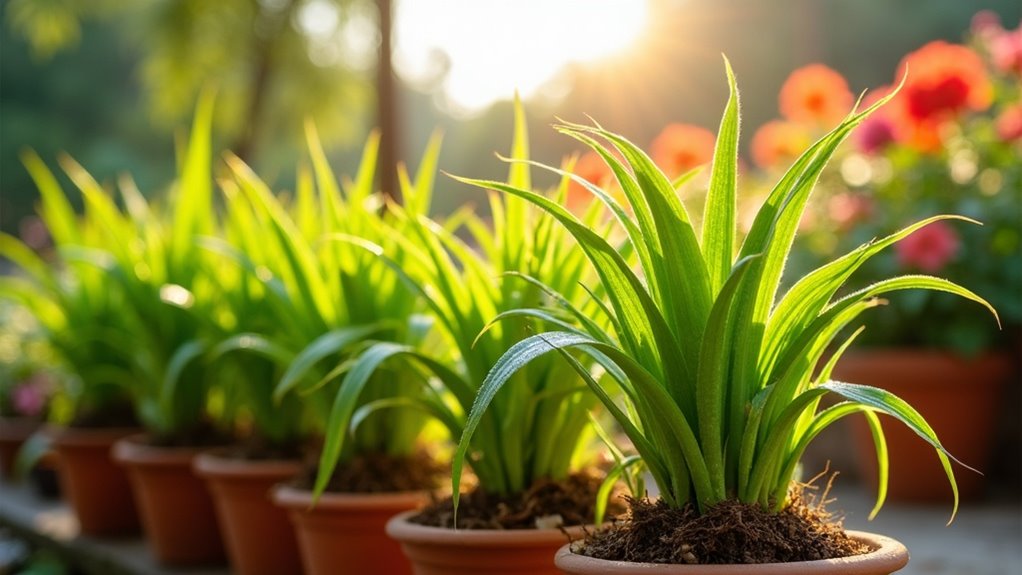
Yes, spider plants can thrive outside in warm climates as long as the temperature stays between 60°F and 80°F. Start by moving them outdoors gradually, offering partial shade to protect against leaf burn. Make certain the soil is well-draining and water every 2-3 days to keep it moist, but not soggy. Watch for common issues like root rot and pests. For more detailed care tips and seasonal guidance, find out how to keep your plants happy all year round.
Key Takeaways
- Spider plants can thrive outdoors in warm climates when temperatures exceed 60°F (15°C).
- They prefer partial shade and should be protected from direct sunlight to prevent leaf burn.
- During summer, maintain temperatures between 60°F and 80°F for optimal growth.
- Water every 2-3 days, ensuring the soil remains moist but not soggy to avoid root rot.
- Regularly check for pests and transition plants indoors before temperatures drop below 60°F (15°C).
When To Put Spider Plant Outside
When you’re ready to move your spider plant outside, wait until temperatures consistently exceed 60°F (15°C) to secure ideal growth.
Start by gradually acclimatizing your plant to the outdoor environment; initially, expose it for a couple of hours each day. This helps prevent shock.
Once acclimatized, you can place it in partial shade, where it thrives in filtered sunlight.
Monitor temperatures closely and be prepared to bring your spider plant indoors if they drop below 60°F (15°C) to avoid stunted growth or damage.
Direct sunlight can cause leaf burn, so make certain it’s protected from harsh rays.
Best Outdoor Conditions for Spider Plants in Summer
To guarantee your spider plants flourish during the summer, aim for outdoor conditions that mimic their natural habitat.
Keep spider plants in temperatures between 60°F and 80°F, providing shade during heat waves to prevent stress. They thrive in partial shade or filtered sunlight, as full sun can cause leaf burn.
Keep spider plants in temperatures of 60°F to 80°F, offering shade during heat waves to prevent stress and avoid leaf burn.
Water every 2-3 days, ensuring the soil remains moist but not soggy while using well-draining soil to prevent root rot.
Maintain humidity by misting leaves and grouping plants together.
Consider using pots with drainage holes or hanging baskets to enhance growth and prevent overwatering when growing spider plants outdoors.
Common Outdoor Problems and How to Fix Them
Even in ideal outdoor conditions, spider plants can encounter various problems that affect their health and growth.
Leaf burn, marked by brown tips, occurs from too much sun; moving your plant to partial shade can help.
Overwatering leads to root rot, characterized by yellow leaves; make sure well-draining soil and monitor moisture levels.
Pest issues, like aphids and spider mites, show up as sticky leaves; treat them with insecticidal soap.
Finally, heat stress causes drooping leaves; increase watering and provide shade.
Regular monitoring for stress and pests is vital to keep your spider plant thriving outdoors.
When to Bring Spider Plants Back Indoors
How can you guarantee your spider plants thrive indoors after a summer spent outside? Bring your spider plants back indoors before temperatures drop below 60°F (15°C) to prevent stunted growth. Weeks prior, inspect the plants for pests and diseases. As you prepare to move them inside, gradually reduce outdoor watering to help them acclimate to indoor conditions. Once inside, place them in bright, indirect light while avoiding direct sunlight. Finally, monitor indoor conditions regularly to ascertain humidity and temperature remain consistent.
| Action | Timing |
|---|---|
| Inspect the plants | 2 weeks before moving |
| Reduce outdoor watering | Gradually, 1 week prior |
| Move indoors | Before temperatures drop |
| Monitor indoor conditions | Weekly after moving |
Final Thoughts
While spider plants flourish in warm climates, their successful shift between outdoor and indoor environments requires careful attention to detail.
These plants are well suited for USDA zones 9 to 11 but can’t handle direct sunlight for long periods. Instead, they thrive in partial shade.
Keep their potting soil moist—not waterlogged—to avoid dry soil and root rot. Regularly check for pests like aphids and spider mites.
When the season changes, it’s essential to move the plant indoors before temperatures drop.
With proper care, you’ll enjoy their lush foliage and star-shaped flowers in hanging baskets throughout the year.





