
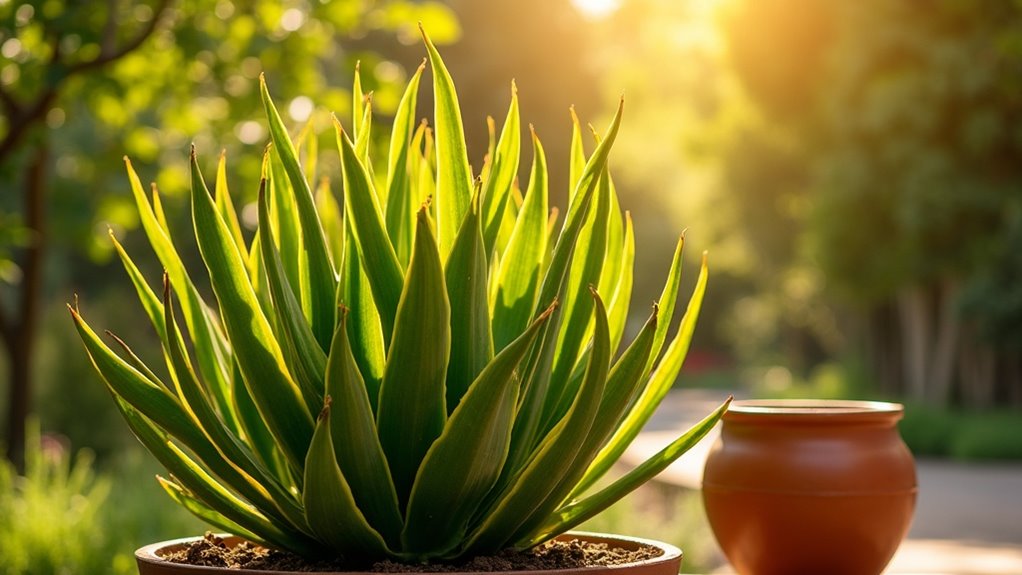
Yes, snake plants can thrive outside during the summer months, as long as temperatures stay between 70°F and 90°F. Gradually acclimatize your plant to the outdoor environment by mimicking its indoor light conditions first. Make sure you use pots with proper drainage to prevent root rot, and place them in partial shade to avoid leaf scorch. Monitor outdoor conditions closely and be prepared to bring your snake plant back inside when temperatures drop. Learn more about ideal care and benefits.
Key Takeaways
- Snake plants can thrive outdoors in USDA zones 9 to 11 during summer months with proper care and conditions.
- Gradual acclimatization to outdoor light is essential to prevent leaf scorch from excessive sunlight.
- They require well-draining pots to prevent root rot, especially in wet conditions.
- Monitor outdoor temperatures, bringing plants indoors if temperatures drop significantly at night.
- Increased light and natural humidity can enhance growth, leading to healthier plants during summer.
Can Snake Plants Live Outside?
Can snake plants thrive outdoors? Yes, they can! In USDA growing zones 9 to 11, where temperatures consistently exceed 50°F, you can successfully place snake plants outside. They prefer warm conditions, ideally between 70°F and 90°F, making summer a perfect time. However, it’s essential to gradually acclimate them to outdoor environments. Start in a sheltered area with similar indirect sunlight before fully exposing them. While snake plants tolerate full sun, excessive direct exposure can scorch their leaves; partial shade is best during peak heat. Finally, guarantee proper drainage to prevent root rot, particularly in wet conditions.
The Right Way to Move a Snake Plant Outside
Successfully moving your snake plant outdoors requires careful planning and execution to assure it thrives in its new environment. Start by placing it in an area mimicking its current light conditions, then gradually expose it to increased outdoor light over a week. Use wide, shallow pots with good drainage to prevent root rot. Ascertain the plant is protected from strong winds and heavy rain, which can cause damage. Wait for dry weather before moving your snake plant outside, especially if rain is forecasted.
| Step | Action | Purpose |
|---|---|---|
| Initial Placement | Mimic current light conditions | Ease acclimatization |
| Gradual Exposure | Increase light exposure over a week | Prevent shock and leaf scorch |
| Weather Consideration | Move during dry weather | Minimize risk of overwatering |
How to Care For a Snake Plant Outside
To guarantee your snake plant thrives outdoors, it’s vital to provide the right care tailored to its needs.
Start by placing your plant in a sheltered location that mimics its indoor light conditions, gradually acclimating it to different light levels.
Ascertain the pot has good drainage—wide and shallow pots prevent root rot, especially in rainy areas.
Water infrequently, allowing the soil to dry completely between waterings.
Protect your snake plant from excessive direct sunlight by providing partial shade during hot afternoons.
Finally, monitor outdoor temperatures closely, bringing your plant back indoors when nighttime temps drop to the upper 50°F to lower 60°F.
When to Bring a Snake Plant Back Inside
As nighttime temperatures start to dip into the upper 50°F to lower 60°F, it’s crucial to bring your snake plant back indoors to prevent cold damage.
Gradually acclimate it by initially placing it in bright, indirect light for several days. Before bringing it inside, carefully monitor for any signs of pests or infestations to avoid spreading them to your other indoor plants.
Gradually acclimate your snake plant to bright, indirect light while checking for pests before bringing it indoors.
After a week of adjustment, re-acclimate your snake plant to its previous indoor location to minimize shock from sudden changes in light and temperature.
Quarantining it in a separate area for a week guarantees it’s healthy and pest-free.
Benefits of Outdoor Placement
Placing your snake plants outdoors during summer enhances their growth opportunities by providing increased light exposure, which promotes vibrant foliage.
Improved air circulation and natural humidity in outdoor environments contribute to their overall health and resilience.
Additionally, the striking appearance of snake plants in gardens or patios can elevate the aesthetic appeal of your outdoor space.
Enhanced Growth Opportunities
When you move your snake plants outdoors during the summer, they can experience a significant boost in growth due to the abundant light and fresh air.
With 3 to 4 hours of direct sunlight daily, these plants thrive, resulting in larger leaves and faster growth rates. The natural humidity levels help maintain favorable moisture, reducing the risk of overwatering common indoors.
Temperatures between 60°F and 90°F are ideal for enhanced growth, allowing your snake plants to flourish.
Additionally, their vibrant colors and unique forms create a striking visual impact in outdoor spaces, adding to your garden’s aesthetic appeal.
Improved Air Circulation
Improved air circulation is one of the key advantages you’ll notice when moving your snake plants outdoors for the summer. This natural airflow can greatly boost your plants’ health by reducing the risk of mold and pests that thrive in stagnant conditions.
- Fresh air enhances photosynthesis, fostering vibrant foliage.
- Natural breezes promote leaf transpiration, ensuring ideal moisture levels.
- Exposure to varied outdoor conditions toughens your plants against humidity fluctuations.
With these benefits, outdoor placement not only enhances your snake plants’ resilience but also contributes to their overall health and growth. Enjoy the fresh air while nurturing your greenery!
Aesthetic Garden Appeal
By incorporating snake plants into your outdoor garden, you not only enhance the visual appeal but also create a striking focal point with their unique upright form and vibrant variegation. These potted snake plants thrive in sunlight and adapt to various lighting conditions, making them versatile additions. Their height can reach up to 5 feet, allowing for bold design statements. Additionally, when combined with other drought-tolerant plants, they create interesting contrasts while maintaining a low-maintenance aesthetic. Below is a table showing the benefits of snake plants in your garden:
| Feature | Benefit | Impact on Aesthetic Appeal |
|---|---|---|
| Unique Form | Striking focal point | Enhances garden visuals |
| Variegation Patterns | Color contrast | Adds depth and interest |
| Adaptability | Thrives in diverse settings | Versatile design options |
| Height | Creates bold statements | Makes gardens feel larger |
Common Snake Plant Problems
Although snake plants are hardy and resilient, they can still face several common problems when grown outdoors during the summer months.
- Overwatering can lead to root rot; always let the soil dry completely between waterings.
- Yellowing leaves often signal overwatering or poor drainage, requiring adjustments to your care routine.
- Keep an eye out for pests like spider mites and mealybugs, as they thrive outdoors.
Additionally, sudden temperature fluctuations can stress your plants, causing leaf damage.
Monitor conditions closely to guarantee your snake plants remain healthy and vibrant throughout the season.





