
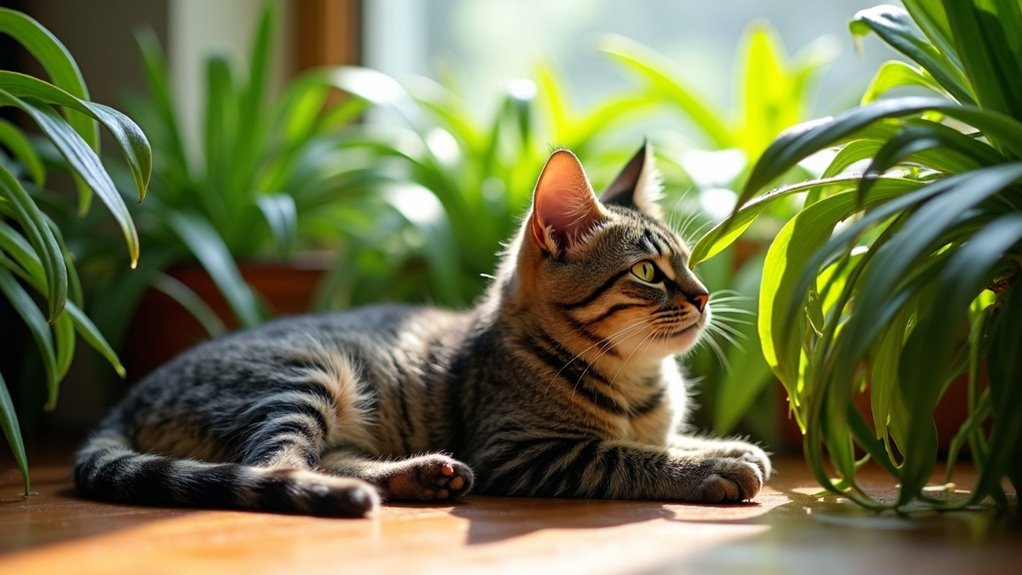
Yes, cats can safely explore spider plants since they’re non-toxic. However, if ingested, they might cause mild digestive upset, resulting in symptoms like vomiting or diarrhea. Cats are often attracted to the plant’s hanging leaves and may nibble on them out of curiosity. It’s important to monitor your cat’s behavior following interaction. To learn about strategies to deter your cat from spider plants and discover safe alternatives, keep going for more insights.
Key Takeaways
- Spider plants are classified as non-toxic to cats by the ASPCA, making them safe for exploration.
- Ingestion may cause mild digestive issues like upset stomach, vomiting, or diarrhea.
- Individual reactions vary, so it’s important to monitor your cat’s behavior after ingestion.
- Playful interaction with spider plants is common, but nibbling may lead to mild digestive upset.
- Providing alternative cat-friendly plants can help reduce temptation and promote safe exploration.
Understanding Spider Plants and Their Appeal to Cats
Although spider plants are beloved by many for their air-purifying qualities and lush appearance, they also hold a unique appeal for cats.
These non-toxic plants attract your feline friends with their long, dangling leaves and mild hallucinogenic effects, similar to catnip. Your cat’s curiosity drives them to explore, making spider plants an enticing target.
While generally harmless, ingestion can sometimes cause mild digestive issues like upset stomach or vomiting.
To keep your spider plants safe, consider providing alternative cat-friendly options like cat grass, satisfying their curiosity without risking damage to your beloved greenery.
Assessing the Toxicity of Spider Plants for Cats
When evaluating the toxicity of spider plants for cats, it’s reassuring to know that these popular houseplants are classified as non-toxic by the ASPCA. This means they don’t pose a significant health risk if ingested.
However, you should be aware that ingestion can lead to mild digestive issues, such as upset stomach, vomiting, or diarrhea.
Cats tend to be attracted to spider plants, possibly due to their mild hallucinogenic effects, similar to catnip.
Individual reactions may vary, so it’s wise to monitor your cat’s behavior and consult a veterinarian if any concerning symptoms arise after ingestion.
Observing Your Cat’s Behavior Around Spider Plants
Observing your cat’s behavior around spider plants can provide valuable insights into their interests and instincts.
Since cats are prone to curiosity, you’ll notice various reactions. Here are some behaviors to watch for:
- Playfulness: Your cat might swat or pounce on the dangling leaves.
- Nibbling: Some cats may show interest in chewing the leaves.
- Lethargy: After interaction, watch for signs of fatigue.
- Digestive Upset: Monitor for vomiting or other digestive issues.
Strategies to Keep Cats Away From Spider Plants
To keep your cat away from spider plants, it’s essential to implement a few effective strategies that deter their curiosity and prevent unwanted chewing.
Place spider plants in high locations, such as shelves or hanging baskets, to keep them out of reach. Use bitter-tasting plant repellents on the leaves to discourage chewing.
Regularly prune or divide the plants to minimize excessive foliage that may attract attention. Avoid positioning spider plants near common climbing spots like windowsills.
Finally, provide alternative cat-friendly plants, like cat grass or Boston ferns, to satisfy their curiosity and reduce temptation towards spider plants.
Alternative Plants That Are Safe for Cats
If you’re looking for safe indoor plants for your feline friend, several options can enhance your home without health risks.
Boston ferns and prayer plants not only add beauty but also engage your cat’s curiosity.
Consider these cat-friendly choices to create a green, safe environment for your pets.
Safe Indoor Plant Options
Creating a cat-friendly home doesn’t mean sacrificing greenery or aesthetic appeal.
You can enjoy beautiful plants that are safe for your feline friends. Here are some great options to take into account:
- Boston Ferns: Non-toxic and fun for cats to explore.
- Chinese Money Plant: Easy to propagate and pet-friendly.
- Cat Grass Kits: Allow your cat to graze safely.
- Prayer Plants: Low maintenance and non-toxic for curious pets.
While Spider Plants are popular, these alternatives guarantee your home remains both stylish and safe for your cats.
Enjoy the benefits of indoor plants without worry!
Cat-Friendly Greenery Choices
When you want to bring greenery into your home without endangering your cat, it’s essential to choose plants that are safe for your furry friend.
Consider cat-friendly greenery choices like Boston ferns and Chinese money plants, both non-toxic and easy to care for. Prayer plants and Calathea plants not only beautify your space but are also pet-friendly.
For a fun treat, cat grass growing kits provide a safe munching option. If you’re looking for a low-maintenance choice, a snake plant can be an excellent addition, as it’s non-toxic and helps purify the air in your home.
Monitoring Your Cat’s Health After Plant Ingestion
Monitoring your cat’s health after it ingests spider plants is essential for ensuring its well-being.
The chemical compounds in these plants can affect cats differently.
Keep an eye out for:
- Vomiting or diarrhea – Signs of digestive issues.
- Lethargy – A decrease in energy or activity level.
- Behavioral changes – Unusual actions that may indicate discomfort.
- Persistent symptoms – Ongoing issues warrant a vet visit.





