
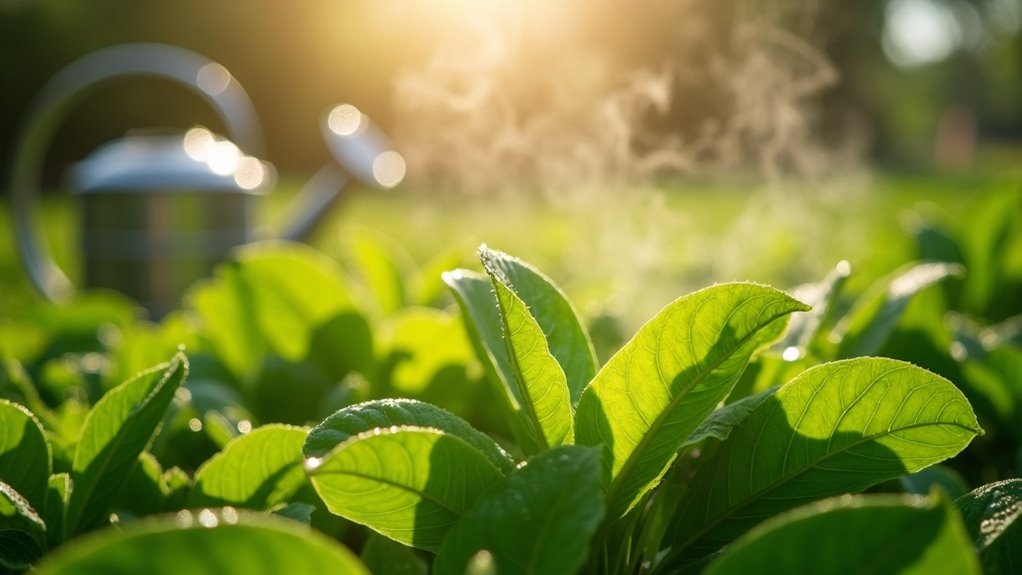
You can water plants in the sun without scorching leaves by using certain techniques. Focus on watering the soil directly to limit water on leaves, especially for hairy-leaved varieties. Early mornings or late evenings are ideal for minimizing sun exposure. If conditions are very dry, watering during the day might be necessary for hydration. Keeping an eye on your plants’ needs and understanding their types will help you prevent sunburn risks. Explore more effective strategies to guarantee your plants thrive.
Key Takeaways
- Watering in direct sunlight can scorch leaves, especially on hairy-leaved plants due to the lens effect of water droplets.
- Smooth-leaved plants shed water quickly, reducing the risk of leaf burn during midday watering.
- Severely dehydrated plants may benefit from daytime watering, outweighing potential scorch risks.
- To minimize damage, direct water towards the soil and avoid pooling on leaves.
- Consider watering in the early morning or late evening to prevent sunburn and promote healthy hydration.
Common Misconceptions About Mid-Day Watering
Have you ever wondered why some gardeners avoid watering their plants during the hottest part of the day? The common belief is that water droplets can scorch leaves, but this mainly affects hairy-leaved plants.
Most smooth-leaved varieties don’t retain water long enough to suffer damage. While midday watering might cause some leaf damage, the risks are often outweighed by the benefits of hydrating dehydrated plants.
Additionally, many plants can quickly shed excess water, reducing burn risk. It’s essential to monitor new or tender plants, as they may be more susceptible to sunburn after midday watering.
The Science Behind Watering in Direct Sunlight
Understanding the science behind watering plants in direct sunlight reveals why some practices are more effective than others.
Water droplets on the leaves of plants can cause leaf burn, particularly in hairy-leaved varieties due to the lens effect, where sunlight refracts through the droplets. However, smooth-leaved plants typically shed water quickly, minimizing burn risk.
Research shows that watering severely dehydrated plants in hot conditions often benefits them, as hydration outweighs the scorch risks.
Thoughtful watering practices guarantee most plants remain unharmed, even in sunny weather, though specific types, like rosette-forming plants, may require more caution.
Plant Types and Their Vulnerability to Sunburn
While many plants thrive in sunlight, certain types exhibit heightened vulnerability to sunburn, particularly when watered during peak hours. Understanding these vulnerabilities can help you water your plants effectively.
| Plant Type | Vulnerability Level | Recommendations |
|---|---|---|
| Rosette-forming plants | High | Water in the morning or evening |
| Farina-coated succulents | Moderate | Avoid pooling water on leaves |
| Hairy-leaved plants | High | Water carefully to prevent droplet burn |
Newly planted or young plants also face increased risk, so be cautious when watering them in direct sunlight to prevent sunburn damage.
Recommended Watering Practices for Sunny Days
To guarantee your plants thrive on sunny days, it’s essential to adopt effective watering practices.
Water plants early in the morning or later in the evening, steering clear of the midday sun when evaporation peaks. If you must water during the day, direct the water towards the soil to minimize leaf exposure and reduce scorch risk.
When plants are severely dehydrated, daytime watering can help, as rehydration benefits outweigh potential leaf burn. After watering, tilt pots to allow excess water to drain, preventing pooling that could lead to sunburn on tender growth points.
Strategies for Effective Plant Care in Hot Weather
As temperatures rise, maintaining plant health requires more than just proper watering techniques.
You need to adopt key strategies for effective care:
- Water when they need it, ideally in the early morning or late afternoon.
- Use mulch to retain soil moisture and regulate temperature.
- Implement a drip irrigation system for targeted watering at the base of plants, avoiding excess moisture on hairy leaves.
- Monitor soil moisture levels; if the top inch feels dry, it’s time to water.





