
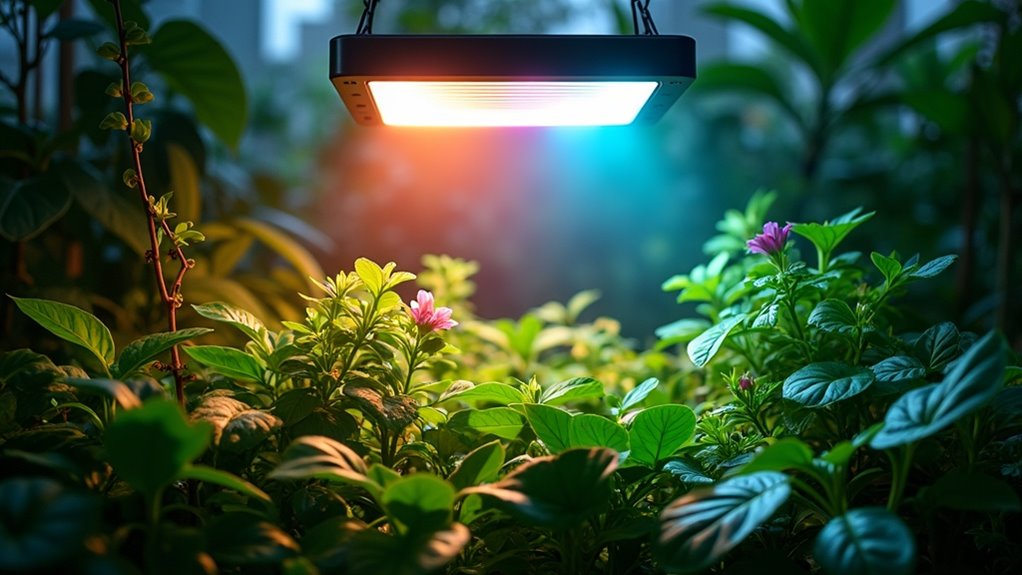
Yes, plants can grow with LED lights year-round. LED grow lights offer full-spectrum capabilities, promoting photosynthesis while being energy-efficient and durable. They emit balanced wavelengths, with blue light supporting vegetative growth and red light triggering flowering. You should provide 14-16 hours of light for seedlings and 12-14 hours for flowering plants, adjusting the height for peak intensity. This method not only enhances growth but also reduces long-term costs, creating an ideal environment for your indoor garden. There’s more to learn about maximizing your setup.
Key Takeaways
- LED grow lights support year-round plant growth by providing consistent light conditions suitable for various plant types.
- Full-spectrum capabilities of LED lights mimic natural sunlight, enhancing photosynthesis efficiency throughout the year.
- Adjustable light spectrum can cater to different growth stages, optimizing plant health and yield at any time.
- Energy-efficient LED lights consume significantly less power, making them cost-effective for continuous use.
- Proper light duration and placement ensure healthy growth, with seedlings thriving on 14-16 hours and flowering plants on 12-14 hours of light daily.
The Benefits of Using LED Grow Lights
When you choose LED grow lights for your indoor garden, you’re not just investing in an energy-efficient solution; you’re also ensuring your plants receive the perfect light spectrum necessary for healthy growth.
LED grow lights use up to 80% less power than traditional options, considerably lowering electricity costs. With lifespans of 50,000 to 100,000 hours, they require infrequent replacements, reducing maintenance expenses.
Their full-spectrum capabilities promote optimal photosynthesis, enhancing plant growth and development year-round. Additionally, lower heat output allows closer placement to plants, improving growth efficiency and enabling you to cultivate a diverse range of vegetables, herbs, and ornamental plants.
Understanding the Light Spectrum for Plant Growth
To optimize plant growth, you need to understand the light spectrum, particularly the roles of red and blue wavelengths.
Blue light, ranging from 400 to 500 nm, supports vegetative growth, while red light, from 600 to 700 nm, triggers flowering and fruiting.
Light Spectrum Basics
Understanding the light spectrum is fundamental for optimizing plant growth, as different wavelengths play distinct roles at various stages of development.
- Blue light (400-500 nm) is essential for vegetative growth, promoting chlorophyll production and healthy leaf development.
- Red light (600-700 nm) encourages flowering and fruiting, making it significant for mature plants.
- Full spectrum LED lights mimic natural sunlight, emitting a balanced range of wavelengths for all growth stages.
Importance of Red/Blue
While many factors influence plant growth, the balance of red and blue light in the spectrum is essential for achieving ideal health and yield.
Blue light (400-500 nm) promotes chlorophyll production and foliage growth, while red light (600-700 nm) is vital during flowering and fruiting stages. A balanced light spectrum mimics natural sunlight, enhancing photosynthesis throughout all growth phases.
Full spectrum LED grow lights emit both red and blue wavelengths, ensuring peak development year-round.
However, excess red light can cause leggy growth, underscoring the need for a balanced light approach to maximize yields and support overall plant health.
Recommended Light Duration for Different Plant Types
When growing different types of plants under LED lights, understanding their specific light duration needs is essential.
For instance, seedlings and vegetative plants thrive with 14-16 hours of light, while flowering plants require 12-14 hours to encourage blooms.
Additionally, seasonal adjustments may be necessary to cater to the varying requirements of cool-season crops and short-day or long-day plants.
Light Duration Guidelines
To guarantee your plants flourish, it’s important to tailor the light duration based on their specific needs. Proper light exposure helps them grow effectively under LED lights.
Here are some guidelines:
- Seedlings & vegetative plants: 14-16 hours of light per day for robust growth.
- Flowering plants: 12-14 hours to stimulate blooming and fruit production.
- Long-day plants: 14-18 hours are necessary for ideal flowering.
Short-day plants require less than 12 hours, while day-neutral plants thrive with 8-12 hours of light per day.
Understanding these light duration needs will enhance your growing conditions and promote vibrant growth throughout the year.
Specific Plant Needs
Understanding the specific light duration needs for different plant types is essential for optimizing growth under LED lights. Here’s a concise guide on how many hours of light per day various plants need for effective indoor growing:
| Plant Type | Recommended Light Duration | Growth Stage |
|---|---|---|
| Seedlings/Vegetative | 14-16 hours | Early Development |
| Flowering Plants | 12-14 hours | Blooming Phase |
| Long-Day Plants | 14-18 hours | Healthy Growth |
| Short-Day Plants | <12 hours | Bloom Trigger |
| Day-Neutral Plants | 8-12 hours | Varies by Stage |
Seasonal Adjustments Required
As seasons change, so do the light requirements for various plant types, necessitating adjustments to guarantee ideal growth under LED lights.
Understanding the photoperiod needs of your plants is vital for successful cultivation. Here are some essential adjustments to take into account:
- Seedlings and vegetative plants thrive on 16-18 hours of light daily.
- Flowering plants generally require 12-14 hours of exposure.
- Short-day plants flourish with less than 12 hours of light.
Utilizing timers can help automate these light schedules, ensuring your plants receive adequate darkness for energy breakdown, enhancing overall growth and health throughout the year.
Ideal Placement and Distance of LED Grow Lights
When positioning LED grow lights, it’s crucial to find the right balance between light intensity and plant health.
Ideally, place full-spectrum LED grow lights 6 to 12 inches above your plants, ensuring maximum light intensity while minimizing heat stress. For seedlings, maintain a distance of about 6 inches to promote ideal growth without burning.
As your plants mature, adjust the distance accordingly to maintain adequate light coverage and prevent light stress. Regularly monitor your plants for signs of stretching or burning, as this will help you fine-tune the placement and distance for the best growing conditions.
Setting Up LED Lights for Various Plant Categories
Properly setting up LED grow lights is essential for maximizing plant health across various categories, from seedlings to mature houseplants.
Tailor your setup to each plant type’s unique light needs:
- Seedlings: Keep LED lights 6-12 inches above, providing 14-16 hours a day.
- Houseplants: Position lights 12-24 inches away, aiming for 8-14 hours daily.
- Edible plants: Maintain 6-12 inches distance, offering 10-18 hours, depending on specific varieties.
As your plants grow, adjust the height of LED lights to guarantee ideal light exposure without burning foliage.
Regularly monitor their responses to fine-tune settings for successful indoor gardening.
Maintaining Optimal Conditions for Indoor Gardening
To successfully maintain ideal conditions for indoor gardening, it’s vital to control various environmental factors that influence plant health.
Aim for a light duration of 12-18 hours daily, adjusting based on your plants’ specific needs. Utilize full spectrum LED grow lights with a color temperature of 5,000-6,500 Kelvin to mimic natural sunlight. Position lights 6-12 inches above plants to optimize light intensity while minimizing heat stress.
Regularly monitor ambient temperature (65-75°F) and humidity levels (40-60%) to promote healthy plant development. Watch for signs of light burn and adjust light intensity and duration to guarantee your plants thrive.
Cost-Effectiveness and Efficiency of LED Grow Lights
Maintaining ideal conditions for indoor gardening not only supports plant health but also leads to considerable cost savings when using LED grow lights.
Their cost-effectiveness stems from:
- Consuming 50-70% less energy than fluorescent lights, resulting in lower electricity bills.
- A lifespan of 50,000 to 100,000 hours, which reduces replacement costs considerably.
- Generating less heat, allowing for closer placement to plants, enhancing photosynthesis and overall plant growth.
Investing in LED grow lights may require more upfront capital, but the energy efficiency and long-term savings from reduced energy consumption make them a smart choice for any indoor gardening enthusiast.





