
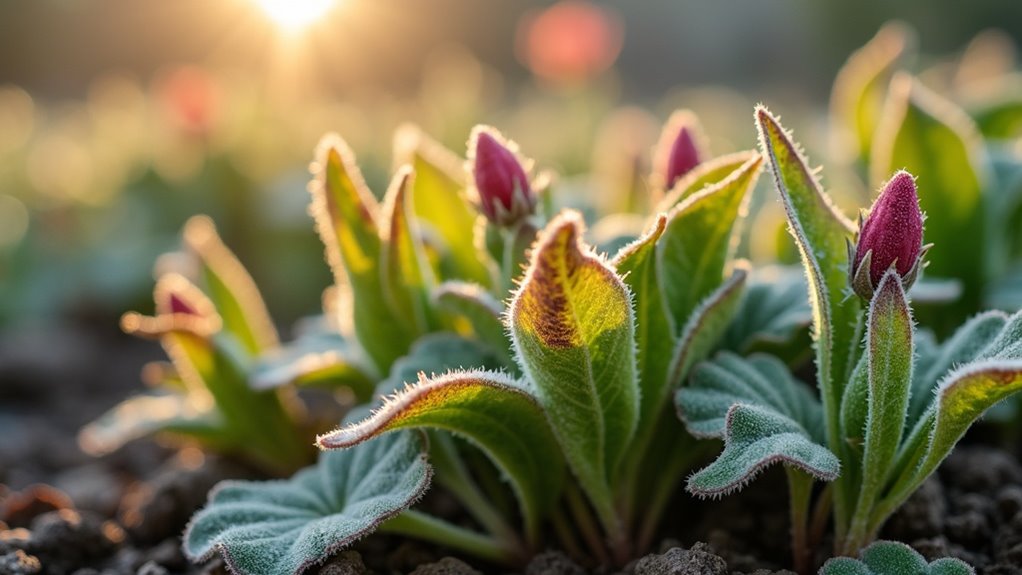
Yes, plants can recover from frost damage in spring with proper care and monitoring. After a freeze, look for signs of new growth like green shoots or leaves, which indicate recovery. It’s essential to wait before pruning; do so only when new growth appears and after the last frost. Allow your plants to use their energy reserves for recovery. If you’re curious about specific care techniques and best practices, there’s more to explore on this topic.
Key Takeaways
- Yes, plants can recover from frost damage in spring, especially if new growth is observed.
- Signs of recovery include new green shoots and visible green tissue when scratching the bark.
- Dead foliage can provide insulation while the plant recovers, so avoid immediate pruning.
- Patience is essential; full recovery may take time, and new growth can appear weeks after the frost.
- Monitor environmental conditions and wait to prune until after the last frost to protect new growth.
Understanding Frost Damage
Frost damage is a significant concern for gardeners and farmers alike, as it can severely impact plant health and yield. When temperatures drop below 32°F, ice crystals form on tender foliage, leading to symptoms such as burnt edges, discoloration, and potential bloom drop.
Newly emerging shoots are particularly vulnerable during late frosts, with damage often visible days later. The severity of frost damage varies by species; some plants experience merely aesthetic issues, while others face significant growth reduction.
Understanding these factors is essential for effective management and mitigation of dead foliage and long-term plant health.
Signs of Plant Recovery
As temperatures rise, look for new green shoots or leaves emerging from your plants; this is a primary indicator of recovery from frost damage.
You can also perform a bark scratching test to check for green tissue beneath the surface, confirming that the plant is still alive.
Monitoring these signs is essential, as full recovery may take time and patience.
New Growth Appearance
Within weeks of the last freeze, you may start to notice new growth on frost-damaged plants, signaling the recovery process has kicked off. This new growth often consists of fresh shoots and leaves, vibrant and green, contrasting sharply with previously damaged foliage.
However, some plants may exhibit a delay in new growth due to the extent of freeze damage, which can take several weeks to manifest. It’s essential to monitor for green tissue beneath the bark; if the inner layer is green, the plant is still alive and capable of recovery, indicating a positive response to the warming temperatures.
Bark Scratching Test
Once you notice new growth on your frost-damaged plants, it’s time to assess their overall health using the bark scratching test. This technique involves gently scraping the outer bark to reveal green tissue underneath, indicating the plant’s health.
If you see brown or black beneath, it suggests dead wood and a reduced chance of recovery.
- You’re hoping for green, a sign of life.
- The uncertainty of damage can be overwhelming.
- Every bud represents resilience against winter’s harshness.
Perform this test in spring, after the last frost, to accurately gauge the extent of the damage and the plant’s recovery potential.
Proper Care After a Freeze
After a freeze, evaluating the extent of cold damage is essential before you take any action.
Wait for signs of new growth before pruning, as dead foliage can help insulate the plant during recovery.
Additionally, hold off on fertilizing until spring, when the risk of frost has passed, ensuring your plants have the best chance for healthy regrowth.
Assessing Plant Damage
Evaluating plant damage after a freeze is essential for ensuring their recovery. Start by examining plant damage: scratch the bark; if it’s green underneath, your plant may still be viable.
Look for signs of damage, like browning or shriveling of new growth. Remember, older plants might show resilience due to established roots.
- Feel the anxiety of potential loss.
- Sense the hope in new growth.
- Experience the relief of finding a viable plant.
Delay pruning until spring; dead foliage can protect against further injury.
Monitor environmental conditions, as additional cold snaps can worsen stress on your plants.
Pruning and Fertilizing Timing
As temperatures warm and signs of new growth emerge, it’s essential to approach pruning and fertilizing with care to guarantee your plants’ recovery from frost damage.
Delay pruning until you spot new growth, as early cuts can stress the plant further. Assess bark to identify healthy wood, which indicates viable parts for recovery.
Avoid fertilizing until after the last frost; early application can spur new growth vulnerable to freezing temperatures. Dead foliage may insulate the plant, so keep it until you see fresh growth.
Focus pruning on removing only dead or visibly damaged material, conserving energy for recovery.
Importance of Patience
While rushing to prune frost-damaged plants might seem like a proactive approach, exercising patience is essential for their recovery. The full extent of damage may remain hidden for weeks, and immediate action can stress your plants further.
By allowing time, you help them utilize energy reserves effectively, promoting healthier growth in the long run.
- Witnessing new growth can be a rewarding experience.
- Avoiding hasty actions helps protect your plants from additional injury.
- Your patience fosters resilience in your garden.
In colder hardiness zones, such as Zone 8a, those extra weeks can make all the difference in ensuring successful recovery.
When to Prune
Pruning frost-damaged plants requires careful timing to guarantee effective recovery. You should delay pruning until new growth appears in spring to assess the extent of damage accurately.
Waiting until after the last frost is essential; premature pruning exposes new growth to low temperatures, risking further injury. To check a plant’s viability, scratch the bark; if it’s green underneath, the plant may recover, and you can prune dead sections.
While dead foliage can be removed anytime to prevent insulation from injury, excessive pruning should be avoided until growth resumes, ensuring you support the plant’s recovery effectively. Regularly monitor for new growth.
Seeking Professional Help
After evaluating frost damage and determining the right time for pruning, you may find that seeking professional help can enhance the recovery process.
Experts provide tailored advice for specific plant species, guaranteeing effective recovery techniques. They accurately assess frost damage, distinguishing between minor aesthetic issues and severe threats to plant viability.
Experts offer personalized guidance for plant species, ensuring precise recovery methods and accurate assessment of frost damage severity.
Consulting professionals also helps you understand the best timing for care, minimizing stress on the plants.
- Gain confidence in your recovery strategy.
- Confirm your plants get the best possible care.
- Access invaluable resources for ongoing plant health support.
Professional help is essential to overcoming frost damage effectively.





