
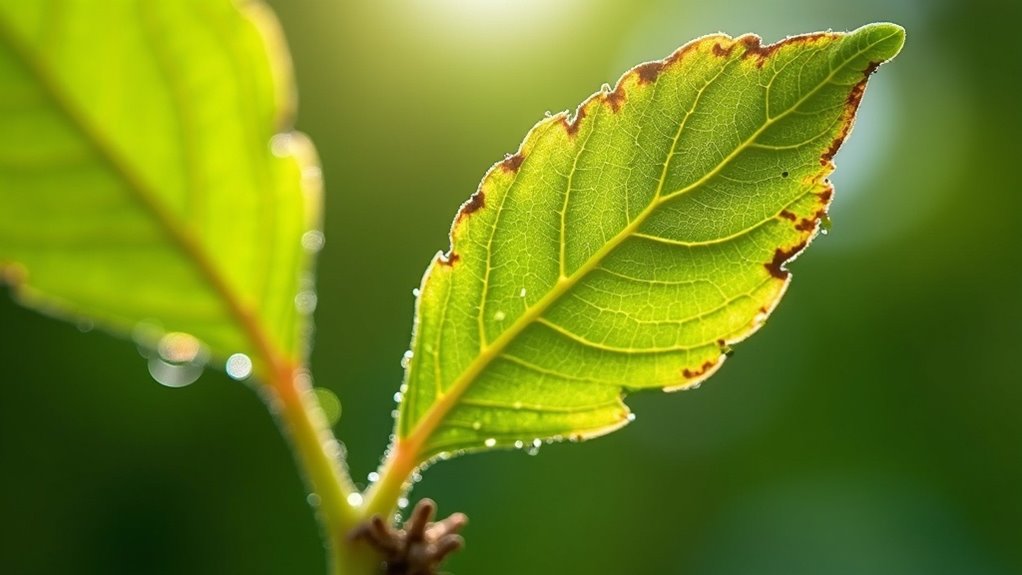
Yes, plants can recover from sunscald on leaves if you take proper care during their healing process. Start by providing temporary shade and closely monitor water and nutrient levels. Remove severely damaged leaves to encourage new growth, and allow about two weeks for recovery. Remember to water in the morning or evening to reduce stress. As you support your plants, you’ll discover more effective strategies for preventing further damage and ensuring their health.
Key Takeaways
- Yes, plants can recover from sunscald, but the process requires time and proper care.
- Provide temporary shade to reduce stress and support healing during recovery.
- Monitor water and nutrient levels closely to aid in recovery efforts.
- Remove severely damaged leaves to promote new growth and overall health.
- Gradually reintroduce sunlight once the plant shows signs of recovery.
What Does Sunscald Look Like on Plants?
Sunscald manifests as bleached or discolored patches on leaves, often appearing white or light tan. This condition results from excessive light exposure, leading to sunburn on the leaf tissue.
Initially, you may notice a papery texture alongside visible damage, with affected leaves showing signs of wilting or drooping. In severe cases, edges become dry and crispy, indicating significant moisture loss and cellular damage.
Additionally, leaves suffering from sunscald may exhibit stunted growth as the plant struggles to recover. Early recognition of discoloration on the leaves is vital to implement measures that prevent sunburn and support plant health effectively.
Causes of Sunscald in Plants
Sunscald in plants often occurs when they experience rapid exposure to intense sunlight, particularly after being moved from shaded areas to full sun without acclimation.
High temperatures, especially those exceeding 90°F, can cause rapid desiccation of leaf tissue, leading to visible damage.
Additionally, plants that haven’t undergone proper hardening off are particularly vulnerable, as they lack the necessary resilience to handle sudden UV exposure.
Rapid Light Exposure
When plants that have been accustomed to shaded or filtered light suddenly face intense sunlight, they can suffer from severe leaf tissue damage, commonly known as sunscald.
This rapid light exposure leads to sun damage, causing leaves to turn from light tan to white. Transplants moved directly from greenhouses are particularly vulnerable, as they’re unprepared for such a drastic increase in UV light.
To prevent your plants from sunscald, proper hardening off is essential, gradually introducing them to sunlight over 5-10 days.
Be mindful of environmental conditions, especially during heat waves, to minimize the risk of rapid leaf damage.
High Temperature Conditions
Rapid exposure to intense sunlight is just one factor contributing to sunscald in plants; high temperature conditions play a significant role as well.
When temperatures exceed 90°F, especially after cool, wet weather, your plants are at a higher risk for sunburn damage. Rapid desiccation can leave leaves damaged and unprepared for intense UV light.
Heat waves, defined as three consecutive days above 90°F, exacerbate this problem, making even established plants vulnerable.
Improper Hardening Off
If you don’t properly harden off your plants before exposing them to full sunlight, you greatly increase their risk of sunscald.
Improper hardening off leads to unprepared leaf tissue facing intense UV exposure, resulting in damage. Here’s what to keep in mind:
- Gradually acclimate plants over 5 to 10 days.
- Monitor weather conditions and avoid peak sunlight hours.
- Recognize signs of sunscald, like white or tan discoloration.
Transplants from filtered light environments are particularly vulnerable to sunscald, as sudden exposure to direct sunlight can cause rapid desiccation.
Proper hardening off is essential for plant health and resilience.
Symptoms of Sunscald
Sunscald can manifest in various ways, and recognizing the symptoms early is essential for plant health.
You might notice initial discoloration of leaves, where they turn white or light tan due to damage from excessive sunlight. Additionally, visible damage can appear on the stems of tender plants, signaling stress from intense sun exposure.
Initial signs of sunscald include leaf discoloration to white or light tan, alongside stem damage in tender plants.
Affected plants may exhibit wilting or drooping, and severe cases can lead to sudden defoliation, leaving fruits vulnerable to harsh light.
Long-term exposure results in stunted growth, as your plant struggles to recover from the ongoing damage caused by relentless sunlight.
How to Prevent Sunscald
To effectively prevent sunscald, it’s essential to gradually acclimate your plants to full sun exposure over a two-week period. This process helps them develop sun-resistant leaves.
Consider these additional strategies:
- Use sunshades or sheer curtains during peak sunlight hours to limit UV exposure.
- Water and feed plants consistently, especially in the morning, to maintain moisture levels.
- Apply organic mulch to conserve soil moisture and cool the root zone.
Recovery Strategies for Sunscalded Plants
Recovering sunscalded plants requires immediate attention to their needs and environment. First, support the plant by providing temporary shade to minimize stress while it develops new leaves.
Monitor water and nutrient levels closely; proper hydration and feeding are essential for recovery. Remove severely damaged leaves that are 50% or more scorched to redirect energy toward new growth.
Expect a recovery period of about two weeks, during which new leaves should form. Once you see signs of healthy growth, gradually reintroduce sunlight exposure by removing shade, allowing the plant to acclimate and strengthen against future sunscald.
Importance of Proper Watering Practices
Proper watering practices are essential for the recovery of sunscalded plants, as they help maintain consistent soil moisture and prevent further stress.
To effectively support your plants, consider these tips:
- Water in the morning or evening to minimize leaf droplet exposure.
- Use a thermo/hygrometer to monitor temperature and humidity for tailored watering.
- Maintain a balanced watering routine to avoid exacerbating sunscald damage.
Fertilizer Considerations for Affected Plants
When dealing with sunscalded plants, understanding fertilizer considerations is crucial for promoting recovery without causing additional stress. Over-fertilization can worsen leaf burn and impede healing.
During recovery, reduce fertilizer application to half strength to avoid overwhelming affected plants. Monitor the specific nutrient needs, as sunscald may disrupt nutrient uptake.
While fertilizers high in nitrogen can encourage new growth, use them cautiously since they increase water demand in stressed plants.
Adhering to recommended fertilization guidelines guarantees a balanced nutrient supply, minimizing the risk of further damage to sunscalded leaves and supporting your plants’ overall health.
Additional Tips for Plant Care During Heat Stress
As sunscalded plants begin to heal, addressing heat stress becomes essential for their ongoing recovery.
Implement these strategies to support your plants during intense heat:
- Water in the early morning or late evening to maintain moisture and minimize evaporation.
- Apply organic mulch to retain soil moisture and regulate temperature.
- Use shade cloth during peak sunlight hours to shield against extra UV exposure.
Additionally, monitor humidity levels with a thermo/hygrometer and gradually acclimate your plants to increased sunlight exposure.
These consistent watering practices and protective measures will help your plants thrive and reduce stress during high temperatures.





