
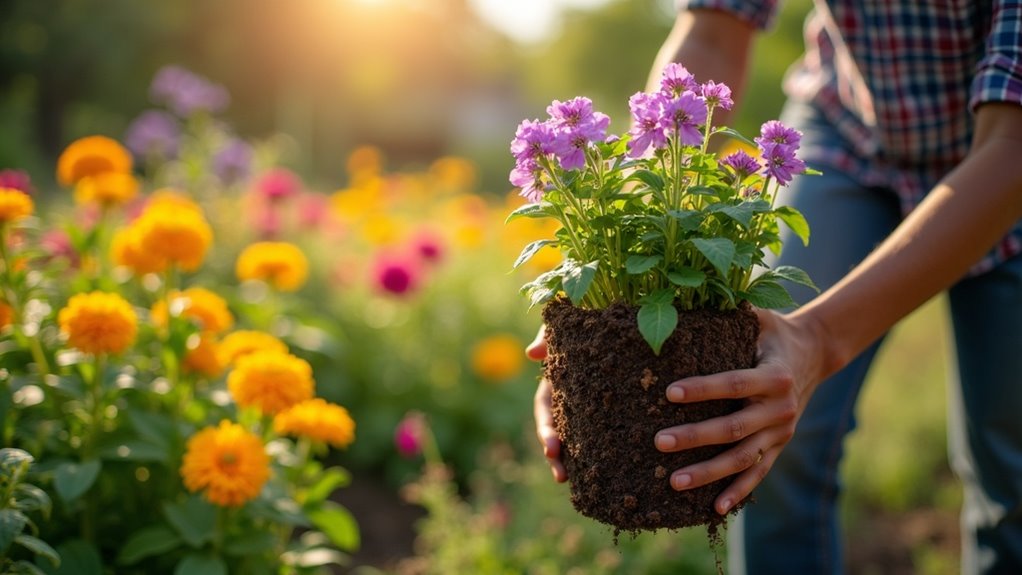
Transplanting flowering plants can lead to shock, but it’s manageable. You should snip off flowers to redirect energy for root establishment. Choose cooler, overcast days for the move to minimize stress. Make certain that the new site has well-draining soil and keep the soil moist after transplanting. Regularly monitor the plant for any signs of stress like yellowing or wilting. With the right care, you can help your plants thrive after transplanting—there’s more you can do to guarantee success.
Key Takeaways
- Moving flowering plants can cause shock; snipping off flowers before transplanting helps redirect energy to root establishment.
- Timing the move during cooler, overcast days reduces stress on flowering plants.
- Transplanting during dormancy (late fall or early spring) is ideal to minimize shock.
- Ensure thorough watering before and after the move to support the plant’s recovery.
- Monitor for signs of stress post-transplant and adjust care accordingly for optimal recovery.
Understanding Transplant Shock in Flowering Plants
When you move a flowering plant, you mightn’t realize that it can experience transplant shock, a condition that manifests through symptoms like yellowing leaves, wilting, and even leaf drop.
This shock occurs as the plant reallocates energy from root growth to reproduction, especially if it’s in bloom. To mitigate this, it’s advisable to snip off flowers prior to transplanting.
The timing of transplanting plays an essential role; doing so during dormancy minimizes shock.
Post-transplant care is important—ensure proper watering and limit exposure to stressors like direct sunlight to support recovery and encourage healthy growth in the new soil.
Timing Considerations for Transplanting
Timing plays an essential role in the successful transplanting of flowering plants, as moving them at the wrong moment can exacerbate transplant shock.
Ideally, you should transplant during dormancy, which occurs in late fall or early spring, when the plants aren’t actively growing. This timing reduces stress and allows for better root establishment.
If you must transplant while flowering, consider snipping off flowers to redirect energy from reproduction back to growth.
Additionally, choose overcast or cooler days for the transplant, minimizing stress from direct sunlight and heat.
Making these timing considerations can greatly enhance your plant’s resilience during the shift.
Preparing Your Plants for the Move
To guarantee a successful move for your flowering plants, you’ll want to focus on several key preparations that minimize stress and promote healthy recovery:
Focus on key preparations to minimize stress and ensure a successful move for your flowering plants.
- Verify your plants are well-hydrated in the days leading up to the move, maintaining soil moisture in the root ball.
- Choose a cloudy day or cooler hours to reduce exposure to direct sunlight and heat.
- Gently prune excess foliage and flowers to redirect energy toward establishing new roots.
- Prepare the new home with fresh, well-draining soil, avoiding air pockets around the root ball to support ideal growth.
Monitor for stress signs post-move.
Techniques to Minimize Shock During Transplanting
After preparing your plants for the move, implementing techniques to minimize shock during transplanting can greatly enhance their recovery.
Transplanting during cooler times, like early morning or late evening, helps reduce water loss and stress. Make certain the new site has well-draining soil that meets your plant’s needs for quicker recovery.
Water thoroughly before and after transplanting to settle the soil around the roots, minimizing air pockets that cause transplant shock. Keep the soil moist for the first few weeks, especially in hot temperatures.
Consider applying a diluted root stimulator to redirect energy towards recovery instead of flowering.
Post-Transplant Care and Monitoring
While acclimating your newly transplanted plant to its new environment, consistent post-transplant care is essential for promoting recovery and ensuring healthy growth.
Here are some important steps to follow:
- Water thoroughly: Give your plant a good drink to settle the soil around the roots and prevent air pockets.
- Monitor soil moisture: Check regularly for the first week to avoid drought stress.
- Apply mulch: This helps retain soil moisture and reduces weed competition.
- Watch for stress signs: Look for yellowing leaves or wilting, adjusting care as needed to help your plant thrive over time.





