
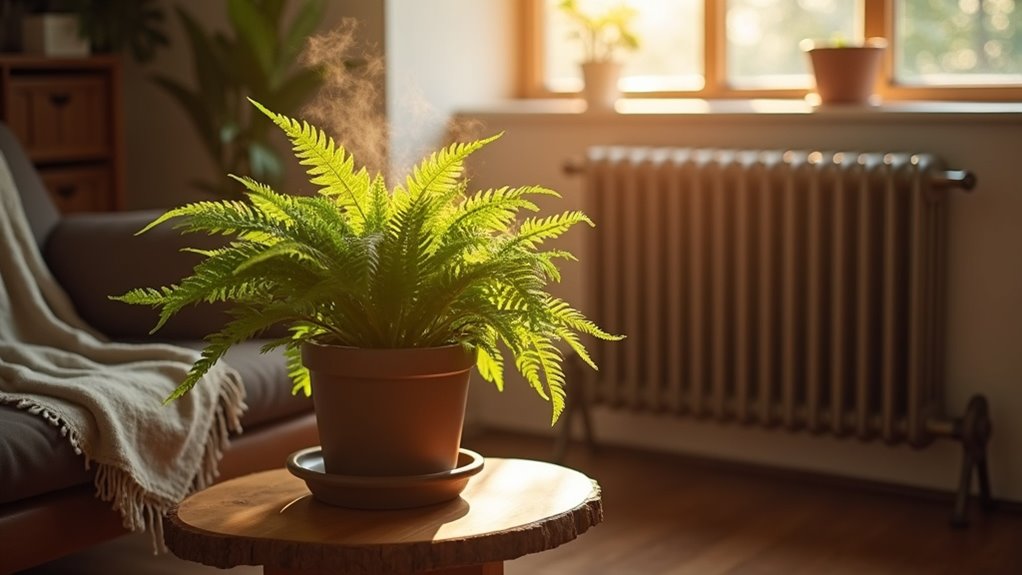
Plants can struggle to live near radiators in winter. The dry heat lowers indoor humidity, leading to rapid moisture loss. Sensitive species like calathea and peace lilies may show signs of dehydration, requiring them to be placed at least three feet from radiators. Conversely, drought-tolerant plants like succulents thrive in warmer conditions. To maintain plant health, monitor moisture levels closely and adjust care accordingly. There are effective strategies to guarantee your plants thrive despite these challenges.
Key Takeaways
- Plants can live near radiators, but sensitive species may suffer from dehydration and stress due to dry heat.
- Keep heat-sensitive plants like calathea and alocasia at least three feet away from radiators.
- Tropical plants like cacti and succulents thrive in warm conditions and can be placed closer to radiators.
- Regularly monitor soil moisture, as plants near radiators may need more frequent watering during winter.
- Use humidity trays or misting for moisture-loving plants to help them cope with dry air near heat sources.
Understanding the Impact of Radiators on Houseplants
When you place houseplants near radiators, understanding the impact of dry heat on their health is essential.
Radiators produce dry heat that lowers indoor humidity, causing rapid moisture loss in plants. This can lead to dehydration symptoms, like brown, crisp leaves or wilting.
Heat-sensitive species, such as calathea and alocasia, are particularly vulnerable to leaf stress in such conditions.
To protect your plants, it’s advisable to keep them at least three feet away from radiators.
Additionally, regularly monitor soil moisture and adjust your watering practices to prevent dehydration, especially during the dry winter months when heat sources are in use.
Ideal Plants for Heat Exposure
While many houseplants struggle with the dry heat radiators produce, some are well-suited for these conditions.
Tropical plants like cacti and succulents thrive in warm environments and store water effectively, making them ideal near radiators. The yucca plant also flourishes in bright, warm spaces, while aloe vera tolerates dry air with ease.
Jade plants, another type of succulent, can maintain their health in heat with proper care. Finally, ZZ plants are versatile, adapting well to the warmth and dryness that radiators create.
Choosing these resilient options guarantees your home remains vibrant even in challenging winter conditions.
Plants to Avoid Near Radiators
When considering plants for spaces near radiators, it’s essential to avoid sensitive types like spider plants, peace lilies, and prayer plants.
These species can suffer from dehydration and discoloration when exposed to excessive heat, so it’s best to keep them at least three feet away from any heat source.
Sensitive Plant Types
Sensitive plants, such as Calathea and Alocasia, struggle to thrive near radiators due to their susceptibility to heat stress. Placing them too close can lead to browning leaves and overall decline.
Begonias, while somewhat heat-tolerant, still prefer consistent moisture and cooler conditions, making them vulnerable as well.
Aglaonema can show signs of dehydration and leaf curling if near radiators.
To protect sensitive plants, keep them at least three feet away from heat sources.
Regularly monitor plants like spider plants and peace lilies, as they can develop leaf discoloration from heat exposure, underscoring the need for careful placement.
Distance Recommendations Needed
Placing plants too close to radiators can lead to serious issues, particularly for those that are more sensitive to heat and humidity fluctuations. Here are some distance recommendations to take into account:
| Plant Type | Minimum Distance from Radiator | Notes |
|---|---|---|
| Calathea | 3 feet | Highly sensitive to heat |
| Alocasia | 3 feet | Avoid heat stress |
| Begonia | 2-3 feet | Some tolerance, but cautious |
| Aglaonema | 3 feet | Stress from heat proximity |
| General Rule | 3 feet | Prevents dehydration and stress |
Regularly monitor your plants’ health, as those near radiators may need repositioning to thrive.
Care Tips for Houseplants Near Radiators
Although houseplants can struggle in the dry heat near radiators, implementing a few strategic care tips can help you maintain their health.
First, monitor soil moisture closely, as plants near your radiator may need more frequent watering to avoid dehydration.
Keep a close eye on soil moisture, as radiator-adjacent plants often require more frequent watering to prevent dehydration.
Consider using humidity trays or misting to support moisture levels for sensitive plants.
For tropical varieties like peace lilies, keep them at least three feet away from radiators.
Conversely, drought-tolerant plants like succulents thrive closer to heat sources.
Regularly adjust their placement based on temperature changes and observe their responses to enhance their overall health during winter.
Recognizing Signs of Plant Stress
When plants are exposed to the dry heat of radiators, they can quickly show signs of stress that indicate a need for intervention. Look for brown, crisp, or wilting leaves, especially in sensitive species near the radiator.
Monitoring soil moisture is essential, as plants can dehydrate rapidly; check the top inch of soil to assess watering needs. Additionally, observe for leaf drop or slowed growth, which may signal unfavorable conditions.
Adjusting your care routine, like misting or relocating plants away from direct heat sources, is important to maintaining their health during winter’s harsh environment.
Humidity Solutions for Winter Plant Care
To keep your plants thriving during winter, especially those near radiators, addressing humidity levels becomes important.
One effective humidity solution is using a humidifier, which greatly boosts moisture in dry air. Alternatively, consider placing humidity-loving plants like ferns in bathrooms to benefit from natural humidity.
Using a humidifier can significantly enhance moisture levels, while humidity-loving plants thrive in naturally humid spaces like bathrooms.
You can also use humidity trays filled with water and pebbles to create a microclimate around your plants. Regular misting helps, too; aim for several times a week for sensitive species.
Finally, grouping plants together enhances humidity through transpiration, fostering a more supportive environment for those that struggle in dry conditions.
Seasonal Adjustments for Plant Maintenance
As winter sets in and indoor environments become drier, making seasonal adjustments for plant maintenance is essential to guarantee your plants thrive.
The dry heat from radiators can stress your plants, so consider these adjustments:
- Regularly check soil moisture levels; they may need more frequent watering.
- Relocate humidity-sensitive plants away from radiators to prevent dehydration.
- Implement misting or use humidity trays to maintain moisture.
- Adapt watering schedules for dormant plants, as their needs decrease.
Community Experiences and Insights on Plant Care
Though many plant enthusiasts have differing opinions, community experiences reveal valuable insights into caring for plants near radiators.
Many members successfully put their plants, like succulents and cacti, near a radiator, as these heat-tolerant species thrive in the warmth.
However, they emphasize regularly monitoring moisture levels, since radiators can rapidly dehydrate plants.
Using humidity trays and misting can effectively combat low humidity.
Observing your plants for signs of stress, such as leaf drop or browning, is essential.
Ultimately, researching individual plant needs helps guarantee you provide the right environment, balancing warmth and moisture for peak health.





