
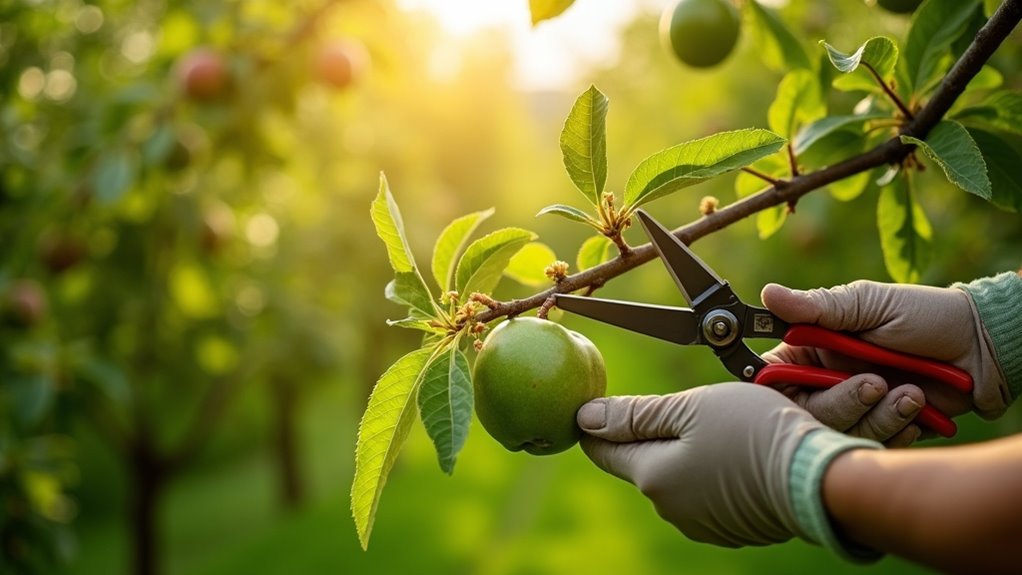
Pruning greatly boosts yield in fruiting plants by enhancing light penetration and airflow, which improves overall plant health. By strategically removing excess buds and older wood, you can direct energy towards fruit development and guarantee remaining fruits receive adequate nutrients. Proper timing, especially during the dormant season, maximizes these benefits without risking health. However, be cautious of over-pruning, as it can lead to diminished fruit quality. You’ll discover further insights on effective pruning techniques that optimize your harvest.
Key Takeaways
- Pruning enhances yield by improving light penetration and airflow to the fruiting plants.
- It reduces competition among buds, allowing remaining buds to access more nutrients.
- Proper timing of pruning during dormancy maximizes flower bud visibility and promotes healthier plants.
- Thinning fruiting buds directs energy towards the development of fewer, higher-quality fruits.
- Regular pruning invigorates the plant, balancing vegetative growth with fruit production for larger harvests.
The Importance of Pruning in Fruit Production
When you prune fruiting plants, you’re not just cutting back branches; you’re actively enhancing their yield.
Pruning improves light penetration and airflow, essential for photosynthesis and fruit development. By regularly thinning out branches, you reduce competition among buds, allowing remaining ones to access more nutrients, thereby increasing fruit size and quality.
Effective pruning techniques optimize plant structure, supporting heavier fruit loads. Additionally, performing pruning during the dormant season promotes quicker healing and stimulates new growth in spring, setting the stage for enhanced fruit production.
Properly pruned trees consistently yield larger, more abundant harvests by balancing vegetative growth with fruiting demands.
Timing Your Pruning for Optimal Results
Pruning at the right time is essential for maximizing the yield of fruiting plants.
Pruning at the optimal time is crucial for boosting the productivity of fruit-bearing plants.
Timing your pruning during the dormant season, just before spring growth, can greatly impact outcomes.
Consider these key factors:
- Identify flower buds easily for informed pruning cuts.
- Avoid winter injury, promoting healthier plants.
- Regulate top growth and root system balance.
- Enhance fruit quality and size through proper timing.
Pruning Techniques to Enhance Yield
To enhance yield, you’ll want to focus on effective pruning techniques that balance vegetative and reproductive growth.
Timing your pruning for late winter or early spring guarantees that plants channel energy into fruitful development rather than excessive foliage.
Timing for Effective Pruning
How can you maximize your plant’s yield through effective timing of pruning? Timing is essential for pruning fruit trees to enhance fruit set and improve fruit quality. Consider these key points:
- Dormant Season: Pruning is done just before spring growth for ideal healing.
- Three Ds Technique: Remove dead, damaged, or diseased branches to boost airflow.
- Branch Training: Position branches horizontally to support heavy fruit loads.
- Thinning: Reduce excess fruiting wood to invigorate remaining buds, enhancing size and harvest.
Techniques to Maximize Growth
Effective timing in pruning sets the stage for maximizing growth, but the techniques employed during the process are equally important.
For the pruning of fruit trees, focus on thinning fruiting buds to guarantee remaining buds receive adequate nutrients, enhancing fruit size and quality.
When working with Apple Trees, consider removing the terminal to promote lateral growth. Training branches horizontally provides strong support for heavy fruit loads, preventing limb breakage and encouraging higher yields.
Regularly removing older wood invigorates the plant, as younger wood is typically more productive, consequently optimizing overall fruit yield and guaranteeing healthier trees.
Balancing Vegetative and Reproductive Growth
While balancing vegetative and reproductive growth in fruit trees may seem challenging, employing targeted pruning techniques can greatly enhance yield.
Consider these methods:
- Thin excess branches to improve light penetration and air circulation.
- Remove dead or diseased wood to redirect energy towards productive growth.
- Train strong support branches horizontally to better support heavy fruit loads.
- Thin fruiting buds to invigorate remaining ones, enhancing fruit size and quality.
Understanding Plant Growth and Hormonal Influence
To optimize plant yield, it’s essential to understand the two types of growth: primary and secondary.
Each growth type relies on specific hormonal control mechanisms that dictate how plants respond to environmental factors and pruning.
Growth Types Overview
Understanding plant growth types is essential for anyone involved in horticulture or agriculture. Recognizing these growth processes helps you make informed decisions on pruning strategies to optimize fruit production.
Key growth types include:
- Primary growth – Increases the length of shoots and roots.
- Secondary growth – Increases the thickness of stems and roots.
- Meristems – Apical and axillary regions that facilitate growth.
- Hormonal balance – The ratio of growth promoters to inhibitors influences tree growth.
Hormonal Control Mechanisms
Hormonal control mechanisms play an essential role in regulating plant growth and development, particularly in fruiting species.
Pruning alters the balance of hormones like auxins, gibberellins, and cytokinins, affecting overall yield. By disrupting apical dominance, pruning stimulates lateral bud development, which can enhance fruit production. Increased auxin levels near pruning cuts promote vegetative growth, supporting greater fruiting capacity in future seasons.
Additionally, hormonal responses to pruning influence the timing of flowering and fruit set, ensuring effective resource allocation between growth and reproduction. Environmental factors like light and temperature further interact with hormonal activity, shaping growth patterns and yield outcomes.
Consequences of Over-Pruning on Fruit Yield
While pruning is fundamental for maintaining plant health and productivity, over-pruning can severely compromise fruit yield.
Here are the main consequences of excessive pruning:
- Removal of essential flower buds, necessary for fruit production.
- Increased vegetative growth, resulting in a lush canopy but fewer fruits.
- Sunburn on exposed branches, leading to stress and reduced yield.
- Disruption of energy allocation, diverting resources from fruiting to excessive water sprouting.
To guarantee ideal fruit yield, it’s critical to maintain a balance between vegetative growth and fruit production through regular, moderate pruning.
Over-pruning greatly diminishes both fruit quality and size.
Engaging With Community Resources for Pruning Success
Engaging with community resources can greatly enhance your pruning success, as these platforms offer valuable opportunities for learning and skill development. Local extension services, workshops, and gardening clubs provide hands-on experience and expert guidance in pruning techniques, particularly for apple and pear trees. These interactions foster knowledge sharing with seasoned growers and horticultural experts, like Dr. Jim Downer, ensuring you stay informed on the latest practices to boost yields.
| Resource Type | Benefits | Key Focus |
|---|---|---|
| Local Extension | Demonstrations on pruning | Effective pruning techniques |
| Workshops | Hands-on experience | Species-specific care |
| Gardening Clubs | Knowledge sharing | Community support |
| Online Forums | Tips from experienced growers | Practical advice |
| Expert Connections | Insights from horticultural experts | Research and best practices |





