
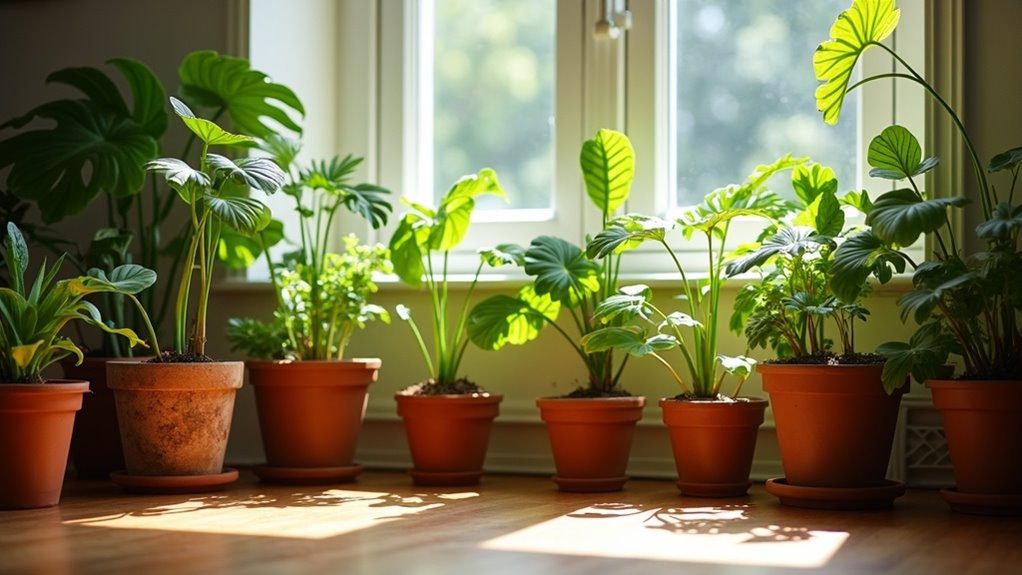
Yes, plant rotation greatly improves light exposure indoors. By regularly turning your plants, you guarantee even distribution of sunlight across all sides, promoting balanced growth and vibrant foliage. This practice prevents uneven development caused by phototropism, allowing your plants to thrive. Additionally, rotating them enhances air circulation, which reduces mold and pest risks. If you’re interested in optimizing your plant care even further, there are many more effective strategies to explore for enhancing indoor growth.
Key Takeaways
- Regular plant rotation enhances exposure to light, promoting balanced growth for indoor plants.
- Rotating plants prevents uneven growth caused by phototropism, ensuring all sides receive adequate light.
- Improved air circulation from rotation reduces mold and pest risks, contributing to overall plant health.
- Frequent rotation facilitates better light distribution among plants, optimizing their light needs.
- Adjusting plant placement based on seasonal changes and light intensity further enhances growth and vitality.
Benefits of Plant Rotation
When you regularly rotate your indoor plants, you not only enhance their exposure to light but also promote healthier growth overall.
This practice guarantees balanced growth by allowing all sides of the plant to receive adequate light, preventing uneven growth caused by phototropism. By turning your plants a quarter-turn during watering, you create consistent light exposure, which stimulates growth in shaded areas and leads to fuller foliage.
Additionally, effective rotation improves air circulation around your plants, reducing the risk of mold and pests. Overall, regular rotation contributes greatly to the vitality and well-being of your indoor plants.
How Often Should I Turn a Houseplant?
How often should you turn your houseplant to guarantee ideal growth?
To promote balanced and robust development, rotate your plants every three days to two weeks. A practical approach is turning them a quarter turn each time you water, integrating rotation into your plant care routine.
For balanced growth, rotate your plants every three days to two weeks, ideally with each watering.
This consistent rotation prevents leaning and asymmetrical growth due to phototropism, as plants naturally seek light. Adjust the rotation frequency based on your plant’s growth rate and the light conditions in its environment.
Healthy growth and vibrant foliage are direct results of maintaining balanced light exposure through regular rotation.
Fluorescent Lights as an Alternative
Fluorescent lights offer a reliable solution for indoor gardening, especially when natural light is scarce.
By strategically placing these lights, you can guarantee even illumination, promoting balanced growth without the hassle of rotating your plants.
Additionally, understanding the ideal duration of light exposure will help you maximize photosynthesis and overall plant health.
Benefits of Fluorescent Lighting
While many indoor gardeners rely on natural sunlight, using fluorescent lighting offers a practical alternative that can notably enhance plant growth.
Fluorescent lights effectively mimic natural sunlight, delivering consistent illumination that promotes balanced growth. By strategically positioning them above plants, you guarantee even light exposure, crucial for robust development.
This lighting option eliminates dependence on window light, making it ideal for spaces with limited natural illumination. Most houseplants thrive with 12 to 14 hours of fluorescent light daily, considerably boosting their vitality in low-light environments.
Embracing fluorescent lighting can take your indoor gardening to a new level of success.
Placement for Optimal Growth
Maximizing light exposure is a key factor in optimizing plant growth indoors. By strategically placing fluorescent lights, you can enhance the overall health of your indoor garden.
Position these lights directly above your plants for even distribution, promoting sturdy growth. Alternatively, placing them on the shadier sides counters uneven natural light exposure, ensuring balanced development.
Fluorescent lights eliminate reliance on windows, making them ideal for low-light spaces. Providing 12 to 14 hours of artificial light daily meets the requirements for many houseplants, allowing you flexibility in plant placement and enhancing growth performance throughout the year.
Light Duration Requirements
How do you determine the right duration of light exposure for your indoor plants? Most houseplants thrive with 12 to 14 hours of fluorescent light daily, especially in low sunlight conditions.
If natural light is scarce, particularly in winter, some plants might need up to 16 hours to maintain ideal growth. Long-day bloomers require over 14 hours to encourage flowering.
Positioning fluorescent lights on the shady side of plants helps distribute light evenly, preventing leggy growth.
Environmental Factors Affecting Growth
As you arrange your indoor plants, it’s essential to contemplate how environmental factors like light exposure can greatly impact their growth.
Positioning plants near windows may result in intense sunlight, leading to leaf burn, while those farther away might face insufficient light. This uneven light exposure can hinder your plant’s growth and health.
Seasonal changes in sunlight angles necessitate adjustments in plant placement to meet varying light requirements. Additionally, inconsistent evaporation rates due to uneven light can cause overwatering or underwatering.
Recognizing and addressing these environmental factors is fundamental for maintaining balanced growth in your indoor garden.
Pest and Disease Management Through Rotation
Regularly rotating your houseplants disrupts pest habitats, making it more difficult for infestations to take hold.
This practice also encourages you to monitor for early signs of disease, allowing for swift intervention before problems escalate.
Disrupting Pest Habitats
Rotating your houseplants effectively disrupts potential pest habitats, making it challenging for pests to establish colonies.
By regularly changing the orientation of your plants, you reduce their chances of developing specific hiding spots. This practice also enhances air circulation around the plants, lowering humidity levels and deterring moisture-related diseases like fungi.
Engaging in plant rotation encourages vigilant monitoring of plant health, allowing you to spot early signs of pest infestations or stress.
Early Disease Detection
Many indoor gardeners may not realize that a simple practice like rotating plants can greatly enhance early disease detection.
Regular rotation allows you to:
- Disrupt potential hiding spots for pests, reducing their establishment.
- Easily inspect all sides of your plants, ensuring even coverage and health checks.
- Improve air circulation, lowering the risk of fungal diseases.
- Foster proactive pest and disease management through vigilant monitoring.
This habit not only promotes awareness but also helps you catch issues before they escalate, creating a healthier indoor gardening ecosystem.
Stay attentive, and your plants will thrive!
Encouraging Vigilant Monitoring
Engaging in a routine of plant rotation not only aids in early disease detection but also fosters vigilant monitoring, which is essential for effective pest and disease management.
By rotating your plants, you disrupt potential hiding spots for pests, making it harder for them to thrive. This practice encourages you to examine all sides of your plants, ensuring you spot any signs of distress, like yellowing leaves or webbing, early on.
Improved air circulation from rotation reduces mold risks, while consistent exposure to light sources helps prevent uneven growth, promoting a healthier indoor ecosystem conducive to thriving plants.
Tips for Easy Plant Rotation
A simple rotation strategy can greatly enhance your indoor plants’ growth and importance. By incorporating regular rotation into your care routine, you can help keep your plants healthy.
Here are some practical tips:
- Rotate plants a quarter turn each time you water to establish a consistent habit.
- Use a lazy Susan to effortlessly spin smaller plants, ensuring all sides receive much natural light.
- Place larger plants on tables with casters for easy movement.
- Roll plants to different areas to maximize sunlight intake in varying light conditions.
These methods promote balanced growth and improve your indoor garden’s aesthetics.
Understanding Light Requirements for Houseplants
Understanding the specific light requirements of your houseplants is essential for their growth and overall health.
Some plants thrive in full sun, needing bright light from south or southwest-facing windows, like Gardenias and cacti. Others, such as Rubber plants, prefer medium light near east or west-facing windows.
For low light environments, Peace lilies and ZZ plants excel in darker spaces or north-facing windows, focusing on foliage rather than flowers.
Remember, seasonal changes affect light availability, so adjust their placement accordingly.
If natural light isn’t sufficient, consider artificial lighting, aiming for 12 to 14 hours of illumination daily for ideal health.





