
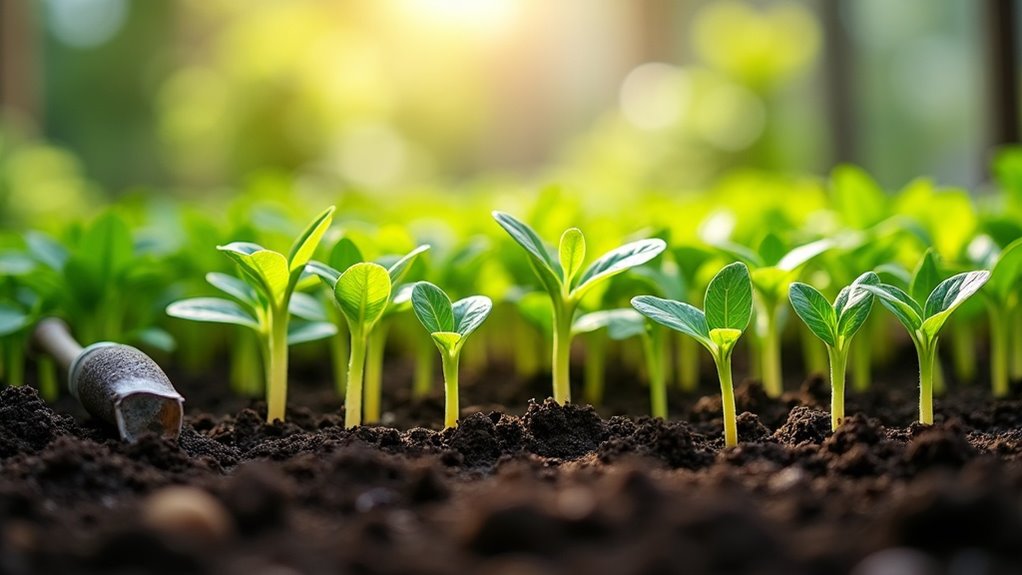
Yes, hardening off your plants greatly reduces transplant shock. By gradually acclimating seedlings to the outdoor environment over 7-14 days, you prepare them for sun, wind, and temperature changes. Start by placing seedlings in sheltered areas, then increase their exposure incrementally. This process enhances their resilience and encourages stronger root development. Avoid common mistakes like overwatering or jumping into full sun exposure too quickly. Discover more strategies to guarantee a successful planting shift.
Key Takeaways
- Hardening off gradually acclimates seedlings to outdoor conditions, significantly reducing transplant shock.
- It enhances the development of protective compounds in plants, preparing them for environmental stressors.
- Seedlings exposed to sunlight incrementally are more resilient against strong winds and intense light after transplanting.
- A stronger root system develops during hardening off, improving nutrient-seeking capabilities post-transplant.
- Neglecting hardening off can lead to increased stress and higher transplant failure rates.
Understanding the Importance of Hardening Off
When you grow seedlings indoors, it’s essential to prepare them for the outdoor environment to prevent transplant shock.
Hardening is the process of gradually acclimating your seedlings to outdoor conditions over 7-14 days. This gradual exposure allows them to adapt to temperature fluctuations, direct sunlight, and wind.
As seedlings spend more time outside, they develop protective compounds and stronger root systems, enhancing their resilience against environmental stressors.
The Process of Hardening Off Seedlings
To successfully harden off your seedlings, start by introducing them to outdoor conditions gradually, ensuring they adapt without experiencing shock.
Begin by placing your seedlings in a sheltered, shaded area for a few hours each day, then slowly increase their exposure to sunlight.
Start by gradually introducing your seedlings to outdoor conditions, placing them in a shaded spot for a few hours daily.
Monitor weather forecasts to avoid extreme temperatures or strong winds that can stress your seedlings.
Watch for signs of stress, like wilting or yellowing leaves, and adjust the hardening off schedule as needed.
This process enhances root development and resilience, preparing your seedlings for a successful transplant into ideal conditions.
Benefits of Hardening Off for Transplant Success
Successful hardening off greatly boosts the chances of transplant success. The process of hardening off seedlings for 7-14 days acclimates them to outdoor conditions, considerably reducing transplant shock.
Gradual sun exposure helps seedlings develop protective compounds and thicker leaves, enhancing their resilience against strong winds and intense sunlight. Additionally, this acclimatization encourages root development, allowing seedlings to adapt and seek nutrients effectively.
Common Mistakes to Avoid During Hardening Off
Although hardening off is essential for preparing seedlings for transplanting, many gardeners make common mistakes that can hinder their success.
Starting the hardening off process too late can leave seedlings unprepared for transplant shock. Be sure to gradually expose them to outdoor conditions, increasing sunlight incrementally.
Neglecting to monitor for temperature fluctuations and strong wind can stress seedlings, leading to wilting or yellowing leaves. Additionally, overwatering during this period hampers root development, so let them “almost wilt.”
Finally, skipping sheltered spots for initial exposure can cause immediate shock; always begin in shaded areas before full sun and wind.
Monitoring Seedlings During the Hardening Off Process
As you monitor seedlings during the hardening off process, it’s essential to remain vigilant for signs of stress, such as wilting, yellowing leaves, or drooping stems.
Monitor your seedlings closely for stress indicators like wilting, yellowing leaves, or drooping stems during hardening off.
Adjust your care based on outdoor conditions to minimize transplant shock. Here are key points to take into account:
- Regularly check soil moisture to avoid dehydration.
- Gradually increase outdoor exposure, tracking responses to light and temperature.
- Watch for weather forecasts to protect seedlings from extremes.
- If stress appears, reduce exposure or provide shade.
- Maintain consistent watering to support acclimatization.
These practices guarantee healthier seedlings ready for their new environment.
Alternatives to Traditional Hardening Off Methods
While traditional hardening off methods are effective, exploring alternatives like low tunnels can enhance the acclimatization process for seedlings.
These temporary structures protect your plants from environmental stressors while they acclimate. Using low tunnels reduces the labor of daily movements, creating a stable environment that minimizes transplanting stress.
You can layer protective coverings, such as frost blankets and insect netting, to further boost plant health. Monitoring the temperature inside allows for adjustments, ensuring ideal conditions for growth.
Plus, low tunnels are versatile, reusable, and adaptable for various growth stages, making them an excellent choice for hardening off your seedlings.
Tips for Successful Transplanting After Hardening Off
Transplanting seedlings successfully hinges on careful timing and preparation to minimize stress.
To guarantee your plants thrive outdoors, follow these tips for strong transplanting:
- Water seedlings thoroughly before transplanting to ease the shift.
- Choose cooler parts of the day, like early morning or late afternoon, to avoid heat stress.
- Select a planting spot with initial shade to help seedlings adjust gradually to sunlight.
- Avoid fertilizing immediately; wait a few weeks and use a diluted solution instead.
- Monitor weather conditions closely, shielding seedlings from extreme temperatures and wind right after transplanting.
These steps enhance survival post-hardening.





