
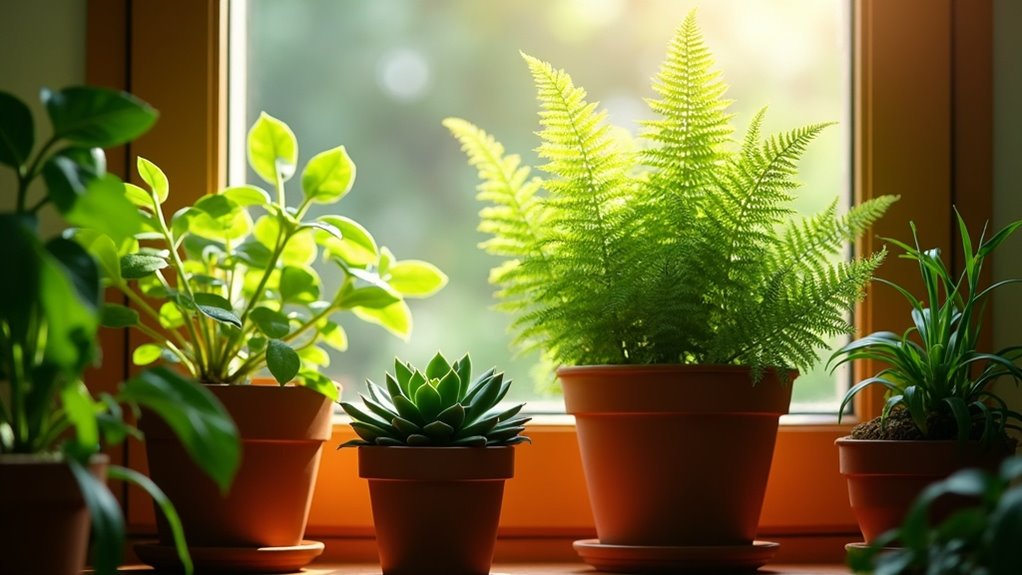
Yes, most houseplants thrive in direct sunlight from south-facing windows, as they receive the brightest light necessary for vigorous growth and vibrant colors. However, some thinner-leaved species require protection from harsh rays during summer, so placing them 0.5 to 1 meter away can help prevent leaf scorch. Regularly monitoring for signs of stress, such as wilting or discoloration, is essential. You’ll find further tips on adjusting placements for ideal growth and ensuring your plants flourish.
Key Takeaways
- Many plants, especially sun-loving species like cacti and succulents, thrive in direct sunlight from south-facing windows.
- South-facing windows provide abundant light, promoting vigorous growth and vibrant colors in plants.
- Thinner-leaved plants may need protection from harsh sunlight, especially during peak summer hours.
- Positioning plants 0.5-1 meter away from the window helps prevent leaf scorch while ensuring adequate light.
- Regular monitoring of plants is essential to detect signs of stress, such as wilting or scorched leaves.
Understanding Light Requirements for Houseplants
When you consider the light requirements for houseplants, it’s important to understand that different species have varying needs based on their natural habitats.
South-facing windows provide the brightest light, ideal for sun-loving plants like cacti and succulents that thrive in direct sunlight. However, thinner-leaved plants may need protection from harsh rays during summer months to prevent scorching.
South-facing windows offer intense light perfect for sun-loving plants, but delicate varieties may require shade to avoid scorching.
Seasonal changes in light intensity require you to adjust plant positioning accordingly. Monitoring for signs of distress, such as scorched leaves or wilting, is essential for maintaining plant health.
Additionally, regular watering and humidity checks are critical in these bright conditions.
Benefits of South-Facing Windows
Because south-facing windows offer the brightest and most intense light, they present a unique opportunity for cultivating sun-loving plants like cacti and succulents.
The abundant bright light promotes vigorous growth and enhances vibrant colors, contributing to overall plant health. However, regular monitoring is essential to prevent leaf scorch from direct sunlight, especially in summer.
Placing plants 0.5-1 meter away from the window allows them to acclimatize while maintaining ideal air circulation.
For those sensitive to intense light, utilizing sheer curtains can filter the sun’s rays, providing a balance of direct and indirect light necessary for successful plant care.
Identifying Plants That Thrive in Direct Sunlight
Identifying plants that thrive in direct sunlight can greatly enhance your indoor garden’s importance and aesthetic appeal.
When you place cacti or succulents in a south-facing window, they flourish under abundant light, optimizing growth. The String of Pearls and Ponytail Palm excel in bright conditions, showcasing their unique forms.
Cacti and succulents thrive in south-facing windows, maximizing growth and displaying their stunning forms beautifully.
Desert cacti, particularly resilient, thrive in direct sunlight without damage. However, always monitor light intensity to prevent scorching, especially during peak summer months.
For those with thinner foliage, slight positioning adjustments may be necessary to guarantee they receive adequate sun exposure while avoiding potential leaf crisping.
Signs of Too Much or Too Little Light
Monitoring light conditions becomes essential once you’ve placed sun-loving plants in direct sunlight. Regularly assess their health for signs of excess light or insufficient light. Scorched patches may indicate too much sunlight, while leggy growth suggests your plants are stretching for light.
– Monitor leaf health; yellowing lower leaves can reveal light issues.
Adjusting plant placement, like moving them away from direct rays or using sheer curtains, helps achieve adequate exposure.
Watch for washed-out colors or wilting, as these are also signs that your plants need a light adjustment to thrive in their environment.
Tips for Protecting Plants From Scorching
To protect your plants from scorching, it’s vital to provide shade during peak sunlight hours, especially for sensitive species.
Implementing sheer curtains can help diffuse harsh rays while still allowing adequate light for photosynthesis.
Additionally, closely monitoring your watering needs becomes essential, as increased sunlight can accelerate soil drying and lead to dehydration.
Shade During Peak Hours
Although many plants enjoy the bright light of south-facing windows, they can suffer from leaf scorch if exposed to direct sunlight during peak afternoon hours.
To protect your plants, consider these strategies:
- Use sheer curtains to diffuse harsh sunlight while still providing adequate brightness.
- Position your plants slightly away from south-facing windows to help them adjust to intense conditions.
- Increase humidity around your plants to combat the drying effects of strong sunlight, reducing wilting and maintaining their health.
Monitor Watering Needs
Direct sunlight can greatly impact a plant’s hydration needs, especially when situated in bright environments like south-facing windows. Here, increased light intensity heightens evaporation rates, necessitating careful monitoring of watering needs.
Watch for signs of stress, like scorched patches or wilting leaves, indicating excessive direct sunlight exposure. Acclimatizing plants gradually to these conditions can mitigate scorching risks, so consider placing them slightly away from the window initially.
Additionally, regularly check humidity levels and verify proper air circulation to support plant health, as these factors can considerably influence how well your plants cope with the intense environment of direct sunlight.
Use Sheer Curtains
While many plants thrive in bright light, excessive direct sunlight can lead to leaf damage and stress. Using sheer curtains on your south-facing windows effectively filters intense sunlight, providing the bright, indirect light that many plants prefer.
This approach helps maintain a stable temperature and humidity around your plants, essential during hot months.
- Adjust sheer curtains seasonally to optimize light exposure.
- Monitor plants for stress indicators like crisping leaves or fading colors.
- Enjoy the benefits of direct sunlight without the risk of scorching.
Implementing sheer curtains can enhance plant health and growth markedly.
Adjusting Plant Placement for Optimal Growth
When positioning your plants, consider their acclimation to bright light, especially if they’re near south-facing windows.
You’ll want to observe for signs of sun damage, as intense sunlight can scorch leaves and hinder growth.
Acclimating to Bright Light
To guarantee ideal growth, it’s essential to acclimate your plants gradually to bright light conditions, particularly when placing them near south-facing windows.
Start by positioning them 0.5-1 meter away, allowing them to adapt without risking leaf burn. Monitor for signs of stress, like leaf crisping or fading colors, as these are indicators that your plants might need additional support.
Consider using sheer curtains to filter intense sunlight during peak summer months.
Finally, incorporate regular rotation of your plants to promote even exposure to sunlight, ensuring balanced growth in these bright environments.
- Position plants 0.5-1 meter away.
- Use sheer curtains for protection.
- Rotate plants for even light exposure.
Monitoring for Sun Damage
Monitoring your plants for sun damage is crucial, as even the most light-loving species can suffer from excessive exposure to direct sunlight.
When positioned in south-facing windows, signs of sun damage, like burnt leaf tips, may appear. Regularly monitor your plants; if you notice these symptoms, adjusting their placement slightly away from the window can help.
Utilizing sheer curtains filters intense sunlight, allowing for bright, indirect light that protects sensitive species. Positioning sun-loving plants 0.5-1 meter from the window guarantees they receive adequate light while maintaining peak plant health.
Assess growth regularly; yellowing leaves may indicate light imbalance.





