
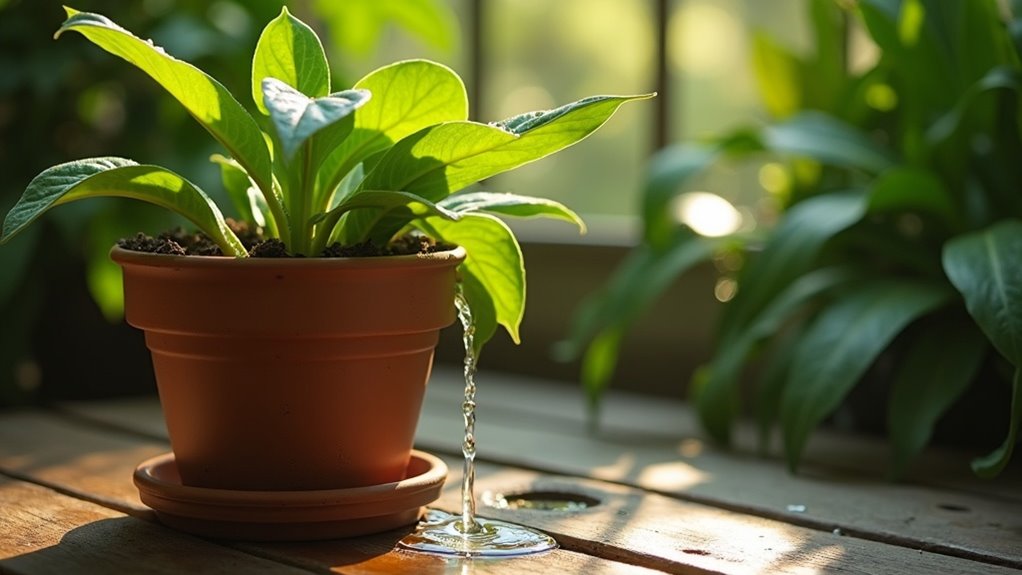
Yes, many plants prefer bottom watering in pots as it promotes healthier, deeper root systems while minimizing the risk of overwatering and root rot. This method allows the soil to absorb moisture more evenly and encourages roots to grow downward in search of water. It’s particularly beneficial for plants like African violets and certain orchids. By mastering this technique, you can enhance your plant care skills and support robust growth in your potted plants.
Key Takeaways
- Many plants, like African violets, prefer bottom watering to prevent moisture-induced rot and promote healthier root systems.
- Bottom watering encourages deeper root growth, enhancing water absorption and overall plant vigor.
- This method minimizes excess water on the soil surface, reducing the risk of fungus gnats and simplifying watering for dense foliage plants.
- Regularly checking soil moisture is essential; bottom watering allows plants to absorb only the necessary water, preventing overwatering.
- While many plants benefit from bottom watering, some, like succulents and cacti, may prefer top watering due to their drought resistance.
Understanding Bottom Watering
Have you ever wondered how bottom watering can influence your plant’s health?
Bottom watering, or reverse watering, involves adding water to a saucer beneath your pot, allowing moisture to seep through drainage holes. This method enhances water absorption, especially in dry potting mediums, ensuring the entire medium becomes saturated and encourages deeper root growth.
It’s particularly beneficial for plants with hairy leaves, like African violets, as it minimizes leaf wetness. Additionally, bottom watering helps prevent overwatering, enabling plants to absorb only what they need, which reduces the risks of root rot and waterlogging effectively.
Benefits of Bottom Watering
Bottom watering offers numerous advantages that can greatly enhance your plant care routine.
This method allows your plants to absorb only the water they need, reducing the risk of overwatering and promoting healthier root systems. By providing moisture from below, bottom watering encourages deeper root growth, resulting in a stronger, more resilient structure.
Additionally, it minimizes excess water on the soil surface, helping to deter pesky fungus gnats. With more even moisture distribution, especially for dense foliage, bottom watering simplifies your watering process, allowing you to multitask while keeping multiple pots hydrated efficiently.
Promoting Healthy Roots
Promoting healthy roots is essential for your plant’s growth, and bottom watering plays a crucial role in this process.
By encouraging roots to grow downward, you enhance their absorption capabilities and create a stronger root system.
This method not only supports overall plant vigor but also optimizes nutrient uptake, leading to thriving plants.
Strengthening Root Absorption
While many factors influence plant health, one of the most critical is the strength of the root system, which can be greatly enhanced through bottom watering.
This method encourages deeper root growth and improves water absorption efficiency, resulting in healthier plants.
- Stimulates roots to seek moisture
- Prevents waterlogging
- Supports natural downward growth
- Boosts nutrient absorption
Encouraging Downward Growth
Encouraging downward growth is a key benefit of bottom watering, as this method naturally leads roots to seek moisture deeper in the soil. By saturating the potting medium evenly, roots develop stronger systems, reducing their tendency to remain near the surface. This technique fosters healthy roots essential for nutrient absorption and minimizes the risk of root rot by allowing soil to dry between waterings.
| Benefit | Description |
|---|---|
| Stronger Roots | Encourages roots to grow deeper |
| Even Moisture | Saturates potting medium uniformly |
| Reduced Root Rot | Allows soil to dry, promoting healthy growth |
Enhancing Overall Plant Vitality
Enhancing overall plant vigor hinges on the health and robustness of root systems.
Bottom watering is an effective method that promotes strong roots, leading to vibrant plants. Here’s how it benefits your plants:
- Encourages deeper root growth for resilience
- Guarantees even moisture distribution, preventing dry spots
- Allows gradual water absorption, strengthening roots over time
- Minimizes root rot risk by letting the top layer dry
Preventing Root Rot
Since root rot is a common issue among houseplants, adopting effective watering techniques is essential for their health.
Bottom watering allows your plants to absorb only the water they need, greatly reducing the risk of overwatering. This method encourages drying out between waterings, establishing a balanced moisture level that minimizes root rot development.
Bottom watering helps prevent overwatering by allowing plants to absorb just what they need, promoting a healthier moisture balance.
As roots extend downward in search of moisture, you promote stronger growth, enhancing overall vitality.
It’s important to monitor the duration of bottom watering to prevent waterlogging. Regularly checking soil moisture levels helps you adjust your routine, supporting healthy roots and further reducing the chances of root rot.
Fighting Fungus Gnats
When you adopt bottom watering as your primary method of irrigation, you not only provide your plants with the moisture they need but also create an environment that’s less favorable for fungus gnats.
This technique effectively reduces excess moisture on the soil surface, discouraging gnats from laying eggs. By targeting deeper moisture, you minimize organic material at the surface.
- Promotes healthier soil conditions
- Encourages even moisture distribution
- Deters gnat populations naturally
- Maintains ideal moisture levels
Implementing bottom watering is a simple yet effective solution to combat fungus gnats in your potted plants.
Suitable Types of Plants
Many plants thrive with bottom watering, making it a preferred method for various species.
Plants like African violets, with their fuzzy leaves, benefit from this technique as it prevents moisture-induced rot. Species such as snake plants and Philodendron, which dislike wet leaves, also thrive with bottom watering, ensuring their foliage remains dry.
African violets and snake plants thrive with bottom watering, keeping their leaves dry and healthy while preventing rot.
Additionally, plants in soilless mixes, requiring consistent moisture, respond well to this method.
Dense foliage plants like certain orchids, which obstruct water access, and severely dried potting mediums, such as succulents or Tradescantia, can be revitalized effectively, showcasing the versatility of bottom watering for diverse plant types.
How to Bottom Water Your Plants
To bottom water your plants effectively, you’ll need a shallow dish and a planter with drainage holes.
Start by filling the dish halfway with water, then place the planter inside for 30 minutes to 1 hour.
Check the top layer of soil for moisture before removing the pot to guarantee you don’t overwater.
Required Materials for Bottom Watering
A sturdy planter with a drainage hole and a shallow dish are essential for effective bottom watering. Here’s what you need to guarantee your plants thrive:
- A planter with adequate drainage holes for proper water absorption
- A shallow dish to hold water, allowing for soaking
- Terra cotta planters for visibility of water levels
- Regular monitoring for salt build-up on the soil surface
Fill the dish halfway with water and place the pot in it. Soak for 30 minutes to an hour and check the top soil layer for moisture before removing the pot to prevent overwatering.
Step-by-Step Watering Process
How can you effectively bottom water your plants?
Start by filling a shallow dish halfway with water. Place your planter, ensuring it has drainage holes, in the dish for 30 minutes to 1 hour.
Make sure the water level covers the bottom inch of the pot for ideal absorption without causing waterlogging.
After soaking, check the top layer of soil for moisture before removing the pot to avoid overwatering.
For best results with bottom watering, use a moisture-absorbent potting medium that allows gradual water uptake, particularly beneficial for plants with shallow roots or those needing consistent moisture levels.
Timing and Soil Moisture
While monitoring soil moisture is essential for effective bottom watering, timing also plays a critical role in ensuring your plants receive the right amount of hydration.
Consider these points for ideal results:
- Check the water level in the dish regularly.
- Allow your plant to soak for 30 minutes to 1 hour.
- Stop when the top layer of soil feels moist.
- Use terracotta pots for better visibility of water levels.
Observing Plant Preferences
Which factors influence a plant’s preference for bottom or top watering? Observing plant responses is essential. Some plants thrive with bottom watering, especially those with hairy leaves like African violets, while drought-resistant succulents prefer top watering. Root systems also play a key role; shallow-rooted plants benefit from the gradual moisture absorption of bottom watering. You can monitor your plants for signs like leaf droop or dry soil to determine their watering preference.
| Plant Type | Preferred Method | Reason |
|---|---|---|
| African Violets | Bottom Watering | Prevents leaf rot |
| Succulents | Top Watering | Drought-resistant |
| Ferns | Bottom Watering | Enjoy consistently moist soil |
| Cacti | Top Watering | Quick hydration needed |
| Peace Lilies | Bottom Watering | Prefers moist conditions |





