
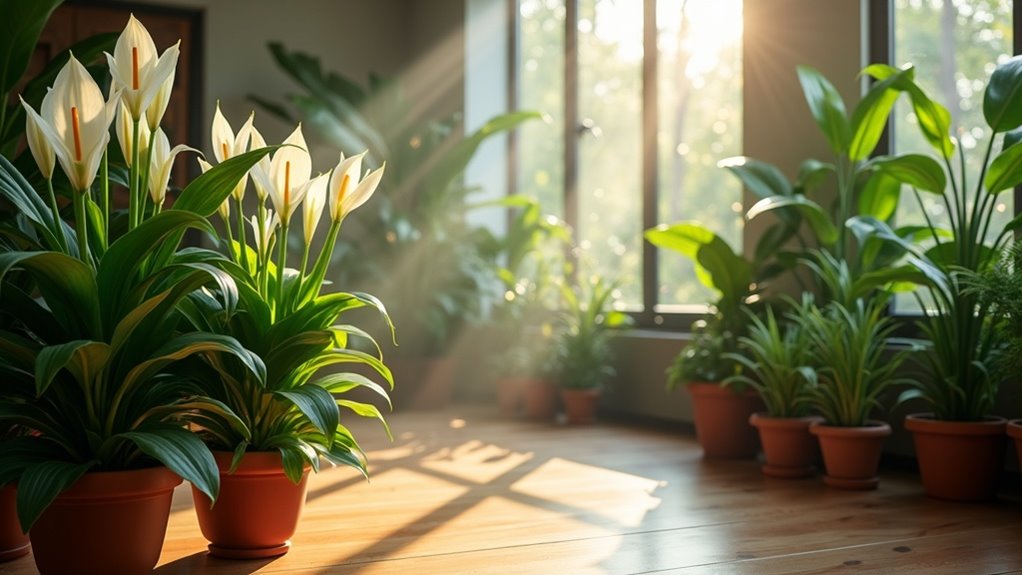
Plants can improve indoor air quality, but their measurable impact on air purification is limited. NASA’s study suggested potential, but real-world findings indicate you’d need 500 to 1,000 plants per square meter for significant effects. Factors like natural ventilation and mechanical air cleaners are more effective for removing pollutants. While plants enhance your environment aesthetically and boost your mental well-being, their role in purifying air is minimal. Discover more about effective air quality solutions and plant choices ahead.
Key Takeaways
- Houseplants can improve indoor air quality, but their effectiveness in real-world settings is limited compared to controlled environments.
- Significant VOC removal requires 500 to 1,000 plants per square meter, which is impractical for most homes.
- Natural ventilation and mechanical air cleaning methods are more effective for improving indoor air quality than relying on houseplants.
- While plants may not significantly purify air, they offer mental health benefits and enhance the aesthetic appeal of indoor spaces.
- Regular air quality monitoring and maintenance practices are essential for optimal indoor air quality beyond using houseplants.
The Science Behind Plant Air Purification
While many people believe that houseplants can greatly improve indoor air quality, the science behind plant air purification reveals a more complex reality.
The 1989 NASA study highlighted certain houseplants’ potential for VOC removal in controlled environments, but real-world results differ. A 2019 meta-analysis indicates you’d need between 10 to 1,000 plants per square meter for significant effects.
Most research shows that microbial activity in soil plays a more essential role in absorbing air pollutants. Ultimately, while houseplants enhance aesthetic quality, their contribution to air purification remains negligible, suggesting you shouldn’t rely solely on them for improving indoor air quality.
Limitations of Houseplants for Improving Air Quality
Houseplants may enhance your living space, but their ability to improve indoor air quality is limited. Research shows they’ve a negligible effect on removing indoor air pollutants.
Here are some key points to take into account:
- Achieving considerable VOC removal requires 500 to 1,000 houseplants per square meter.
- Studies often occur in controlled settings, not reflecting real-world conditions.
- Natural ventilation and mechanical air cleaning are more effective methods.
- Expert consensus, including insights from air quality researcher Richard L. Corsi, supports this view.
- While they add aesthetic value, houseplants don’t notably combat indoor air pollution.
Health Benefits Beyond Air Purification
Although many people focus primarily on the air purification capabilities of indoor plants, their health benefits extend far beyond just improving air quality.
You might find that these plants greatly enhance your mental health and overall well-being. Engaging with indoor plants can reduce anxiety and promote relaxation, leading to improved mood.
Engaging with indoor plants can significantly enhance mental health, reducing anxiety and fostering relaxation for a better mood.
Furthermore, the presence of greenery in indoor environments often boosts creativity and productivity, creating a more inviting atmosphere.
The aesthetic benefits shouldn’t be overlooked, as they contribute to a pleasant setting. Incorporating plants into your space can create a holistic environment that nurtures both psychological and emotional health.
Effective Indoor Air Quality Solutions
To achieve effective indoor air quality solutions, it’s essential to prioritize source control by eliminating products that emit high levels of volatile organic compounds (VOCs).
You can enhance your indoor air pollution abatement efforts by considering the following strategies:
- Increase ventilation by opening doors and windows for 10-15 minutes daily.
- Use HEPA air purifiers to filter out 99.97% of airborne particulates.
- Change furnace filters every 2-3 months, opting for MERV 13 filters.
- Employ portable HEPA air cleaners in living spaces.
- Regularly utilize measuring equipment to monitor air quality.
These methods can greatly help clean your indoor air effectively.
Choosing the Right Plants for Your Home
When considering indoor plants for air purification, you’ll find that certain species stand out due to their proven effectiveness in removing common indoor pollutants.
The Spider Plant excels at eliminating formaldehyde, while the Snake Plant absorbs both formaldehyde and benzene, making them low-maintenance choices.
Peace Lilies thrive in indirect light and effectively remove ammonia and formaldehyde, fitting seamlessly into various spaces.
If you have bright light, consider Aloe Vera for formaldehyde and benzene removal.
For high humidity environments, Boston Ferns can help with formaldehyde and xylene, though they require specific care in drier conditions.
Choose wisely to enhance your home’s air quality!





