
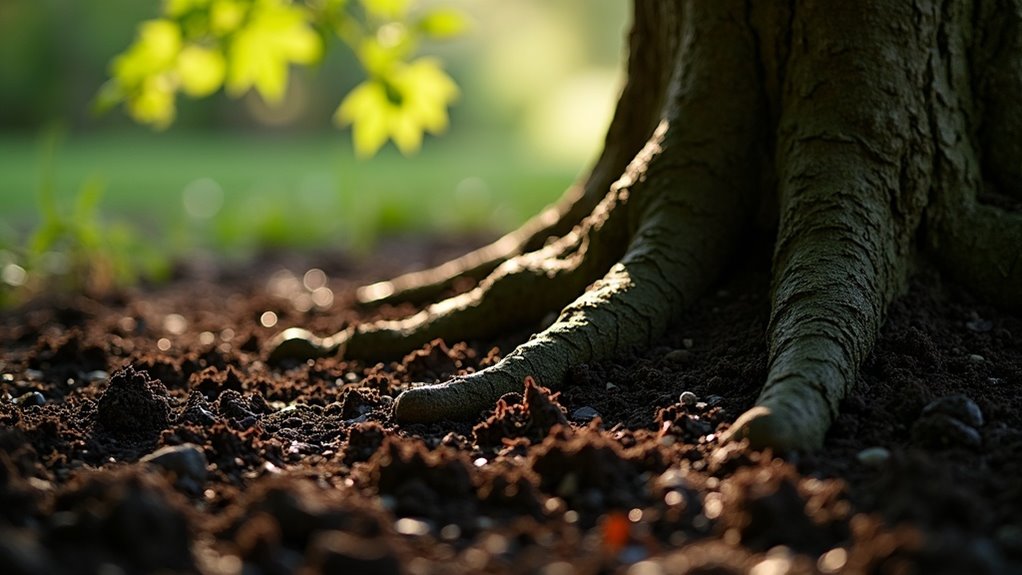
Mulch isn’t inherently unsafe around tree trunks, but how you apply it matters. Keep mulch 12 to 18 inches from the trunk, and maintain a depth of 2 to 4 inches. Excess mulch can lead to critical issues like girdling roots and moisture retention that suffocates roots. Regularly check your mulch levels to promote tree health. If you want to know the best practices for mulching and how to identify over-mulched trees, there’s more essential information ahead.
Key Takeaways
- Mulch should be kept 12 to 18 inches away from tree trunks to promote healthy growth and prevent bark decay.
- A depth of 2 to 4 inches is ideal for moisture retention without suffocating tree roots.
- Excess mulch can cause girdling roots, which choke the trunk and hinder growth.
- Over-mulching creates waterlogged conditions that reduce oxygen availability and attract pests.
- Regular monitoring and maintenance of mulch levels are crucial for long-term tree health.
The Importance of Proper Mulching Techniques
When you mulch around trees, understanding proper techniques is essential to maintaining their health and stability.
Keep mulch 12 to 18 inches away from the tree trunk to prevent moisture buildup that can decay the bark. A depth of 2-4 inches is preferable, as excessive layers can suffocate roots and encourage fungal growth.
Distribute mulch evenly around the root zone, extending to the tree’s drip line, to enhance moisture retention and root growth.
Regularly inspect and adjust mulch levels to avoid girdling roots, which can strangle the trunk and compromise tree stability, ensuring peak tree health for years to come.
Risks Associated With Excessive Mulching
While mulching is beneficial for trees, excessive application can pose significant risks to their health.
Excess mulch piled against the trunk creates a “volcano” effect, retaining moisture that can rot the bark and introduce fungal diseases. This practice may lead to girdling roots, where roots growing upwards into the mulch layer choke the trunk, restricting growth.
Additionally, waterlogged conditions from too much mulch reduce oxygen availability, hindering root development and potentially leading to tree decline.
Finally, the accumulation attracts pests, which can damage the inner bark and ultimately kill trees if these conditions persist for years.
How Over-Mulching Affects Tree Health
Over-mulching can lead to serious issues for your trees, primarily through the development of girdling roots that strangle the trunk.
Additionally, excessive mulch retains moisture against the bark, fostering conditions for fungal growth and wood decay diseases.
This combination of factors can jeopardize the health and stability of your trees, potentially resulting in irreversible damage over time.
Girdling Roots Consequences
Excessive mulch around trees can result in girdling roots, which strangle the trunk and hinder growth. This issue often leads to:
- Structural Instability: Girdling roots compromise the tree’s stability, increasing the risk of failure.
- Hidden Damage: Over-mulching can conceal decay and dead spots, delaying necessary interventions.
- Vulnerability in Young Trees: Trees planted within the last 10 to 20 years are particularly susceptible, as their root systems may not be robust enough to withstand the effects of over-mulching.
Regularly monitoring mulch levels and maintaining a distance of 12 to 18 inches from the trunk promotes healthier tree growth.
Moisture Retention Risks
When mulch is piled too high around a tree trunk, it can create excessive moisture retention, which adversely affects tree health.
This “mulch volcano” smothers roots, reducing oxygen levels and hindering root growth. Waterlogged conditions promote fungal growth and decay of bark tissues, leading to long-term decline.
Over-mulching can also result in nitrogen deficiencies, as decomposing bacteria compete for this essential nutrient. Symptoms of these issues often take years to appear, making it difficult to link them directly to over-mulching.
Additionally, trees suffering from moisture retention are more susceptible to pests like bark beetles, further exacerbating their decline.
Best Practices for Mulching Around Trees
When mulching around trees, keep the mulch 12 to 18 inches away from the trunk to promote healthy root growth and avoid damage.
Maintain a mulch depth of 2 to 4 inches to effectively conserve moisture and suppress weeds without suffocating the roots.
Regularly check and refresh the mulch to guarantee it remains at the ideal level for tree health.
Mulch Depth Guidelines
To promote healthy tree growth and secure adequate moisture retention, it’s crucial to adhere to proper mulch depth guidelines.
Follow these recommendations to optimize your mulch ring:
- Maintain a mulch depth of 2-4 inches to guarantee proper moisture retention while preventing suffocation of tree roots.
- Keep mulch at least 12-18 inches away from the trunk to avoid excessive moisture and allow for air circulation.
- Refresh mulch annually to maintain effective depth and prevent the negative impacts of decomposing material on soil quality and tree health.
Distance From Trunk
Properly distancing mulch from the trunk of a tree is essential for promoting healthy growth and preventing damage.
Keep mulch around 12 to 18 inches away from the trunk to avoid issues like stem girdling roots and decay. Create a ring shape for the mulch, ensuring it never contacts the trunk, which supports air circulation and prevents bark damage.
Aim for a mulch depth of 2 to 4 inches, evenly distributed around the root ball. Ideally, extend the mulch ring at least 3 feet, preferably 6 feet, from the trunk to foster healthy root development and maintain a proper tree structure.
Identifying and Fixing Over-Mulched Trees
Although mulch can benefit trees, over-mulching can create serious problems for their health and stability.
You can identify over-mulched trees by observing these signs:
- Yellowing leaves indicating stress.
- Decay around the trunk.
- Roots growing into the mulch layer instead of spreading in the soil.
To fix an over-mulched tree, carefully remove excess mulch from around the trunk, exposing the flare roots.
Maintain a mulch distance of 12 to 18 inches from the trunk.
Regular monitoring of mulch levels guarantees proper application techniques, preventing over-mulching and its risks to tree health.
Alternative Mulch Options for Tree Care
Choosing the right mulch is essential for maintaining tree health, especially after addressing issues of over-mulching.
Organic mulches like cedar and cypress mulch offer various benefits; cedar mulch repels pests and lasts longer, while cypress mulch enhances aesthetics but may increase soil acidity over time.
Raked leaves serve as a cost-effective alternative, promoting water penetration and reducing soil compaction.
It’s important to evaluate mulch types based on your specific tree species needs, as some trees respond better to particular organic mulches due to their unique soil and nutrient requirements, ultimately improving soil health and supporting overall tree importance.





