
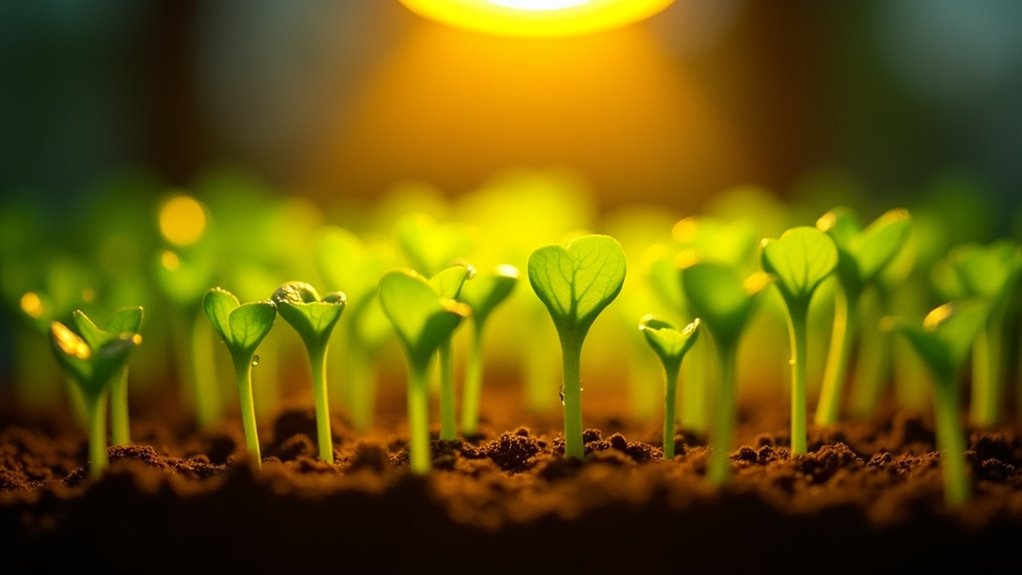
Yes, the distance of grow lights is crucial for seedlings’ healthy development. Proper placement guarantees ideal light intensity; fluorescent lights should be 3-12 inches above seedlings, while HID lights require 24-36 inches to prevent overheating. LED lights should start 12-24 inches away. Incorrect distances can lead to leggy growth or burnt leaves. Regular monitoring and adjustments based on your seedlings’ response are important. Learn more about the best practices for effective seedling care with grow lights.
Key Takeaways
- Proper grow light distance is crucial for preventing leggy seedlings or burnt leaves, ensuring healthy growth.
- Fluorescent lights should be placed 3-12 inches, HID lights 24-36 inches, and LED lights 12-24 inches above seedlings.
- Regular adjustments are necessary as seedlings grow to maintain optimal light exposure and prevent growth issues.
- Inadequate light intensity can weaken seedlings, highlighting the importance of monitoring and adjusting light distance.
- Consistent light duration, alongside correct placement, promotes effective photosynthesis and healthy seedling development.
Importance of Grow Light Placement for Seedlings
When you’re nurturing seedlings, the placement of grow lights is essential for their development. Correct distance guarantees ideal light intensity, promoting healthy growth.
Fluorescent lights should sit 3-12 inches above seedlings, while HID lights require 24-36 inches to avoid overheating. LED grow lights typically need to be positioned 12-24 inches away, starting higher and adjusting based on plant response.
Incorrect distances can lead to leggy seedlings from too far away or burnt leaves if too close. Regularly monitor and adjust your lights to mimic natural sunlight, guaranteeing your seedlings thrive in perfect conditions for growth.
Recommended Distance for Different Types of Grow Lights
Understanding the recommended distance for different types of grow lights is vital for ideal seedling development.
For fluorescent lights, place them 3-12 inches above seedlings to avoid overheating.
High-Intensity Discharge (HID) lights should be positioned 24-36 inches away to guarantee proper light distribution without burning the plants.
LED lights typically require a distance of 12-24 inches, starting higher and adjusting based on your seedlings’ response.
If seedlings look leggy, closer light placement is necessary; burnt leaves indicate lights are too close.
Proper light placement is essential for promoting healthy growth across various light types.
Impact of Plant Type on Light Requirements
Different plant types greatly influence light requirements, making it vital to tailor your grow light setup accordingly.
Understanding the unique light needs of various plants is crucial for optimizing your grow light setup.
For instance, vegetable seedlings like tomatoes and peppers need 14-16 hours of light daily, while succulents thrive with only 10-14 hours. Flower seedlings, such as marigolds and sunflowers, require 12-16 hours.
Light intensity, measured in DLI, is also important; young plants typically need 10-15 Mol/m²/day to prevent stretching and guarantee healthy growth.
As you choose your grow lights, remember that fluorescent lights can be positioned closer than HID lights, which should be maintained at a safe distance to avoid heat stress.
Adjusting Light Height Based on Seedling Growth
Selecting the right light height for seedlings is essential as they grow, directly impacting their health and development. Adjusting the distance based on their growth stage guarantees ideal light exposure.
- Position fluorescent lights 3-12 inches above seedlings and LED lights 12-24 inches away.
- If seedlings become leggy, lower the light to enhance intensity; if leaves brown, raise it to prevent damage.
- Regularly monitor seedling responses and adjust light height accordingly, keeping it closer during germination and increasing distance as they mature.
Timing and Duration of Light Exposure
To guarantee ideal growth, you should provide seedlings with 14-16 hours of light daily, as this supports their photosynthesis needs.
As they mature, gradually adjust the light duration to 12-14 hours to match their growth stages.
Optimal Light Hours
While seedlings thrive under extended light exposure, providing them with 14-16 hours of light each day is vital for their prime growth.
This duration helps prevent leggy development and guarantees effective photosynthesis. As seedlings mature, you need to gradually reduce light duration to 12-14 hours to adapt to their changing energy needs.
- Consistent light promotes healthy growth.
- Monitor seedlings regularly to adjust light duration.
- Allow a recovery period of around 10 hours of darkness.
Understanding these ideal light hours is important for anyone growing seedlings, so make certain you know how to implement this effectively.
Growth Stage Adjustments
As seedlings grow and develop true leaves, adjusting the timing and duration of light exposure becomes essential for their ideal health. Initially, aim for 14-16 hours of light per day, reducing to 12-14 hours as they mature. This helps prevent leggy growth caused by inadequate light exposure. You can also increase the distance of grow lights based on plant response, moving from 1.5-3 inches to 12-24 inches as light intensity needs decrease.
| Growth Stage | Light Duration |
|---|---|
| Initial Stage | 14-16 hours |
| Early Growth | 12-14 hours |
| Mature Seedlings | Gradual increase |
| Light Intensity | Decrease gradually |
| Recovery Period | 10 hours darkness |
Recovery Time Importance
Recovery time is crucial for seedlings, as it allows them to rest and rejuvenate after prolonged light exposure. Proper timing and duration of light exposure can optimize growth and prevent stress.
- Seedlings require 14 to 16 hours of light initially to thrive.
- A recovery period of about 10 hours off light helps them need less energy for growth.
- As they mature, gradually reduce light duration to 12 to 14 hours.
Monitoring these adjustments guarantees strong true leaves and robust development, safeguarding their health and vigor throughout their growth stages.
Observing Seedling Growth for Proper Light Adjustment
As you observe your seedlings, watch for signs of legginess, which indicate they’re stretching for light due to improper distance.
Healthy seedlings should produce strong true leaves; if you notice browning or burnt edges, your lights may be too close.
Regularly adjust the light height to maintain ideal conditions as your seedlings grow.
Identifying Leggy Seedlings
Leggy seedlings are a clear sign that your plants are struggling due to inadequate light exposure.
When seedlings stretch towards the light, it indicates they’re not receiving the right amount of light.
To identify leggy seedlings effectively, observe the following:
- Stems appear elongated and thin, with few true leaves.
- Seedlings divert energy into growth rather than developing strong foliage.
- Height increases rapidly, while leaf density remains low.
Monitoring Leaf Health
Observing leaf health is key to understanding how well your seedlings are responding to light conditions. By monitoring leaf health, you can assess if your light distance is appropriate.
Leggy seedlings with elongated stems indicate insufficient light intensity, while strong, well-developed true leaves signify healthy growth. Watch for yellowing or browning leaves, as these may suggest the grow lights are too close or too far away.
For ideal growth, maintain a light distance of 2-3 inches for lower wattage lights and 12-24 inches for higher wattage lights. Regular assessments allow for timely adjustments, ensuring your seedlings thrive.
Adjusting Light Height
Adjusting the height of your grow lights is essential for ideal seedling growth. If seedlings look leggy or have elongated stems, it means the grow light is too far away. Position white LED lights 1.5 to 3 inches above seedlings to prevent stretching.
– Monitor leaf color; brown edges indicate lights are too close.
Gradually raise the light height as seedlings mature to maintain proper exposure. Make certain seedlings receive 14 to 16 hours of light daily initially.
Regularly observing growth patterns will help you find the best light height for robust and healthy seedlings.
Best Practices for Seedling Care With Grow Lights
To guarantee your seedlings thrive under grow lights, it’s important to position the lights at the correct distance based on their type. Here are some best practices:
| Light Type | Distance from Seedlings |
|---|---|
| Fluorescent | 3-12 inches |
| LED | 12-24 inches |
| Light Hours | 14-16 hours daily |
| Adjustment | As seedlings mature |
Maintaining appropriate light intensity is essential to prevent leggy growth. Regularly monitor your seedlings; if they seem weak, adjust the light closer. Consistently provide the recommended light duration for ideal growth and health.





