
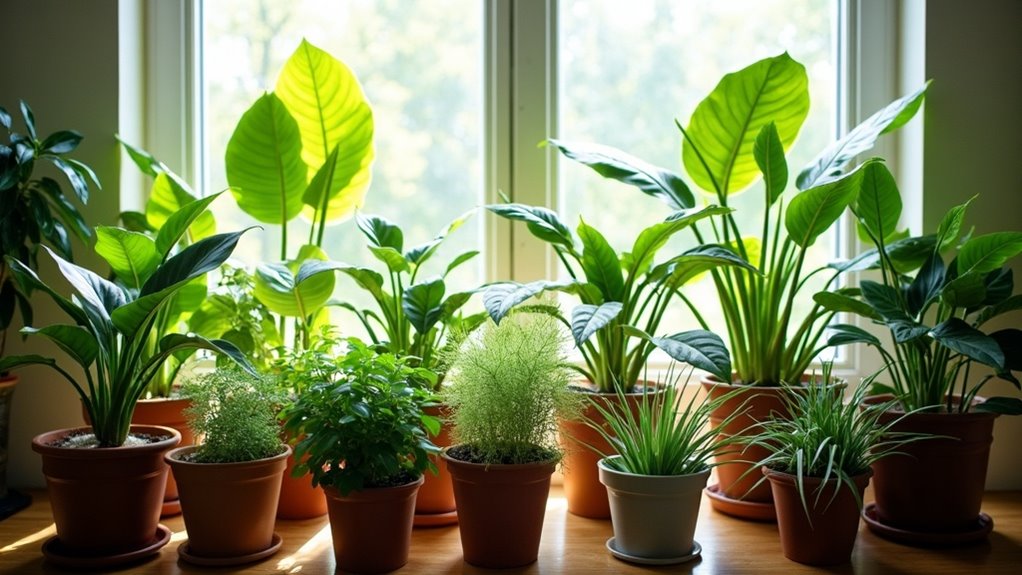
Yes, you should group plants by their light needs indoors. This practice optimizes their health and growth, ensuring each type gets the right amount of light. Low-light plants thrive in shadier spots, while sun-loving varieties need bright areas. Proper placement prevents issues like leggy growth and pest susceptibility. By organizing plants based on light requirements, you simplify care routines and enhance your indoor space. Discover more strategies to maintain the health of your grouped plants effectively.
Key Takeaways
- Grouping plants by light needs ensures optimal growth, preventing stress and promoting healthier plants.
- Low-light plants thrive in shadier areas, while sun-loving varieties require brighter spots for optimal health.
- Proper organization simplifies care routines and enhances the aesthetic appeal of indoor spaces.
- Avoid overcrowding plants with different light requirements to prevent leggy growth and pest issues.
- Regularly monitor light conditions and adjust plant placements as seasons change for continued health.
The Importance of Light for Plant Health
Light plays an essential role in plant health because it fuels photosynthesis, the process that allows plants to convert light energy into the chemical energy they need to grow.
Understanding light requirements is critical for indoor plants, as varying needs can lead to issues like leggy growth or leaf burn. Proper placement of each plant based on its light needs guarantees peak growth.
Grouping plants with similar light requirements simplifies your care routines, allowing you to provide tailored environments. By strategically organizing your plants, you enhance their health and liveliness, making sure they thrive in your indoor space.
Assessing Light Conditions in Your Home
To successfully assess light conditions in your home, start by identifying natural light sources and their orientations.
Use a light meter to measure intensity in different areas, ensuring you understand the varying light levels throughout the day.
Based on these observations, you can adjust your plant placement to optimize their growth according to their specific light requirements.
Natural Light Sources
Understanding the natural light sources in your home is essential for nurturing healthy indoor plants. Assess the direction of your windows; north-facing ones offer low to moderate indirect light, while south-facing windows provide bright light, affecting plant selection and placement.
Measure light intensity throughout the day to identify areas receiving the most light. Use sheer curtains to diffuse harsh sunlight, balancing light for sun-loving and shade-tolerant plants.
Seasonal changes in natural light require adjustments in plant placements or supplemental lighting. Group plants with similar light needs together to prevent competition and guarantee ideal growth for all your indoor plants.
Light Intensity Measurements
Measuring light intensity in your home is essential for determining the best conditions for your indoor plants.
Light intensity is measured in foot-candles or lux; low-light conditions range from 50 to 100 foot-candles, suitable for plants like snake plants. Bright light exceeds 500 foot-candles, perfect for succulents.
Many houseplants prefer indirect sunlight, thriving near sheer curtains or in rooms with north-facing windows. The position of south-facing windows provides the most sunlight, impacting plant selection based on their light requirements.
Using a light meter helps assess these conditions, allowing you to optimize plant placement and effectively group houseplants together.
Adjusting Plant Placement
After evaluating light intensity, it’s time to adjust the placement of your plants to match their specific light needs.
Assess your window directions; north-facing ones provide low to moderate indirect light, while south-facing windows offer bright indirect light to full sun.
Use a light meter app to measure sunlight intensity in different areas.
Position low-light tolerant plants like snake plants in dim areas, and place sun-loving plants such as succulents in bright spots.
Grouping Plants by Light Needs
When grouping plants by light needs, it’s essential to understand their specific light requirements to guarantee ideal placement.
Position low-light plants in shadier areas and sun-loving varieties where they can receive direct sunlight.
This strategic organization not only promotes healthy growth but also enhances your indoor aesthetics.
Light Requirements Overview
Understanding the light requirements of your indoor plants is essential for their health and growth, as each species has specific needs that dictate its placement.
Grouping plants according to their light needs allows you to optimize growth and prevent stress. Low-light tolerant plants, like snake plants, thrive in dim spaces, while sun-loving succulents need bright, direct sunlight.
Optimal Plant Placement
To achieve ideal plant placement, you need to take into account the specific light requirements of each species. Grouping plants by their light needs guarantees optimal placement, promoting healthy plant growth.
For example, position low-light tolerant plants like snake plants together in dim areas, while sun-loving varieties, such as succulents, thrive near bright windows. This organization simplifies care routines, allowing for consistent watering and reducing the risk of over or under-watering.
Benefits of Proper Plant Placement
Proper plant placement offers numerous benefits that greatly enhance indoor gardening success.
By grouping plants according to their light needs, you can achieve:
- Optimal Sunlight: Guarantees each species receives the right amount of light for photosynthesis, promoting healthy growth.
- Reduced Stress: Prevents damage to low-light plants by avoiding exposure to harsh sunlight, reducing wilting and leaf burn.
- Simplified Maintenance: Organizing plants by light requirements streamlines care routines, aligning watering and humidity needs for a more efficient approach.
With proper placement, you’ll foster harmonious growth, minimizing competition for light and creating a thriving indoor garden.
Common Mistakes to Avoid When Grouping
Grouping plants by their light needs is essential for maintaining a healthy indoor garden, yet many gardeners make common mistakes that can undermine their efforts.
One mistake is grouping plants with varying light requirements, which can hinder the growth of light-sensitive species. Additionally, overcrowding plants in dimly lit areas can lead to leggy growth and increased pest susceptibility due to poor airflow.
Neglecting specific needs, like light exposure, may cause stress. Failing to rotate plants for even light distribution can result in uneven growth.
Tips for Maintaining Grouped Plants
Maintaining the health of your grouped plants requires attention to their specific needs and the environment they share. Here are some tips to guarantee proper care:
Ensure your grouped plants thrive by paying close attention to their individual needs and shared environment.
- Monitor light conditions: Regularly check the light needs of each plant and adjust their positions to provide adequate sunlight.
- Establish a watering schedule: Use a moisture meter to assess soil dampness and tailor your watering routine to meet the varying hydration requirements of plants grouped together.
- Encourage airflow: Avoid overcrowding and prune dead leaves to promote healthy growth, allowing air circulation around your plants.





