
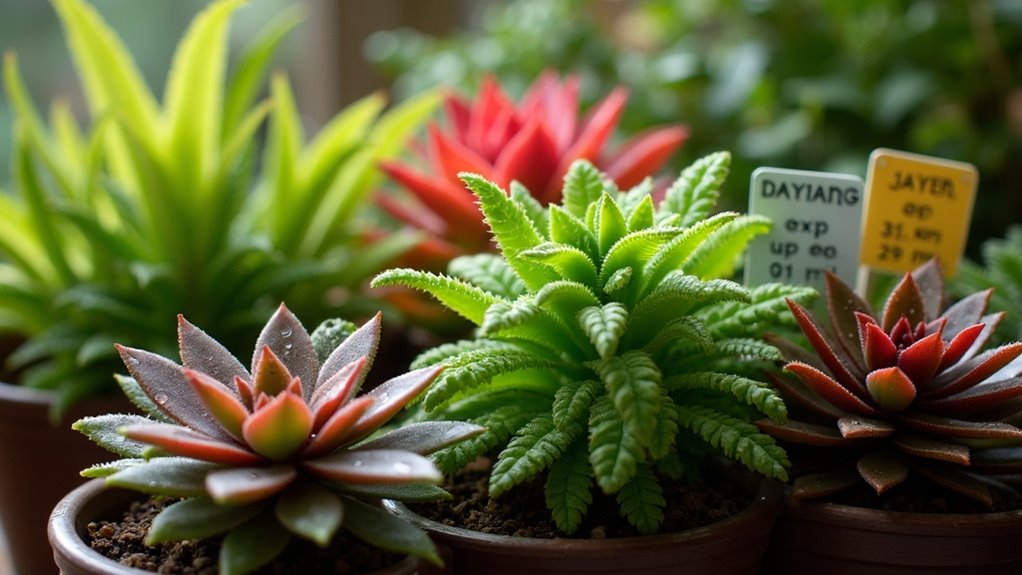
Yes, grouping plants by their watering schedules is essential for optimizing water use and ensuring plant health. It allows you to establish effective watering routines, decreases water waste, and creates a better garden environment. By categorizing plants into high, moderate, and low water needs, you can tailor your irrigation approach. This process also helps minimize disease risks and simplifies maintenance. Explore further to discover practical tips for implementing this strategy in your garden.
Key Takeaways
- Grouping plants by watering needs enhances water efficiency and promotes a healthier garden environment.
- It simplifies irrigation management, allowing for tailored watering schedules that prevent overwatering.
- Organizing plants can lead to significant water conservation, potentially reducing usage by 20-50%.
- Monitoring soil moisture becomes easier when plants are grouped, ensuring optimal hydration for each plant type.
- A well-planned layout can minimize disease risks by maintaining ideal soil conditions for different water needs.
Benefits of Grouping Plants By Water Needs
When you group plants by their water needs, you not only enhance water efficiency but also create a healthier garden environment.
By clustering plants with similar water needs, you can establish a more effective watering schedule, preventing overwatering and ensuring each plant receives the moisture it requires. This practice conserves water, potentially reducing overall water usage by 20-50%.
Healthier plants thrive in ideal soil conditions, minimizing disease risks. Additionally, simplifying landscape maintenance allows for easier irrigation management, saving time and effort in daily assessments.
Ultimately, grouping plants fosters sustainability while promoting robust, thriving gardens.
How to Group Plants By Water Needs
Grouping plants by their water needs is essential for creating an efficient and sustainable garden. Start by categorizing your plants into three groups: high, moderate, and low water needs.
Research each plant’s requirements using resources like the WUCOLS database to guarantee you understand their specific needs. Design your garden layout to separate these zones, which allows for efficient watering.
Implement targeted irrigation systems—such as drip irrigation for high-water plants—while using sprinklers for others.
Finally, regularly monitor soil moisture and adjust your watering schedules as seasons change, assuring your plants receive the right amount of water for ideal growth.
Challenges of Grouping By Water Needs
While organizing plants by their water needs can streamline your gardening efforts, several challenges may arise. Microclimates within your garden can create variations in drying rates, complicating watering schedules. Additionally, aesthetic preferences might clash with strict grouping, as you might prefer mixed planting beds. Water requirements can also change as plants grow, necessitating ongoing adjustments. This can lead to uneven watering, where thirsty plants receive insufficient water while others are overwatered. Balancing these factors requires careful monitoring to guarantee each plant gets the appropriate amount of water.
| Challenge | Impact on Watering | Solution |
|---|---|---|
| Microclimates | Uneven drying | Monitor conditions |
| Aesthetic preferences | Mixed beds vs. grouping | Create varied zones |
| Changing water needs | Ongoing adjustments | Regular assessments |
| Thirsty vs. overwatered | Imbalanced hydration | Tailored watering plans |
Examples and Case Studies
By effectively organizing plants according to their watering needs, gardeners can achieve significant improvements in both efficiency and plant health.
Organizing plants by watering needs enhances efficiency and boosts overall plant health.
For instance, case studies show that when you group plants with similar water use, such as separating high water-requirement cucumbers from low water plants, you can enhance irrigation practices.
In ornamental gardens, creating lush zones for moisture-loving native and adapted plants alongside dry areas for drought-tolerant species optimizes aesthetics and water efficiency.
Implementing these strategies can lead to reduced under-watering issues, improved plant vigor, and a 20-50% decrease in water usage—allowing for tailored irrigation based on the specific amount of water each plant type needs.
Practical Tips for Implementation
Organizing plants based on their watering needs is only the first step; implementing an effective watering strategy is key to maximizing plant health and resource efficiency.
- Establish a watering schedule that reflects each plant’s water needs.
- Use drip irrigation systems to target specific zones, minimizing waste.
- Regularly check soil moisture levels to adjust your schedules.
- Apply mulch to retain moisture and reduce evaporation.





