
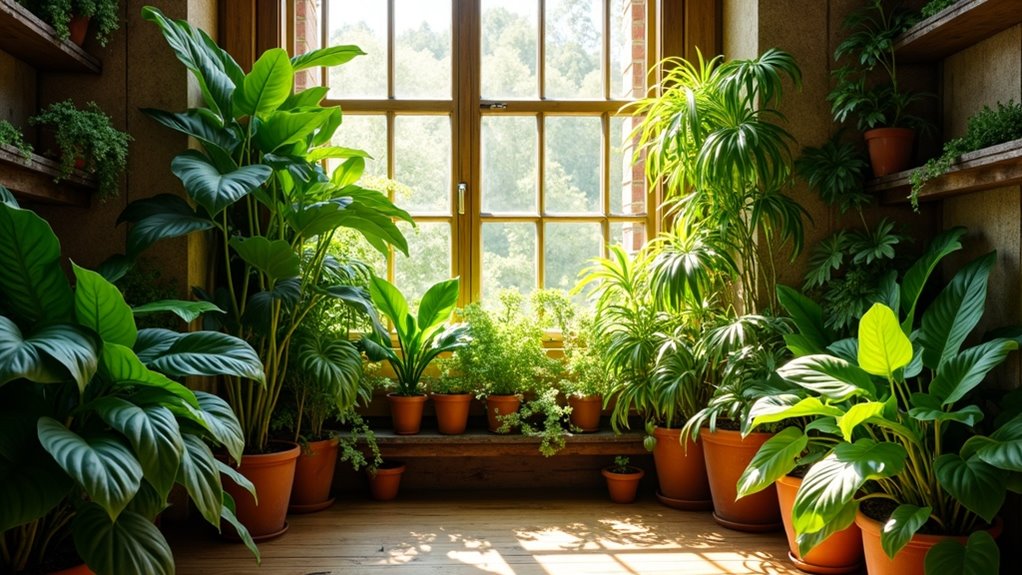
Yes, rotating your plants weekly can promote even growth by ensuring balanced light exposure. This practice counters phototropism, where plants lean toward light, causing uneven development. Regular rotation allows all sides of the plant to receive sunlight, resulting in healthier and more symmetrical growth. Depending on your plant’s light conditions, you might adjust the rotation frequency. If you’re curious about ideal frequencies and strategies for rotation, there’s more valuable information to explore.
Key Takeaways
- Regular rotation, ideally every three days to two weeks, promotes even growth by ensuring all sides receive adequate light exposure.
- Weekly rotation can be beneficial for fast-growing plants or those in bright light conditions to prevent leaning.
- Plants in moderate to low light may not require weekly rotation; every few weeks to once a month is sufficient.
- Consistent rotation helps maintain symmetrical development, leading to healthier and sturdier plant growth.
- If frequent rotation is challenging, consider using fluorescent lights for even illumination on shaded sides, reducing the need for physical movement.
Understanding Phototropism in Houseplants
When you consider how houseplants grow, it’s essential to understand phototropism, the phenomenon that drives their growth towards light. This process involves auxins, plant hormones that accumulate on the shaded side, causing those cells to elongate.
Meanwhile, the sunlit side’s cells grow shorter and sturdier, leading to a bending effect that directs the plant towards the light source. To promote balanced growth, you should rotate your plants regularly.
Benefits of Regular Plant Rotation
Regularly rotating your houseplants offers significant benefits that can enhance their overall growth and health. This practice guarantees even light exposure, promoting symmetrical development and reducing the risk of lopsided growth due to phototropism. Additionally, consistent rotation fosters sturdy new growth and mitigates stress from uneven light conditions. Aesthetically, plants with uniform growth create a more visually appealing display in your home. By integrating rotation into your watering routine, you simplify plant care while reaping these benefits.
| Benefit | Description | Result |
|---|---|---|
| Even Light Exposure | Prevents uneven growth | Healthier plants |
| Enhanced Growth | Encourages sturdy new growth | Greater resilience |
| Aesthetic Appeal | Creates visually pleasing displays | Improved interior design |
Recommended Rotation Frequency
To maximize the benefits of plant rotation, understanding the recommended frequency is important for maintaining ideal growth.
Generally, you should rotate houseplants every three days to two weeks for even light exposure. A practical method is to turn them a quarter turn each time you water, which is typically once a week.
For bright light conditions, a rotation every few months suffices, while plants in moderate to low light should be turned every few weeks to once a month.
Tailoring this frequency based on your specific light conditions can enhance plant health considerably, especially if you’re managing a new account of indoor plants.
Strategies for Rotating Large Plants
Rotating large plants can pose unique challenges, but implementing effective strategies can simplify the process. Consider using mobility aids like wheels or plant stands to enhance movement and guarantee consistent light exposure. Aim to turn your plants a quarter turn at each watering, maintaining symmetry without excessive strain. Regular rotation every two weeks can prevent leaning and fit into manageable care routines. Observe light patterns in your space to determine ideal rotation frequency.
| Strategy | Frequency | Notes |
|---|---|---|
| Use mobility aids | As needed | Facilitates easier rotation |
| Quarter turn | At each watering | Reduces strain |
| Rotate every two weeks | Recommended | Prevents leaning |
| Staking | As necessary | Provides support |
Alternatives to Rotation: Using Fluorescent Lights
While physical rotation of plants can promote even growth, utilizing fluorescent lights serves as an effective alternative for ensuring balanced light exposure.
By positioning fluorescent lights on the shady side of your plants, you can provide consistent illumination, preventing them from leaning toward natural light sources. Placing a light directly above enhances growth across all sides, especially for those with limited window access.
This method simplifies maintenance, ensuring adequate light reaches every part of the plant. Overall, integrating fluorescent lights into your plant care routine can foster healthier stems and fuller foliage, contributing to robust growth without the hassle of rotation.
Common Challenges in Plant Rotation
Although rotating plants is beneficial for promoting even growth, several common challenges can complicate this practice.
Large, heavy plants often resist regular rotation, making it difficult to guarantee balanced light exposure. If you plant a quarter turn too frequently or improperly, some species may become unbalanced and even fall out of their pots, necessitating staking for support.
Additionally, physical limitations, like back pain, can hinder your ability to rotate as recommended. Not all plants respond equally, particularly older woody stems, which may show less responsiveness to light direction changes.
Environmental factors like window orientation further complicate effective rotation practices.
Engaging With Your Plants During Rotation
Engaging with your plants during rotation not only fosters a deeper connection but also enhances your overall care routine.
Every time you rotate, take a moment to inspect their health, checking for signs of stress or pests. Talking to your plants can create a positive atmosphere, contributing to their well-being.
Many plant owners consider rotation as “exercise,” emphasizing movement’s role in promoting healthy growth.





