
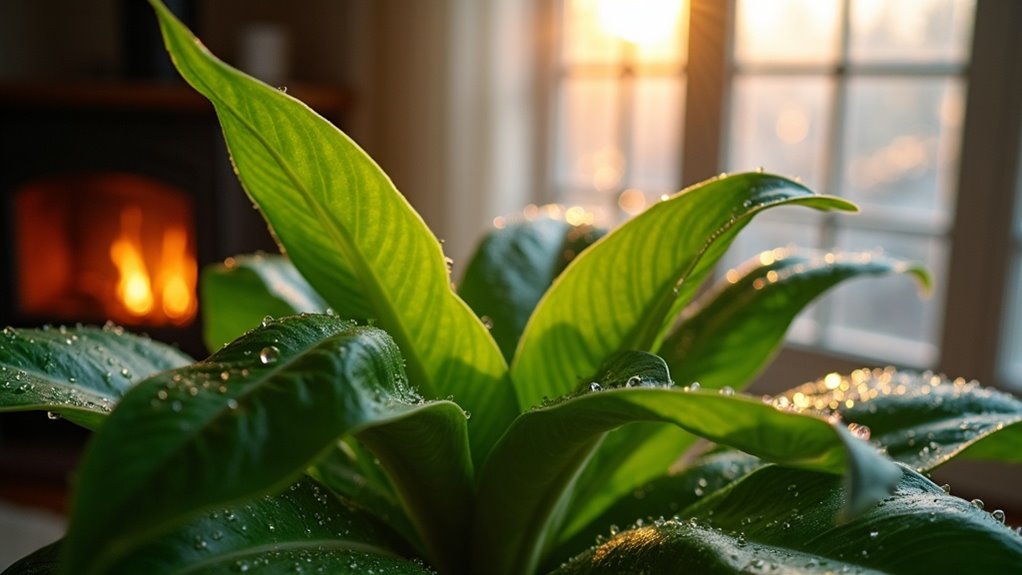
Yes, you can mist your plants during the winter heating season, but it’s often insufficient to combat low humidity levels that can drop to 10-20%. Misting may provide a temporary boost in humidity for your houseplants, but excessive misting can lead to fungal issues. Aim to mist two to three times a week in the morning for best results. To guarantee ideal humidity, consider other methods alongside misting, and there’s more to explore on maintaining proper conditions.
Key Takeaways
- Misting can temporarily increase humidity but should be done sparingly to prevent fungal growth and leaf rot in winter.
- Indoor humidity levels often drop to 10-20% during winter, stressing humidity-loving plants.
- Mist plants in the morning to allow for evaporation before nightfall and avoid misting fuzzy leaves.
- Alternatives to misting, like grouping plants or using pebble trays, can provide better humidity without risks.
- Regularly monitor humidity levels with a hygrometer to ensure optimal conditions for plant health during winter.
Understanding Plant Humidity Needs
Understanding the humidity needs of your houseplants is essential, especially during winter when indoor air can become extremely dry.
Many plants thrive at humidity levels of 40 to 50 percent, but winter conditions can drop to 10 to 20 percent, stressing your greenery.
Many houseplants prefer humidity levels of 40 to 50 percent, but winter can drastically reduce this, causing stress to your plants.
Tropical plants like ferns and philodendrons particularly suffer without adequate humidity, showing symptoms like wilting and browning edges.
Misting can help boost indoor humidity, but it’s important to research individual species’ needs.
The Effect of Winter Heating on Indoor Humidity
Winter heating systems can drastically alter indoor humidity, creating a challenging environment for houseplants.
These systems can drop humidity levels to 10 to 20 percent, far below the 40 to 50 percent preferred by many plants. This dry air stresses your plants, leading to wilting, browning leaf edges, and premature dropping of blooms.
With central heating exacerbating these effects, it’s important to monitor indoor humidity. Misting can help raise humidity levels temporarily, but understanding the impact of winter heating is essential for maintaining a healthy environment.
Providing adequate water and humidity is necessary for your plants’ overall well-being during winter.
Misting: Benefits and Limitations
While misting can offer a quick boost of moisture for houseplants during the dry winter months, it comes with both benefits and limitations.
Here are three key points to reflect on:
- Misting temporarily raises relative humidity, maintaining leaf moisture and supporting plant health.
- However, excessive misting increases the risk of fungal growth and leaf rot, particularly if done too frequently.
- Misting is ineffective for considerably raising humidity levels in extremely dry conditions; alternative methods like humidifiers or pebble trays may be more beneficial.
Use misting wisely to complement your plant care, but be aware of its limitations during winter heating season.
When to Mist Your Plants
To effectively mist your plants, aim to do it in the morning between 7 and 9 a.m.
This timing allows moisture to evaporate throughout the day, reducing the risk of mold.
Light misting two to three times a week is ideal during winter, but be sure to adjust based on your indoor climate and the specific needs of your plants.
Best Time to Mist
Misting your plants in the morning, ideally between 7-9 a.m., is essential for ideal moisture absorption. This timing allows moisture to be absorbed before nighttime when humidity levels can drop.
Here are some tips to maximize effectiveness:
- Focus on both the top and underside of leaves, as most stomata are located underneath.
- Misting helps increase relative humidity, combating the effects of dry air indoors.
- Adjust misting frequency based on climate changes; two to three times a week can be beneficial during winter.
Misting Frequency Guidelines
Understanding the right misting frequency is essential for maintaining your plants’ health during winter. Aim to mist your plants two to three times a week, adjusting based on their individual needs and the relative humidity of your indoor environment.
For humidity-loving plants, at least weekly misting is recommended, especially in very dry conditions. Misting in the morning prevents moisture accumulation overnight, reducing the risk of mold and rot.
While keeping plants together can help boost humidity, avoid daily misting to prevent leaf rot and fungal issues. Finding a balanced misting schedule is key to your plants’ well-being.
Best Practices for Misting Houseplants
When you consider the needs of your houseplants during winter, misting can play an essential role in maintaining their health and vigor.
Follow these best practices for effective misting:
- Timing: Mist in the morning to allow water droplets to evaporate before nightfall, reducing fungal risks.
- Frequency: Aim to mist humidity-loving plants two to three times a week to maintain ideal absorption without over-saturation.
- Technique: Use a quality spray bottle for a fine mist, avoiding plants with fuzzy leaves, as excess moisture may lead to rot.
Monitor your plants closely for signs of stress and adjust as needed for relative humidity.
Plants That Should Not Be Misted
While misting can benefit many houseplants, some species are particularly sensitive to moisture on their leaves and thrive in drier conditions.
Cacti and succulents, for instance, can suffer from rot if misted, as they don’t require extra moisture.
Cacti and succulents are prone to rot when misted, as they thrive without additional moisture.
Fuzzy-leaved plants like African violets may develop leaf damage from water spots caused by misting.
The fiddle leaf fig is also sensitive to excess humidity, leading to fungal issues.
Plants that prefer drier conditions, such as certain palms and snake plants, won’t benefit from misting and may experience stress from over-misting.
Always check care guides before misting any plant.
Alternatives to Misting for Increasing Humidity
If you’re looking for effective ways to increase humidity around your plants without resorting to misting, several alternatives can help.
Here are three practical methods:
- Group your plants: Their combined transpiration can boost the local relative humidity.
- Use pebble trays: Fill trays with water, ensuring the water stays below the pot’s drainage holes to avoid root rot.
- Place bowls of water nearby: As the water evaporates, it’ll add moisture to the air.
Additionally, consider using a humidifier for consistent humidity levels, and check for naturally humid areas like kitchens or bathrooms to support your plants.
Community Insights and Resources for Plant Care
Joining plant care communities can be a game-changer for your winter humidity challenges.
These platforms, like Plant Hoarders Anonymous and the Houseplant Resource Center Facebook group, provide practical advice and shared experiences from fellow enthusiasts.
Additionally, you can find helpful resources like the Houseplants for Millennials book and webinars that focus on effective humidity management strategies.
Plant Care Communities
Participating in plant care communities can greatly enhance your understanding of effective plant maintenance, especially during the challenging winter months.
Engaging with fellow enthusiasts allows you to learn valuable techniques for caring for indoor plants in low relative humidity.
Here are three benefits of joining these communities:
- Knowledge Sharing: Members discuss misting practices that can help increase humidity for your plants.
- Support Network: You’ll find encouragement from both novice and experienced plant owners.
- Educational Resources: Access webinars and expert advice to refine your plant care skills.
Stay connected and guarantee your plants thrive this winter!
Online Resources Available
Wondering how to guarantee your plants get the humidity they need during the dry winter months? Online communities like Plant Hoarders Anonymous connect you with fellow enthusiasts who share effective misting practices.
The Houseplant Resource Center on Facebook is another great resource, offering discussions on common issues and winter care techniques. For a deeper dive, consider resources like “Houseplants for Millennials,” which provides practical tips on maintaining humidity levels.
Additionally, webinars and online tutorials from plant care experts can enhance your understanding of humidity management. Engaging with these resources will improve your plant care methods and promote healthier growth.





