
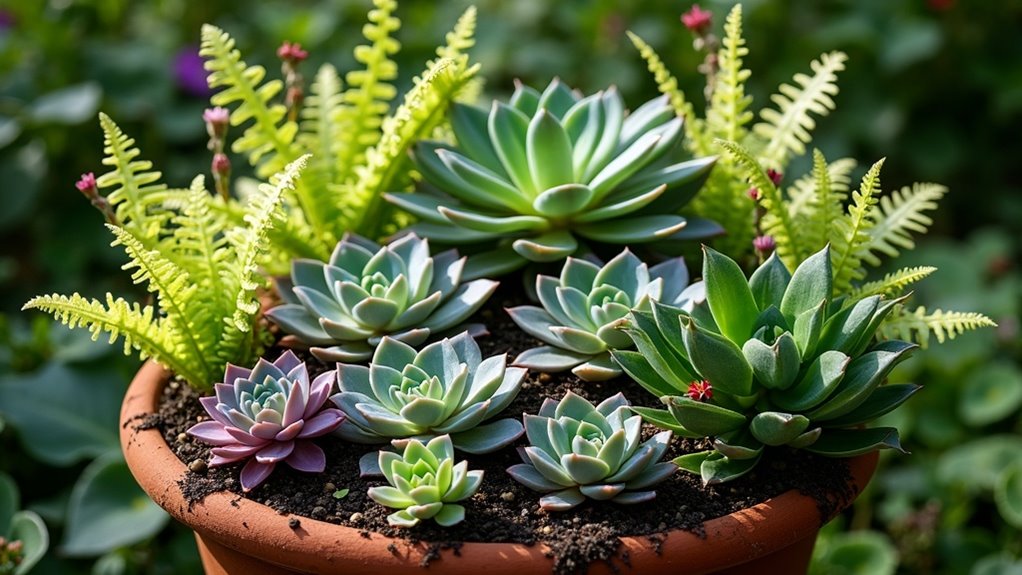
Yes, plants can share containers in mixed plantings, as long as they have compatible growth needs. Choose species that thrive in the same soil, light, and water conditions to guarantee harmonious growth. Mixing different plant types—such as thrillers, fillers, and spillers—enhances visual interest while creating a thriving ecosystem. Proper maintenance, like monitoring soil moisture and pest control, is key to success. Explore further to discover tips on plant selection and arrangement for ideal results.
Key Takeaways
- Yes, plants can share containers in mixed plantings if they have similar soil, light, and watering needs.
- Choosing compatible plant species enhances growth and creates a thriving ecosystem in shared containers.
- Mixing thrillers, fillers, and spillers can optimize visual interest and space in container gardens.
- Regular maintenance is essential to prevent overcrowding and ensure all plants receive adequate resources.
- Monitor for pests and adjust arrangements as needed to promote healthy coexistence among plants.
Benefits of Mixing Potted Plants
When you mix potted plants in containers, you not only enhance your garden’s aesthetics but also create a thriving ecosystem.
Mixed plantings maximize space efficiency, allowing you to combine plants with similar soil, light, and watering needs. This harmonious environment promotes healthier growth and attracts beneficial pollinators and predatory insects, boosting biodiversity.
Maximizing space with mixed plantings fosters healthy growth while attracting vital pollinators and enhancing biodiversity.
Additionally, incorporating companion planting can naturally deter pests, minimizing the need for chemical treatments. By selecting diverse plant species that complement each other, you cultivate a visually appealing mini-landscape while fostering a sustainable garden.
Embracing mixed plantings leads to a healthier, more vibrant gardening experience.
Choosing Compatible Plant Species
When choosing compatible plant species for your container, assess their nutrient and space needs to guarantee they coexist harmoniously.
You’ll want to mix species that not only thrive under similar conditions but also contribute to a diverse ecosystem, enhancing growth and minimizing pest issues.
Assessing Plant Compatibility
Selecting compatible plant species for mixed containers is essential for creating a thriving garden display, as each plant’s specific needs can greatly impact the others.
Prioritize plants that require similar soil, light, and watering conditions to guarantee they flourish together. Choose a dynamic arrangement with a taller “thriller,” medium “filler,” and trailing “spiller” plants for visual interest.
Avoid pairing plants that compete for nutrients, like nitrogen-fixers with heavy feeders. Additionally, consider seasonal growth patterns and pest interactions; companion planting can deter pests, enhancing overall health.
Thoughtful selection promotes harmony in your plant pots, leading to a successful mixed planting.
Nutrient and Space Needs
To guarantee a successful mixed container garden, it’s crucial to assess the nutrient and space needs of each plant species.
Prioritize plants with similar requirements to avoid competition for nutrients in the soil. Consider the mature size of each plant to guarantee enough space for growth.
Here are key factors to remember:
- Choose species with matching soil, light, and watering needs.
- Avoid overcrowding that restricts growth.
- Combine thrillers, fillers, and spillers for balanced arrangements.
- Monitor soil moisture and nutrient levels regularly.
Benefits of Diversity
Evaluating nutrient and space needs sets the stage for exploring the benefits of diversity in your container garden.
Choosing compatible plants, both edibles and ornamentals, enhances growth by aligning soil, light, and water requirements, reducing competition for nutrients. A diverse mix creates an attractive mini-landscape, incorporating thrillers, fillers, and spillers for visual depth.
Companion planting not only deters pests but also fosters a healthier ecosystem, while attracting beneficial insects boosts pollination and fruit production.
Essential Container Selection Tips
When selecting containers for your plants, prioritize those with drainage holes to prevent water buildup and root rot.
Guarantee the size accommodates the mature growth of all plants sharing the space, promoting healthy development.
Additionally, choose materials that allow airflow, like terracotta or wood, while considering how the container’s aesthetics fit into your overall garden design.
Drainage and Size Considerations
Selecting the right container for your plants hinges on two critical factors: drainage and size. Proper drainage holes prevent root rot and excess moisture, which can lead to pests and diseases.
Additionally, the size of the container should accommodate the mature size of your plants, allowing their root systems to thrive.
Consider these tips:
- Choose containers with adequate drainage holes.
- Select sizes that support the plants’ growth rates.
- Larger containers retain moisture better, benefiting mixed plantings.
- Elevate containers with pavers to improve drainage and air circulation.
These considerations guarantee your plants remain healthy and vibrant in shared containers.
Material and Aesthetic Choices
Choosing the right materials for your containers not only impacts plant health but also enhances the overall aesthetic of your garden.
Opt for containers with drainage holes to prevent root rot and excess moisture, which can lead to pests and fungi. Carefully consider size; each container must accommodate your plants’ growth.
Align materials with your garden’s theme—terracotta offers a rustic vibe, while metal brings a modern touch. Elevate containers with pavers or stands to improve drainage and visual appeal.
Ultimately, your selections should support plant health and complement your garden’s design seamlessly.
Effective Plant Arrangement Techniques
How can you create visually appealing plant arrangements that thrive together? Consider these effective techniques to guarantee your plants together go well:
- Use a mix of thrillers, fillers, and spillers for height and depth.
- Balance three to four flowering plants for each non-flowering one for diversity.
- Group plants with similar light, water, and nutrient needs to avoid competition.
- Regularly assess arrangements, adjusting for healthy growth and preventing overcrowding.
Maintenance Strategies for Mixed Plantings
Creating a visually stunning arrangement of plants isn’t just about placement; ongoing maintenance plays an essential role in their success.
Implement effective maintenance strategies by regularly monitoring soil moisture to prevent root rot, adjusting your watering frequency according to weather conditions.
Fertilize after initial planting and again mid-season to replenish nutrients.
Observe growth patterns to guarantee no plant dominates others for light and nutrients.
Be vigilant for pest pressures, employing natural deterrents when necessary.
Regularly prune or deadhead to enhance air circulation and light penetration, making sure all plants thrive in your mixed container environment.
Community Insights on Companion Planting
While exploring the world of companion planting, you’ll find that community insights can greatly enhance your gardening practices.
Engaging with fellow gardeners reveals valuable strategies for mixing certain plants in containers. Here are key takeaways:
- Pair aromatic herbs like rosemary and lavender with vegetables to deter pests.
- Understand each plant’s space, light, and nutrient needs to prevent overcrowding.
- Explore the “Three Sisters” method, showcasing beneficial plant relationships.
- Share knowledge on managing invasive species for a healthier ecosystem.
These insights not only improve aesthetics but also boost functionality in your garden, creating a thriving container environment.





