
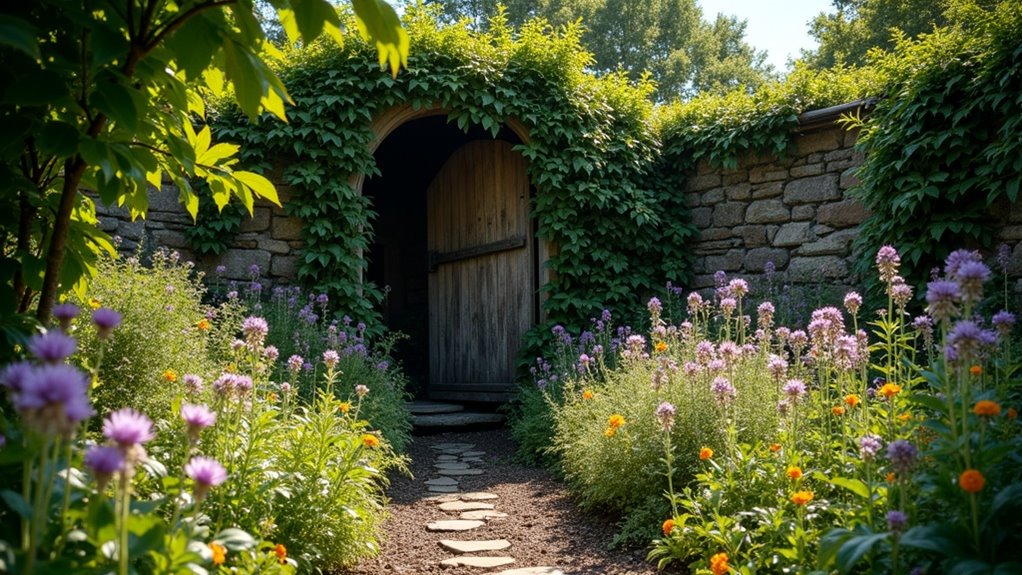
Yes, plants can definitely self-seed in cottage gardens, enhancing their natural charm with minimal maintenance. These resilient plants drop seeds that germinate on their own, providing diverse blooms year after year. However, their success depends on soil, climate, and garden management. Keeping an eye on growth guarantees a balanced ecosystem and prevents overcrowding. By choosing the right varieties, you can create a vibrant, low-maintenance haven. There’s even more to discover about selecting and managing self-seeders effectively.
Key Takeaways
- Self-seeding plants thrive in cottage gardens, enhancing biodiversity and requiring minimal maintenance once established.
- Popular self-seeding flowers like Common Poppies and Alliums can create vibrant displays in cottage gardens.
- Garden management practices, such as weeding and dead-heading, can improve the success of self-seeding plants.
- Monitoring growth is essential to prevent overcrowding and maintain the aesthetic appeal of cottage gardens.
- Ecological balance is crucial, as unchecked self-seeders can disrupt local biodiversity and reduce the health of the garden.
What Exactly Are Self-Seeding Plants?
When you think about self-seeding plants, it’s essential to understand that these species drop their seeds and grow independently, requiring no human intervention for propagation.
Unlike clump-forming varieties, self-seeding plants can spread across your garden, thanks to wind or local wildlife. This natural mechanism enhances garden diversity, as these plants thrive in various conditions.
Once established, they demand minimal care, making them perfect low-maintenance garden plants.
Popular choices like Alliums, Cerinthe major purpurescens, and Common Poppies not only offer vibrant blooms but also contribute to the beauty and sustainability of your cottage garden.
Do Self-Seeded Flowers Come Back Year After Year?
Although self-seeded flowers often return year after year, their reliability can fluctuate based on several factors, including soil type and local climate conditions. Some plants that self-seed, like Alliums and Common Poppies, can vary greatly in seed production. Consistent weeding and dead-heading can enhance their chances of returning. Additionally, the adaptability of these plants to your garden’s microclimates plays an essential role. Here’s a summary of key influences:
| Influencing Factors | Impact on Self-Seeding | Examples of Plants |
|---|---|---|
| Soil Type | High/Low Seed Output | Alliums, Poppies |
| Local Climate | Temperature Variability | Daisies, Foxgloves |
| Garden Management | Weeding Frequency | Sunflowers, Nigella |
My Very Favourite Self-Seeder
One of your best choices for a self-seeder is Lychnis coronaria, which stands out with its unique aesthetic appeal thanks to vibrant pink flowers and striking grey foliage.
Its minimal maintenance requirements make it a resilient option, thriving in various conditions while enhancing your garden’s beauty.
Additionally, this plant supports local ecosystems by attracting pollinators, contributing to a diverse and healthy garden environment.
Unique Aesthetic Appeal
Self-seeding plants not only simplify garden maintenance but also bring a distinctive aesthetic charm to cottage gardens that’s hard to replicate.
Incorporating self seeders like wild gladioli introduces historical beauty, while Alliums add striking vertical interest with their bold forms. Common poppies contribute vibrant colors, creating cheerful focal points throughout your garden.
Meanwhile, the unique textures of Lychnis coronaria and Cerinthe major purpurescens, alongside the cascading effect of Erigeron karvinskianus, enhance the relaxed, wildflower vibe.
Together, these elements transform your outdoor space into a visually enchanting retreat, blending natural beauty and effortless elegance in one harmonious setting.
Minimal Maintenance Requirements
When you choose self-seeding plants for your garden, you’ll discover how they require minimal maintenance while delivering vibrant beauty.
These resilient species thrive with little oversight, allowing you to enjoy a carefree aesthetic.
Consider these benefits:
- Allium Christophii: Blooms brilliantly without the need for fertilization.
- Common Poppies: Self-seed abundantly, creating stunning seasonal displays.
- Gladiolus communis: Flourishes for decades, showcasing longevity with minimal care.
- Honeywort: Spreads effortlessly, filling gaps without frequent intervention.
Ecological Benefits Provided
Choosing self-seeding plants not only brings beauty to your cottage garden but also supports a vibrant ecosystem.
These plants enhance biodiversity by attracting pollinators and beneficial insects, enriching the garden’s ecological footprint. For instance, Lychnis Coronaria improves soil health by fostering a diverse plant community that sustains various soil organisms.
Similarly, Cerinthe Major Purpurescens provides essential habitat for local wildlife, ensuring stability throughout seasons.
Additionally, self-seeding plants like Mexican Daisies combat soil erosion by establishing protective ground cover.
The Best Self-Seeding Flowers
When selecting self-seeding flowers for your cottage garden, consider a mix of vibrant annuals and low-maintenance perennials that not only enhance aesthetics but also attract pollinators.
Flowers like Common Poppies and Foxgloves provide bold colors and structural height, while options like Lychnis Coronaria and Cerinthe Major add unique textures and visual interest.
These plants thrive with minimal care, ensuring a lively and sustainable garden environment.
Vibrant Annual Color Options
In a cottage garden, vibrant annual color options not only enhance aesthetic appeal but also simplify maintenance through self-seeding flowers.
Consider these self-seeding plants for your garden:
- Common Poppies (Papaver rhoeas): Their striking red blooms thrive with little care.
- Rose Campion (Lychnis Coronaria): Pink flowers with grey foliage create stunning visual contrast.
- Alliums: Tall varieties like Purple Sensation multiply considerably, adding height.
- Honeywort (Cerinthe Major Purpurescens): Unique blue flowers attract pollinators, thriving even in neglect.
Including these selections in your summer gardens can guarantee vibrant, low-maintenance beauty year after year.
Low-Maintenance Perennial Choices
While many gardeners seek vibrant blooms without the hassle of constant care, low-maintenance perennial choices can provide a solution through self-seeding flowers.
Consider incorporating Alliums and Foxgloves in your cottage garden; both thrive with minimal upkeep. Alliums offer striking globes of color, while Foxgloves contribute vertical interest.
Additionally, plants like Cerinthe Major Purpurescens and Mexican Daisies self-seed abundantly, creating a casual, wildflower effect. Wild Gladioli also self-seed effectively, forming enchanting clumps.
These self-seeding plants not only beautify your garden but also attract essential pollinators, ensuring a thriving ecosystem with little intervention needed from you.
Attracting Pollinators and Wildlife
To create a vibrant cottage garden that attracts pollinators and wildlife, selecting the right self-seeding flowers is essential.
Consider incorporating these self-seeding plants:
- Common Poppies – Their bold blooms draw bees and butterflies.
- Foxgloves – Known for their height and pollinator appeal, enhancing biodiversity.
- Borage – An edible self-seeder that not only attracts pollinators but also enriches soil health.
- Lychnis Coronaria – With its striking pink flowers, it fills garden spaces while enchanting wildlife.
Self-Seeding Edibles
Self-seeding edibles, such as herbs and greens, offer a practical solution for gardeners looking to cultivate fresh produce with minimal effort.
These plants, like borage and cilantro, thrive in local soil, providing continuous harvests while enhancing biodiversity and sustainability.
By naturally reseeding, they diminish reliance on chemical fertilizers and reduce maintenance demands.
To maximize the benefits, you’ll need to manage growth patterns, ensuring the right timing for an abundant supply of produce.
Embracing self-seeding edibles can lead to a resilient and productive garden, making your gardening experience both rewarding and eco-friendly.
When NOT to Allow Self-Seeding
Allowing self-seeding in your cottage garden can be beneficial, but there are essential instances where it’s best to intervene.
Here are four situations where you shouldn’t allow self-seeding:
- Invasive plants threaten your garden’s delicate balance, competing for resources.
- Overwhelming self-seeders can hinder your ability to manage their spread, leading to chaos.
- Certain species can disrupt biodiversity, making your garden less resilient.
- Neglecting to monitor growth may cause ecological disruption, harming your garden’s aesthetic appeal.





