
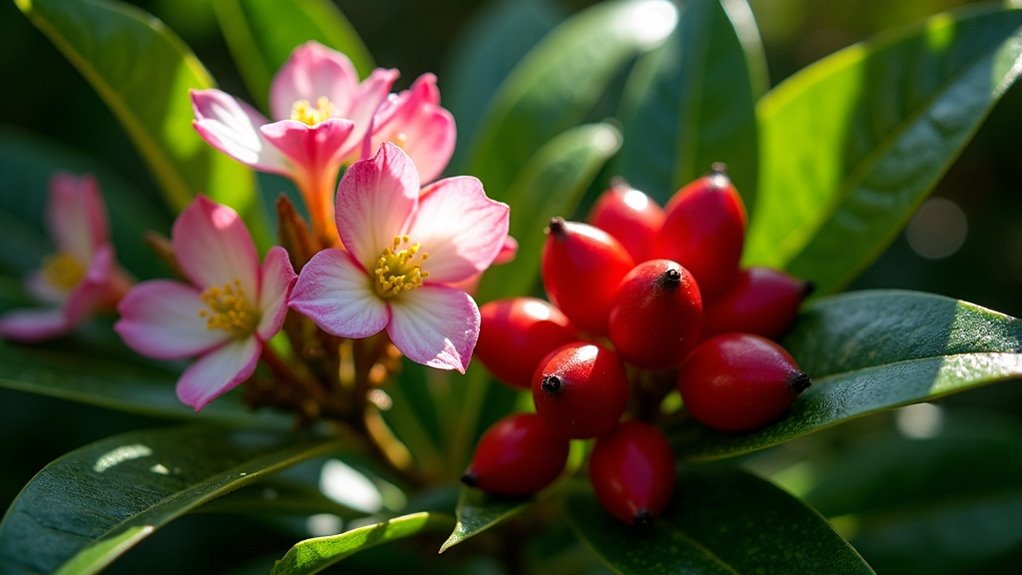
Certain plants are highly toxic to humans if ingested. Oleander and Foxglove can lead to severe digestive issues and fatal heart problems. Bulbs from Hyacinth and Daffodil cause nausea and vomiting. Castor beans contain ricin, which is fatal in small amounts. Dieffenbachia results in painful mouth and throat irritation. To guarantee safety, recognize these plants and their dangers. Further exploration reveals more about their symptoms and emergency responses you should consider.
Key Takeaways
- Oleander is highly toxic and can cause fatal heart arrhythmias if ingested.
- Castor bean seeds contain ricin, which is lethal in small amounts.
- Foxglove has cardiac glycosides that can lead to dangerously irregular heartbeats.
- Dieffenbachia (Dumb Cane) causes severe mouth and throat irritation when consumed.
- Bulbs of Hyacinth, Narcissus, and Daffodil can result in nausea and vomiting.
Common Poisonous Plants
When you encounter common poisonous plants, it’s crucial to recognize their potential dangers.
Oleander, for instance, is highly toxic, containing compounds that can trigger fatal heart arrhythmias if ingested.
The bulbs of Hyacinth, Narcissus, and Daffodil also pose risks, leading to digestive upset like nausea and vomiting.
Dieffenbachia, or Dumb Cane, can cause severe burning and swelling of the mouth and throat when certain parts are consumed.
Additionally, Castor bean seeds are among the most toxic, with ricin making even small amounts lethal.
Finally, Foxglove contains cardiac glycosides that may result in dangerously irregular heartbeats if ingested.
Symptoms of Plant Poisoning
Although the symptoms of plant poisoning can differ markedly based on the type of plant ingested, there are common indicators that can help identify potential toxicity.
You might experience nausea, vomiting, and diarrhea, especially with bulbous poisonous plants like Hyacinth. Severe digestive issues often arise from Oleander and Foxglove, while Dieffenbachia can cause intense mouth and throat irritation.
Cardiovascular disturbances, such as irregular heartbeat, may occur with cardiotoxic plants like Foxglove. In extreme cases, toxic compounds in plants like Water Hemlock can lead to coma and convulsions, emphasizing the potential for serious illness or death from plant ingestion.
Treatment and Emergency Response
If you suspect plant poisoning, acting quickly is essential for guaranteeing the best possible outcome.
Act swiftly if you suspect plant poisoning to ensure the best outcome possible.
Contact Poison Control at 1-800-222-1222 or emergency services (911) for immediate guidance. Quick identification of the plant can greatly aid your treatment.
Avoid inducing vomiting unless instructed by a professional, as it might worsen the situation. In severe cases, treatment may involve administering activated charcoal to absorb toxins, IV fluids for hydration, or stomach pumping.
Symptoms such as difficulty breathing, severe abdominal pain, or unconsciousness require urgent medical attention to alleviate your upset and nervous condition and guarantee effective emergency response.
Notable Examples of Toxic Plants
Several plants possess toxic properties that pose significant risks to human health.
Oleander, for instance, contains compounds that can cause intense digestive distress and fatal heart irregularities.
Water hemlock is notorious for its lethal dose, leading to violent convulsions and even death.
The castor bean‘s seeds are perilous; just one can be fatal due to ricin.
Autumn crocus, or meadow saffron, causes severe symptoms when ingested.
Additionally, foxglove contains cardiac glycosides that induce dangerously irregular heartbeats.
All these plants, including those in the nightshade family, remind us of the potential dangers lurking in seemingly innocent flora.
Safety Precautions and Awareness
Understanding safety precautions and fostering awareness are essential when it comes to handling poisonous plants. Many ornamental plants can pose serious risks, especially if children are involved.
Awareness and safety precautions are crucial when managing poisonous plants, especially in homes with children.
Here are key safety practices to follow:
- Keep potentially poisonous plants, like Oleander and Foxglove, out of reach.
- Familiarize yourself with local toxic plants, such as Jimson Weed and Water Hemlock.
- Use gloves when handling plants like Iris, as their seeds contain irritants.





