
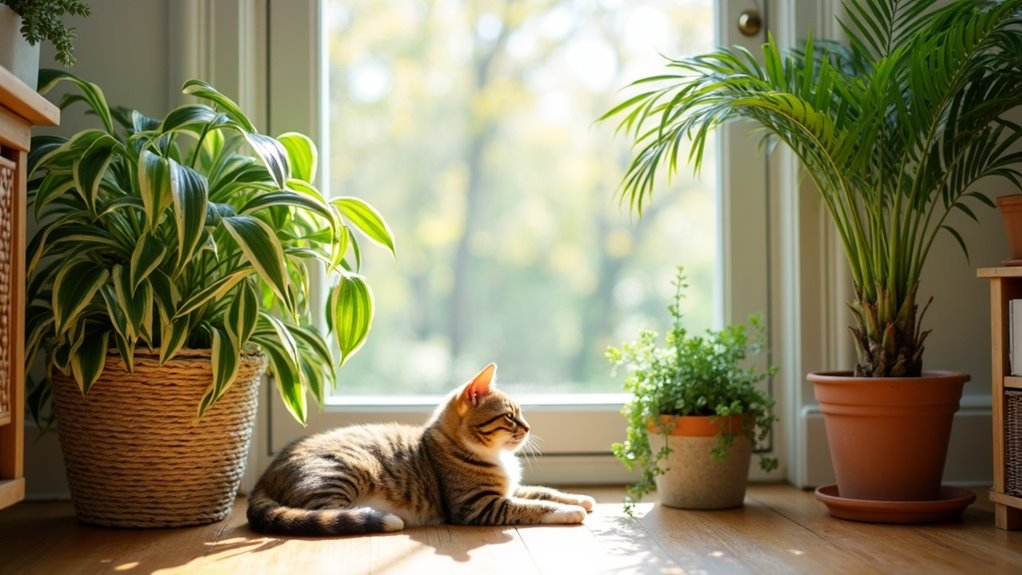
When choosing houseplants safe for your pets, opt for non-toxic varieties like spider plants, moth orchids, and African violets. These plants not only brighten your space but also enhance air quality and reduce stress. Make sure to provide proper care by monitoring soil moisture and light conditions, as well as observing your pets’ behavior around the plants. Understanding plant safety is essential for your furry friends, so keep exploring to discover more insights.
Key Takeaways
- Spider plants and moth orchids are safe for both cats and dogs, providing aesthetic appeal and pet-friendly interaction.
- African violets and birds nest ferns are non-toxic options that add vibrant colors and unique textures to indoor spaces.
- Calathea thrives in high humidity and indirect light, making it an excellent pet-safe choice for indoor environments.
- Hoya plants prefer bright light and infrequent watering, offering a low-maintenance, pet-friendly option with beautiful flowers.
- Always research plant toxicity before introducing new houseplants to ensure the safety of your pets.
Top Pet Safe Indoor Plants
When you’re choosing indoor plants, it’s essential to take into account their safety for your pets.
Consider incorporating safe indoor plants like Spider Plants, which may even attract some cats with their catnip-like effect.
Moth Orchids offer stunning blooms and are safe for both cats and dogs.
The African Violet, known for its vibrant colors, is another excellent choice as it’s non-toxic to pets.
Additionally, the Birds Nest Fern adds unique texture to your space while being easy to care for and pet-safe.
These pet safe plants enhance your home without compromising your furry friends’ health.
Care Requirements for Pet Safe Plants
When caring for pet-safe plants, it’s essential to assess their watering needs, as over- or under-watering can harm their health.
You’ll also want to take into account their light and humidity preferences to create a suitable environment.
Additionally, selecting the right soil and fertilization practices will support their growth while ensuring safety for your pets.
Watering Needs Assessment
How do you guarantee your pet-safe plants thrive while keeping their watering needs in check? Understanding these requirements is essential for a healthy indoor garden.
Here are three key points to take into account:
- Soil Moisture: Most pet-safe plants prefer the top inch or two of soil to dry before watering, while tropical plants may need more moisture.
- Watering Techniques: Use thorough watering to reach the root zone, but avoid overwatering to prevent root rot.
- Monitor Changes: Seasonal shifts can alter watering needs. Regularly check soil moisture, especially for plants like Peperomia that prefer slight dryness between sessions.
Light and Humidity
While many pet-safe plants can adapt to various lighting conditions, ensuring they receive the right amount of light and humidity is essential for their health.
Most thrive in medium to bright indirect light, making environments like living rooms ideal.
Tropical pet-safe plants, such as Fittonia and Bromeliads, require regular misting to maintain high humidity levels.
Monitor humidity levels closely, especially for plants like Boston Ferns, which flourish in consistent moisture.
For species like Venus Fly Traps, keep the soil consistently moist but not soggy.
Understanding these requirements helps keep your pet-safe plants vibrant and healthy.
Soil and Fertilization
To guarantee your pet-safe plants thrive, selecting the right soil and fertilization practices is essential. Follow these guidelines:
- Use well-draining soil like Bio Leaf mix for moisture-loving varieties, incorporating perlite or coco coir for aeration to prevent root rot.
- Fertilize during the growing season with balanced liquid fertilizers, keeping them out of pets’ reach to avoid ingestion.
- Monitor soil moisture closely, allowing the top inches to dry before watering, especially for succulents like Peperomia.
Covering the soil with decorative stones or mulch can deter pets from digging and disrupting the root system, ensuring a healthy environment for your plants.
Benefits of Having Indoor Plants
Indoor plants greatly improve air quality by filtering toxins and increasing humidity, which benefits both you and your pets.
Studies indicate that having greenery in your home can also reduce stress and enhance your overall mood.
Air Quality Improvement
Having plants in your home not only adds beauty but also greatly enhances air quality.
By choosing non-toxic houseplants, you can enjoy air quality improvement while keeping your pets safe.
Consider these benefits of indoor plants:
- They absorb harmful pollutants like formaldehyde and xylene, improving air quality.
- Certain common houseplants can remove up to 87% of indoor toxins within 24 hours, according to NASA.
- Plants increase humidity levels, which can alleviate respiratory issues in humid environments.
Opt for pet-friendly plants to create a healthier, safer living space for both you and your furry friends.
Stress Reduction Benefits
While the presence of plants in your home can enhance aesthetics, their impact on mental health is equally significant. Indoor greenery can reduce stress and anxiety levels, fostering a calming environment.
Research shows that simply being around plants can lower blood pressure and alleviate symptoms of stress-related disorders. Caring for these plants serves as a mindfulness practice, helping you focus and find tranquility.
Additionally, as plants improve air quality, they can boost energy levels and minimize fatigue, further supporting your mental health.
With plants that are safe for curious pets, you can enjoy these benefits without worry.
Common Toxic Plants to Avoid
When adding greenery to your home, it’s crucial to recognize that not all houseplants are safe for your pets.
When incorporating plants into your home, ensure they are safe for your furry friends.
Research shows that certain toxic plants can cause serious health issues. Be aware of these common offenders:
- True Lilies and Day Lilies – Highly toxic to cats, leading to potential kidney damage.
- Philodendrons and Pothos – Contain saponins and calcium oxalate, causing symptoms like vomiting and oral irritation.
- Peace Lilies – Mildly toxic, containing calcium oxalate crystals, causing discomfort.
Always prioritize your pets’ safety by researching plant toxicity before introducing new houseplants into your home.
Monitoring Pet Interactions With Plants
To guarantee your pets’ safety around houseplants, it’s essential to actively monitor their interactions.
Regularly observe your pets’ behaviors to identify any tendencies to nibble or play with plants. Designate areas for safe plants, making it easier to track their interactions and reduce contact with harmful species.
Consider using deterrents like citrus peels or pet-safe sprays on non-safe plants to discourage unwanted nibbling. Elevate or hang plants to limit access while still enjoying indoor greenery.
Finally, check for signs of distress after introducing new plants, and consult a veterinarian if you notice any negative reactions in your pets.
Tips for Maintaining Plant Health
Maintaining the health of your houseplants is essential, especially when you have pets in your home.
To guarantee your plants thrive, consider these tips:
- Monitor Soil Moisture: Check the top inch of soil for dryness before watering to prevent overwatering.
- Light Conditions: Provide bright indirect sunlight for ideal growth, especially for pet-safe species.
- Humidity and Fertilization: Mist tropical plants and fertilize during the growing season while keeping all supplies out of your pets’ reach.
With these easy-to-care tips, you’ll enhance indoor air quality and promote plant health while keeping your furry friends safe.
Selecting the Right Plants for Your Home
Selecting the right houseplants is essential for creating a safe and inviting environment for both you and your pets. By prioritizing pet-safe varieties, you guarantee a harmonious home. Research plant toxicity through resources like the ASPCA’s database, and consider each plant’s care requirements. Choose visually appealing options like Calathea and Hoya that are non-toxic to cats and dogs. Additionally, monitor your pets’ behavior around plants to prevent nibbling on harmful varieties. Here’s a quick reference table to help you:
| Pet-Safe Plants | Care Requirements |
|---|---|
| Spider Plant | Low light, moderate water |
| African Violet | Indirect light, moist soil |
| Moth Orchid | Bright, indirect light |
| Calathea | High humidity, indirect light |
| Hoya | Bright light, infrequent watering |





