
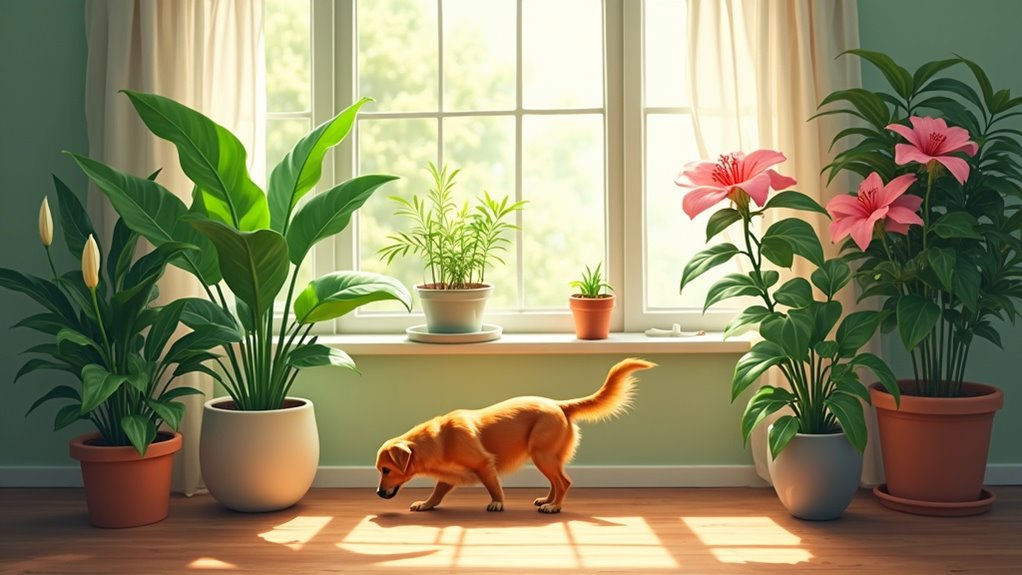
Many common houseplants can be toxic to dogs if ingested. These include Aloe Vera, Philodendron, Snake Plant, and Pothos, which can cause symptoms like vomiting and oral irritation. Highly toxic plants like Sago Palm and Oleander can lead to severe health issues or even death. It’s essential to identify these plants in your home to keep your dog safe. Keep exploring to discover more about how to protect your furry friend from potential plant hazards.
Key Takeaways
- Common houseplants like Aloe Vera and Philodendron can cause vomiting and oral irritation in dogs.
- Highly toxic plants such as Sago Palm and Oleander can lead to severe health issues or fatal poisoning.
- Signs of plant toxicity in dogs include vomiting, diarrhea, excessive drooling, and lethargy.
- Emergency response involves removing the dog from the area and contacting poison control for advice.
- Prevent accidental ingestion by training dogs, creating barriers, and regularly checking for toxic plants in your home.
Common Toxic Houseplants
Many common houseplants can be toxic to dogs, posing serious health risks if ingested.
Aloe Vera, for instance, can cause vomiting and lethargy, while Philodendron contains calcium oxalate crystals leading to oral irritation and difficulty swallowing.
The Snake Plant, or mother-in-law’s tongue, has saponins that may result in nausea and gastrointestinal upset.
Pothos can irritate the mouth, causing excessive drooling and vomiting.
Finally, Dieffenbachia, or dumb cane, can lead to burning and swelling in the mouth.
If you suspect ingestion of any toxic plant material, seek immediate veterinary care to address symptoms and guarantee your pet’s safety.
Highly Toxic Plants to Avoid
When considering plants for your home, it’s essential to steer clear of highly toxic varieties that can pose severe risks to your dog’s health.
Avoid highly toxic plants in your home to protect your dog’s health and well-being.
The sago palm contains cycasin, leading to liver damage if ingested.
Oleander, filled with cardiac glycosides, can cause fatal poisoning.
Desert rose can result in mouth blistering and gastrointestinal distress.
Lily of the valley also possesses cardiac glycosides, disrupting heart function.
Finally, the asparagus fern’s berries may cause vomiting.
If your dog encounters these poisonous plants, contact animal poison control immediately for guidance and support to guarantee your pet’s safety.
Signs of Plant Toxicity in Dogs
Recognizing the signs of plant toxicity in dogs is essential for timely intervention and treatment.
If you suspect your dog has ingested toxic plants, watch for these common symptoms:
- Vomiting
- Diarrhea
- Excessive drooling
Other signs may include lethargy and oral irritation, which can lead to difficulty swallowing or breathing.
Symptoms can appear immediately or may be delayed, so monitor your dog’s behavior closely.
Small dogs often experience more severe reactions.
If you notice any signs of toxicity, seek immediate veterinary attention or contact animal poison control to prevent serious health complications.
Emergency Response for Ingestion
If you suspect your dog has ingested a toxic plant, acting quickly is essential to guarantee their safety and health.
Acting swiftly is crucial if you think your dog has ingested a toxic plant to ensure their safety and well-being.
First, calmly remove your dog from the area to prevent further ingestion and check for any visible plant material in their mouth.
Contact the ASPCA Animal Poison Control or a poison control center for guidance based on the plant type and amount ingested.
Be ready to provide details about your dog’s size, symptoms, and the ingestion timeframe.
Seek professional veterinary care immediately, as treatment varies markedly depending on the toxic plants involved and the severity of symptoms.
Preventing Accidental Ingestion
To effectively prevent your dog from accidentally ingesting toxic plants, it’s vital to implement a combination of training and environmental management strategies.
Consider these key methods:
- Train your dog with the “leave it” command to discourage them from approaching houseplants that are toxic.
- Use positive reinforcement to reward compliance with commands related to plant safety.
- Create physical barriers by placing toxic plants on high shelves or in hanging baskets.
Always supervise your dog in areas with plants and regularly assess your home for toxic varieties.
Removing toxic plants is important for ensuring indoor plant safety and protecting your furry friend.





