
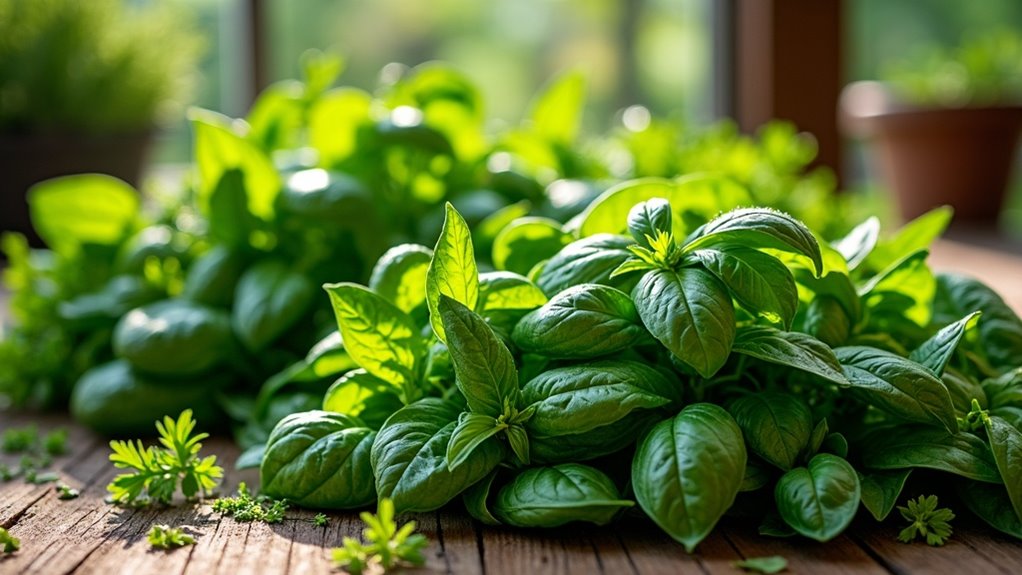
For your kitchen garden, consider planting spinach, lettuce, kale, and microgreens for nutritious leafy greens. Culinary herbs like basil, coriander, mint, and parsley not only provide flavor but also offer health benefits. These plants thrive in various growing conditions, enhancing your dishes while enriching your diet. Pay attention to their specific needs for ideal growth, and discover how each of these edible plants can elevate your culinary experience. There’s much more to explore about these essentials.
Key Takeaways
- Spinach, kale, and lettuce are popular leafy greens that thrive in kitchen gardens and offer high nutritional value.
- Culinary herbs like basil, coriander, mint, and parsley add flavor and versatility to dishes while providing health benefits.
- Microgreens are nutrient-dense plants that are easy to grow indoors and can enhance various culinary creations.
- Leafy greens and herbs require specific growing conditions, including well-drained soil, adequate sunlight, and consistent moisture for optimal growth.
- Both fresh and dried herbs can be harvested from kitchen gardens, offering year-round flavor for various dishes.
Spinach (Spinacia Oleracea L.)
Spinach (Spinacia oleracea L.) is a highly nutritious leafy green vegetable that thrives in cooler temperate climates.
Its edible leaves are packed with essential nutrients, including vitamin C, iron, and folate, which support immune function and bone health.
You can enjoy spinach raw in salads or smoothies, or incorporate it into cooked dishes for added flavor and nutrition.
However, be cautious—excessive consumption may lead to health issues like kidney stones due to its high oxalate content.
This versatile plant grows well in cooler seasons and can be harvested multiple times, providing a continuous supply of fresh greens for your kitchen.
Lettuce (Lactuca Sativa)
Lettuce (Lactuca sativa) is another fantastic option for your kitchen garden, offering a range of varieties such as romaine, butterhead, and leaf lettuce, each boasting unique textures and flavors.
Rich in vitamins B1, B2, C, D, E, and A, it’s a low-calorie edible plant that supports overall health and aids in weight management. You can commonly use it in salads, sandwiches, and wraps, making it a staple in many culinary dishes.
Remember to wash it thoroughly to avoid bacterial contamination. Thriving in cool weather, lettuce provides a continuous supply of fresh greens for your vegetable garden throughout the growing season.
Basil (Ocimum Basilicum)
Basil (Ocimum basilicum) is a tropical herb that not only enhances the flavor of your dishes with its sweet and peppery notes but also offers a wealth of nutritional benefits.
Basil is a flavorful tropical herb packed with nutritional benefits and delightful sweet and peppery notes.
This herb is rich in vitamins A, C, and K, along with antioxidants that promote overall health. It aids digestion and may help lower blood sugar levels, making it a valuable addition to your favorite herbs.
You can enjoy basil fresh in salads, sauces, and teas, or dried for later use. However, if you have blood-related disorders, consult your healthcare provider before incorporating it into your diet.
Edible flowers can also be derived from basil.
Coriander / Cilantro (Coriandrum Sativum)
Coriander, or cilantro, offers a wealth of nutritional benefits, packed with vitamins A, C, and K, as well as antioxidants that support detoxification and digestion.
In the kitchen, its unique citrus-like flavor enhances a variety of dishes, from salsas to salads, making it a popular choice in many cuisines.
If you’re looking to grow this versatile herb, it thrives in well-drained soil with plenty of sunlight and can be harvested multiple times throughout the season.
Nutritional Benefits of Cilantro
Cilantro, with its vibrant green leaves, offers a wealth of nutritional benefits that can enhance your diet. It’s rich in vitamins A, C, and K, which support your overall health. Additionally, cilantro provides powerful antioxidants that aid in detoxification and reduce inflammation.
| Nutrient | Benefit |
|---|---|
| Vitamin A | Supports vision and immune function |
| Vitamin C | Boosts collagen production and immunity |
| Vitamin K | Aids in blood clotting |
| Antioxidants | Helps detoxify and reduce inflammation |
| Essential Oils | Provides antimicrobial properties |
Incorporating cilantro into your meals can greatly benefit your health.
Culinary Uses and Pairings
Fresh herbs like cilantro not only enhance the nutritional profile of your meals but also elevate their flavor. This versatile herb, known for its distinct citrus-like taste, is essential in Mexican, Indian, and Middle Eastern cuisines.
You can use the fresh leaves in salsas, salads, and curries, typically adding them at the end of cooking to maintain their vibrant flavor. Cilantro pairs beautifully with tomatoes, avocado, lime, and beans, making it a favorite among plants to grow in kitchen gardens.
However, be cautious if you have allergies or are on medication, as cilantro may trigger adverse reactions in some individuals.
Growing and Harvesting Tips
When growing cilantro, it’s essential to provide well-drained soil and maintain cooler temperatures between 60-70°F (15-21°C) for ideal growth.
This herb is easy to grow, thriving in both indoor and outdoor gardens.
Begin harvesting leaves about 3-4 weeks after planting, taking outer leaves first to promote further growth.
Since cilantro has a short lifespan and tends to bolt in warm weather, sow seeds every few weeks for a continuous supply.
Regular watering is important, but avoid overwatering to prevent root rot.
Enjoy fresh cilantro leaves in salsas, salads, and watch for its edible flowers to enhance your garden.
Kale (Brassica Oleracea)
Kale (Brassica oleracea) packs a powerful nutritional punch, rich in vitamins A, C, and K, along with antioxidants that support overall health.
You can easily incorporate this versatile green into salads, smoothies, and soups, or enjoy it baked as crispy chips.
Growing kale in your kitchen garden not only boosts your meals’ nutritional value but also aligns with sustainable gardening practices.
Nutritional Benefits of Kale
Known for its impressive nutrient profile, kale (Brassica Oleracea) offers numerous health benefits that can greatly enhance your diet.
This edible leafy green is rich in vitamins A, C, and K, along with carotenoids that support overall health. Its detoxifying properties may reduce cancer risk, thanks to high antioxidant content.
Additionally, kale provides calcium and potassium, essential for healthy bones and blood pressure regulation. The fiber in kale aids digestion and promotes satiety, helping you maintain a healthy weight.
Incorporating kale, along with its flowers, into your meals can considerably boost both nutrition and flavor.
Culinary Uses of Kale
Incorporating kale into your culinary repertoire opens up a world of possibilities, thanks to its versatility and robust flavor. This nutrient-dense leafy green can transform your kitchen garden into a hub of health. You can enjoy kale raw in salads, blended in smoothies, sautéed, or baked into crispy chips. Its earthy depth enhances both savory and sweet dishes, making it ideal for soups, stews, and stir-fries. Here’s a quick guide to its culinary uses:
| Preparation Method | Dish Type | Benefits |
|---|---|---|
| Raw | Salads | Retains nutrients |
| Blended | Smoothies | Boosts antioxidants |
| Sautéed | Stir-fries | Quick cooking option |
| Baked | Chips | Healthy snack |
| Added | Soups & Stews | Nutrient enhancement |
Growing Tips for Kale
When you’re ready to grow kale (Brassica oleracea), remember that this leafy green flourishes best in cool temperatures, making spring and fall the ideal seasons for planting.
Choose well-drained, nutrient-rich soil to support healthy growth. Regular watering is essential; guarantee consistent moisture without waterlogging to prevent root rot.
You can start harvesting kale leaves when they reach 6-8 inches, promoting continuous growth by picking older leaves.
To protect your kale plants from pests like aphids and caterpillars, consider companion planting with herbs such as dill or alongside other brassicas for a thriving kitchen garden.
Microgreens
Microgreens, which are young seedlings harvested just 1-2 weeks after germination, offer a concentrated burst of flavor and nutrition that can enhance any kitchen garden.
These nutrient-dense greens, like arugula, radish, basil, and beet greens, contain 4-5 times more nutrients than their mature counterparts.
They’re easy to grow indoors in containers or trays, requiring minimal space, proper lighting, consistent watering, and well-draining soil.
You can harvest them by cutting just above the soil line.
Beyond culinary uses, you can even make tea from certain microgreens, adding a unique twist to beverages while boosting your immune health.
Mint (Mentha)
Mint (Mentha) is a delightful herb that not only enhances your culinary creations but also offers a range of health benefits. It’s rich in vitamins A and C, and antioxidants that aid digestion and freshen breath. You can easily grow mint in well-drained soil with adequate sunlight and moisture, making it perfect for your kitchen garden, whether indoors or outdoors. Use it fresh, dried, or frozen to enjoy its flavor year-round. Check out the varieties and their uses in the table below:
| Variety | Culinary Uses |
|---|---|
| Spearmint | Teas and salads |
| Peppermint | Desserts and sauces |
| Chocolate Mint | Confections |
| Apple Mint | Fruit salads |
| Pineapple Mint | Exotic dishes |
Parsley (Petroselinum Crispum)
Parsley (Petroselinum crispum) is a versatile herb renowned for its vibrant flavor and impressive nutritional profile. Rich in vitamins A, C, and K, it supports kidney and liver function.
You can grow parsley both indoors and outdoors, as it thrives in well-drained soil with plenty of sunlight and moisture. Often used as a garnish, it enhances dishes like salads, soups, and sauces with its invigorating peppery flavor.
There are two main types: flat-leaf (Italian) parsley, favored for culinary uses due to its stronger taste, and curly parsley, commonly used for decoration.
Remember to consume it in moderation to avoid potential health issues.





