
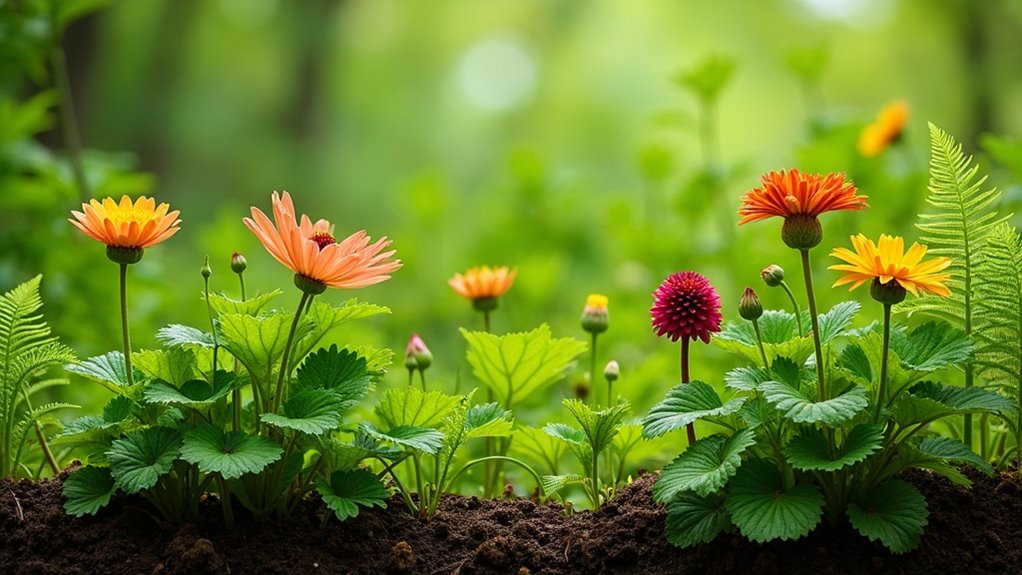
For bog gardens with saturated soil, consider plants like Marsh Marigold and Yellow Iris for their striking blooms. Ligularia dentata offers unique foliage, while Bog Bean attracts pollinators. Lobelia cardinalis adds vibrant color and ecological benefits. These plants thrive in wet conditions, supporting wildlife and improving water quality. They’ve evolved to flourish in low-nutrient environments, making them perfect for your garden. There’s much more to discover about creating a thriving bog garden ecosystem.
Key Takeaways
- Caltha palustris (Marsh Marigold) thrives in saturated soil, offering bright yellow blooms in early spring.
- Iris pseudacorus (Yellow Iris) produces striking yellow flowers and grows well in shallow water.
- Ligularia dentata features unique waxy leaves and adds mid-summer yellow flower spires to bog gardens.
- Menyanthes trifoliata (Bog Bean) showcases elegant white flowers that attract pollinators in wet conditions.
- Lobelia cardinalis is a native plant that enhances beauty and supports local wildlife in saturated soil.
15 Plants Perfect for Wet Soil Conditions
When you’re designing a bog garden, choosing plants that thrive in wet soil conditions is essential for creating a vibrant and sustainable ecosystem.
Designing a bog garden requires selecting plants that excel in wet soil to cultivate a thriving ecosystem.
Consider bog plants like Caltha palustris, which adds cheerful yellow blooms in early spring. Iris pseudacorus enhances your garden with its sunny flowers, ideal for shallow waters.
Lythrum salicaria offers stunning purple blooms, though be mindful of its invasive nature. For dramatic foliage, Gunnera manicata’s massive leaves provide shade, while Menyanthes trifoliata brings elegance with its star-like white flowers.
Each of these plants flourishes in consistently moist soil, ensuring your bog garden thrives year-round.
Benefits of Incorporating Wet-Loving Plants
Incorporating wet-loving plants into your bog garden not only embraces the natural wet soil conditions but also greatly reduces your need for constant watering and maintenance.
These native plants enhance your garden’s ecological balance by:
- Creating mini-habitats that support local wildlife, including pollinators and amphibians.
- Preventing soil erosion with robust root systems.
- Improving water quality through natural filtration processes.
- Adding visual interest with seasonal blooms, like marsh marigolds and blue flag irises.
Designing a Beautiful Bog Garden
When designing a beautiful bog garden, you’ll want to select suitable moisture-loving plants that enhance both aesthetics and biodiversity.
Consider layout and design tips, such as varying shapes and sizes, to seamlessly integrate the garden into your landscape.
Don’t forget the essential maintenance and care practices to guarantee a thriving ecosystem throughout the seasons.
Selecting Suitable Plants
Selecting suitable plants for your bog garden is essential to creating a vibrant and thriving ecosystem, as these moisture-loving species will flourish in the unique conditions you provide.
Consider incorporating the following plants that thrive in wet soils:
- Caltha palustris (Marsh Marigold) – Bright yellow flowers in early spring.
- Iris pseudacorus (Yellow Iris) – Striking sunny yellow blooms in shallow water.
- Ligularia dentata – Unique waxy leaves and mid-summer yellow flower spires.
- Menyanthes trifoliata (Bog Bean) – Elegant white flowers that attract pollinators.
Opt for native plants like Lobelia cardinalis for added beauty and ecological benefits.
Layout and Design Tips
To design a beautiful bog garden, you’ll want to contemplate its layout carefully, as the arrangement of plants and features can greatly influence both aesthetics and functionality. Aim for a rectangular shape, at least 2-1/2 feet deep, using a plastic-lined trench to retain moisture. Position your garden near a pond for natural irrigation. Incorporate a mix of plants based on sun or shade needs for diversity. Consider repurposed containers to add unique elements.
| Design Element | Purpose | Example Plants |
|---|---|---|
| Shape | Enhance formal layout | Rectangular |
| Moisture Retention | Promote healthy growth | Ligularia, Iris pseudacorus |
| Aesthetics | Visual interest | Caltha palustris |
| Unique Features | Add character | Whiskey barrels, utility sinks |
Maintenance and Care Essentials
Creating a thriving bog garden requires ongoing attention to maintenance and care.
To guarantee your plants flourish, follow these essentials:
- Monitor soil moisture consistently; bog plants thrive in saturated conditions.
- Irrigate with rainwater or distilled water to preserve the acidic environment.
- Apply mulch using sphagnum moss or pine straw to retain moisture and suppress weeds.
- Remove dead plant material regularly to promote health and fresh growth.
Maintenance Tips for Bog Gardens
Maintaining a bog garden requires consistent attention to confirm the plants thrive in their unique environment. Regularly check moisture levels to ascertain the soil remains consistently moist, as plants can suffer if allowed to dry out.
Mulching with organic materials, like pine needles, helps retain moisture and suppress weeds while providing winter protection. You should also remove dead or dying plant material to maintain health and prevent disease.
Monitor water quality closely; using rainwater or distilled water is ideal to avoid harmful minerals. Adjust your maintenance strategies seasonally, confirming adequate hydration during dry spells and protection during harsh winters.
Attracting Wildlife to Your Bog Garden
When you design a bog garden, you’ll find that selecting the right plants can greatly enhance its appeal to wildlife.
To attract pollinators and support local ecosystems, consider these native perennials that thrive in wet feet:
- Lythrum salicaria – Vibrant blooms that draw butterflies and bees.
- Cardinal Flower (*Lobelia cardinalis*) – Nectar-rich, enticing hummingbirds and insects.
- Marsh Marigold (*Caltha palustris*) – Early spring food source for emerging pollinators.
- Water Mint (*Mentha aquatica*) – Minty fragrance attracts a variety of pollinators.
Incorporating these species will create a thriving, biodiverse habitat in your bog garden.
Common Mistakes to Avoid in Bog Gardening
Attracting wildlife to your bog garden can enhance its natural beauty, but common mistakes can undermine your efforts. To guarantee success, avoid overwatering, which leads to root rot. Use rainwater instead of tap water to maintain pH levels. Prioritize native plants that thrive in saturated environments, and regularly check soil moisture levels to prevent drying out or waterlogging. Finally, refrain from adding fertilizers, as bog plants prefer low-nutrient conditions.
| Mistake | Consequence | Solution |
|---|---|---|
| Overwatering | Root rot | Maintain balanced moisture |
| Using tap water | Harmful minerals | Use rainwater or distilled water |
| Ignoring native plants | Poor growth/death | Select moisture-loving native species |





