
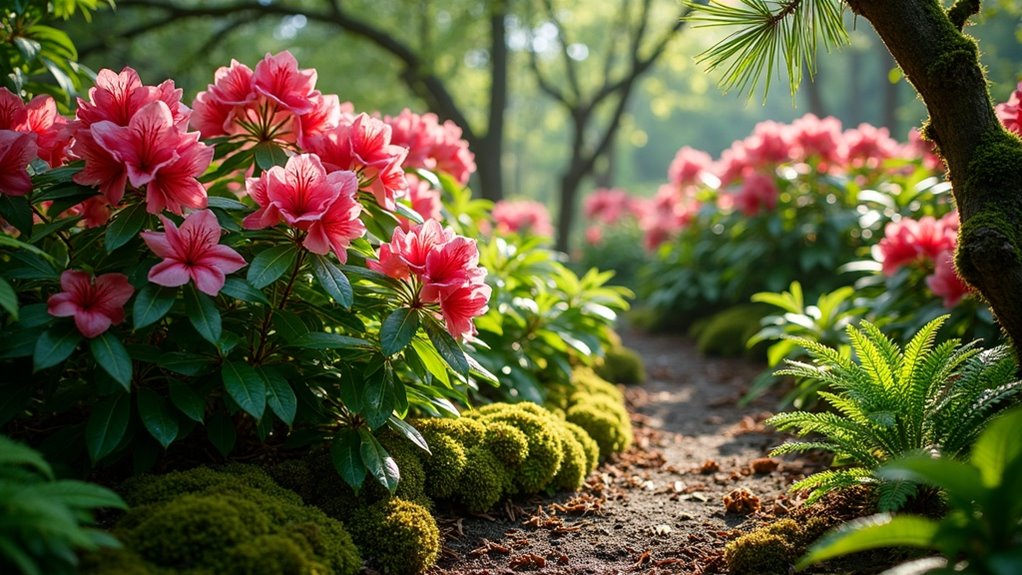
If you want to grow plants that need acidic soil like azaleas, consider rhododendrons, camellias, blueberries, mountain laurel, and fothergilla. These plants thrive in pH levels between 5.5 and 6.5, which enhances nutrient absorption. They prefer well-drained, acidic soil that supports their growth and maintains vibrant foliage. By focusing on the right soil conditions, you can cultivate a flourishing garden. Explore more about the maintenance and specific needs of these acid-loving plants.
Key Takeaways
- Rhododendrons thrive in acidic soil, similar to azaleas, and require well-drained conditions for optimal growth.
- Camellias prefer slightly acidic soil and can flourish in partial shade.
- Blueberries grow best in a pH range of 5.0 to 6.0, benefiting from well-drained, loamy soils.
- Mountain Laurel is another acid-loving plant that enhances garden diversity and thrives in acidic conditions.
- Fothergilla prefers acidic soil and adds ornamental value with its unique foliage and flowers.
Understanding Acidic Soil and Ph Levels
Understanding the nature of acidic soil and its pH levels is crucial if you want to cultivate plants that thrive in such conditions.
Acidic soils have a pH level below 7, with most acid-loving plants, like azaleas, thriving best at pH 5.5 to 6.5. The pH scale is logarithmic, meaning that even a small change in pH can greatly affect acidity.
Acidic soils, with a pH below 7, are ideal for acid-loving plants like azaleas, thriving best between pH 5.5 and 6.5.
In regions like Indiana, where soil often ranges from pH 7.2 to 7.8, acid-loving plants may struggle to absorb essential nutrients, leading to yellowing leaves and stunted growth.
Lowering soil pH can improve conditions for these plants.
Best Acid-Loving Plants for Your Garden
If you’re looking to create a vibrant garden filled with plants that thrive in acidic soil, you’re in for a treat.
Azaleas and rhododendrons flourish in well-drained, acidic soil, offering stunning spring blooms.
Camellias, which prefer slightly acidic conditions, grow beautifully in partial shade with moist, well-drained soil.
Blueberries require a pH between 5.0 to 6.0 and thrive in well-drained loamy soils, often flourishing in pots.
Additionally, Mountain Laurel and Fothergilla enhance your garden’s diversity, both loving acidic soil.
Symptoms of Nutrient Deficiency in Acidic Soil
How can you tell if your acid-loving plants are struggling with nutrient deficiencies? Look for yellowish, smaller leaves, a common sign that indicates a deficiency, especially in acidic soil.
Alkaline conditions can hinder nutrient absorption, impacting essential elements like nitrogen, sulfur, and iron. These deficiencies can lead to poor plant health and stunted growth.
It’s important to regularly test your soil’s pH—at least every three years—to identify potential issues.
Methods for Lowering Soil Ph
When your acid-loving plants show signs of nutrient deficiencies, adjusting the soil pH can often help restore their health.
To lower pH and create acidic soil, you can apply elemental sulfur at 2 pounds per 100 square feet, watering it in well. Monthly applications are recommended until you’ve reached a total of 1½ pounds per 100 square feet.
Alternatively, use aluminum sulfate, starting with ⅓ pound and increasing to 8 pounds for significant pH reduction.
Mulching with pine needles or chopped oak leaves also helps over time.
Remember to test your soil every three years to monitor pH levels effectively.
Ongoing Maintenance for Acidic Soil Plants
Maintaining the right conditions for acid-loving plants requires consistent attention to soil pH and moisture levels. Test your soil every three years to guarantee pH remains within the ideal range of 5.5 to 6.5.
To maintain acidity, apply elemental sulfur at 2 pounds per 100 square feet, watering it in afterward. Mulching with pine needles or chopped oak leaves not only lowers pH but also enriches the soil as they decompose.
Keep an eye out for yellowing leaves, which may signal nutrient deficiencies. Regularly check moisture levels, as these plants thrive in consistently moist, well-drained soil, especially during dry spells.





