
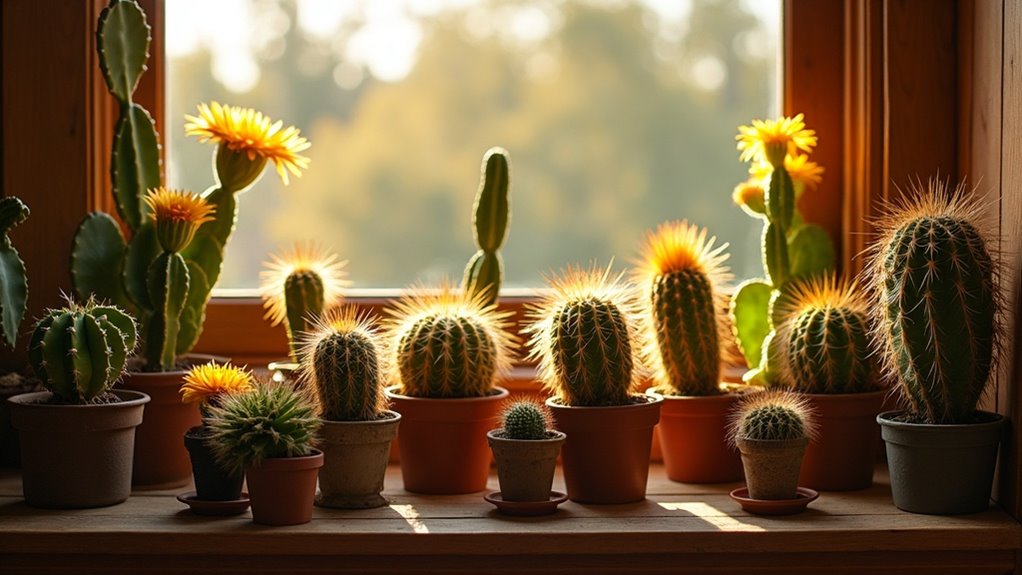
If you’re looking for plants that thrive in low humidity, cacti, jade plants, and snake plants are excellent choices. These resilient species have thick, fleshy leaves that store moisture and require minimal care. They flourish at humidity levels between 25 to 30 percent and adapt well to dry conditions. To keep them healthy, make sure they get bright light and have well-draining soil. Discover additional tips and strategies to maximize their growth potential.
Key Takeaways
- Cacti, jade plants, and snake plants thrive in low humidity environments, requiring humidity levels of 25 to 30 percent.
- These plants have thick, fleshy leaves that store moisture, making them resilient to dry conditions.
- Low humidity plants prefer well-draining soil to avoid root rot and should be watered infrequently.
- They flourish in bright sunlight or bright indirect light, essential for optimal growth in indoor spaces.
- Ideal for busy individuals, these plants require minimal care and enhance indoor air quality.
Characteristics of Low Humidity Plants
When you’re considering plants for low humidity environments, it’s essential to recognize their unique characteristics that enable survival in such conditions.
Low-humidity plants, like cacti and succulents, thrive in dry environments due to their thick, fleshy leaves that store moisture. These adaptations help minimize water evaporation, as many feature waxy surfaces.
Additionally, smaller or narrower leaves further decrease moisture loss. Their deep root systems allow them to access moisture from deeper soil layers, enhancing drought tolerance.
These traits make low humidity plants low-maintenance, ideal for busy individuals or fluctuating moisture levels, ensuring resilience in arid conditions.
Top Low Humidity Houseplants
When selecting houseplants for low humidity, consider options like cacti, jade plants, and snake plants, as they thrive in these conditions.
Each of these plants requires minimal care, making them suitable for beginners or those with busy lifestyles.
Understanding their specific needs will help you maintain a healthy indoor garden despite the dry environment.
Ideal Low Humidity Plants
If you’re looking to enhance your indoor space with resilient greenery, consider plants that thrive in low humidity environments.
Cacti and succulents, such as jade and aloe vera, flourish at humidity levels between 25 to 30 percent, making them perfect for typical homes. These plants require minimal care and watering, adapting well to dry conditions.
The rubber plant and snake plant also excel in low humidity, with their capacity to survive in less-than-ideal moisture.
Incorporating these low humidity plants can greatly improve your indoor garden while ensuring they remain vibrant and healthy with minimal effort.
Care Tips for Succulents
Succulents, including popular varieties like aloe vera and jade plants, demand specific care to thrive in low humidity conditions.
These plants can tolerate low humidity and prefer well-draining soil to prevent root rot.
When caring for succulents and cacti, make sure you use a soil mix containing sand or perlite for best drainage.
Water infrequently, allowing the soil to dry completely between waterings, as these plants store water in their thick leaves.
Place cacti in bright sunlight and succulents like aloe vera in bright indirect light, creating ideal conditions for them to thrive in low humidity environments.
Care Tips for Low Humidity Plants
To guarantee the health of your low humidity plants, adjust your watering frequency based on soil dryness, allowing it to dry completely before the next watering.
Additionally, place these plants in bright, direct light to meet their ideal growth requirements.
Watering Frequency Adjustments
Since low humidity plants thrive in arid conditions, adjusting your watering frequency is essential for their health.
These plants need infrequent watering, typically every 2-4 weeks, allowing the soil to dry out completely between waterings to prevent root rot.
Always check the top inch of soil; if it feels dry, it’s time to water. Wet soil indicates you should wait longer.
In winter, when home humidity drops, reduce watering even further, as plants enter dormancy.
Overwatering is a common mistake, so assess each plant’s specific needs and moisture levels to maintain ideal health, especially compared to tropical plants.
Optimal Light Requirements
Understanding the ideal light requirements for low humidity plants is essential for their growth and overall health.
Cacti thrive in environments with at least 6 hours of direct sunlight daily, making sunny spots perfect for them. Succulents like Aloe Vera can tolerate direct sunlight but prefer bright, indirect light.
Conversely, low humidity plants like Snake and ZZ Plants adapt well to low light conditions, offering versatility for indoor settings. Pothos and Rubber Plants also flourish in lower light, with Pothos thriving in partial shade.
Knowing these light requirements guarantees your low humidity plants, including cacti, receive the best conditions for growth.
Environmental Considerations for Low Humidity Plants
While many plants struggle in low humidity, certain species, like cacti and succulents, have adapted to thrive in these environments.
These plants prefer humidity levels around 25 to 30 percent, typical in most homes. Key environmental factors include bright sunlight, well-drained soil, and temperatures between 65-75°F (18-24°C) to prevent root rot.
You can enhance conditions by grouping low humidity plants, which creates a localized microclimate through transpiration.
Regularly monitoring humidity in your home is essential; levels below 20 percent can cause stress to these plants.
Maintaining ideal humidity guarantees your low humidity plants remain healthy and vibrant.
Strategies to Create a Low Humidity Environment
To effectively create a low humidity environment suitable for plants like cacti and succulents, you need to focus on several key strategies:
Creating a low humidity environment is essential for thriving cacti and succulents; focus on key strategies for success.
- Monitor Humidity: Use a portable humidity meter to keep levels between 25-30%, ideal for low humidity plants.
- Ensure Air Circulation: Position your plants where airflow is ample, like near windows or vents, to prevent moisture buildup.
- Choose Well-Draining Materials: Utilize pots and soil designed for drainage to keep roots dry and promote healthy growth in cacti and succulents.
Implementing these strategies will help maintain the dry conditions these plants thrive in.
Benefits of Growing Low Humidity Plants
Growing low humidity plants offers several distinct advantages that make them a practical choice for many indoor environments.
These plants, such as cacti and succulents, thrive in low humidity and need extra care less frequently, making them perfect for busy individuals. Their thick, fleshy leaves store water, which helps prevent root rot, a common issue in other species.
Additionally, plants for low humidity, like snake and ZZ plants, boast impressive air-purifying properties, enhancing your indoor air quality.





