
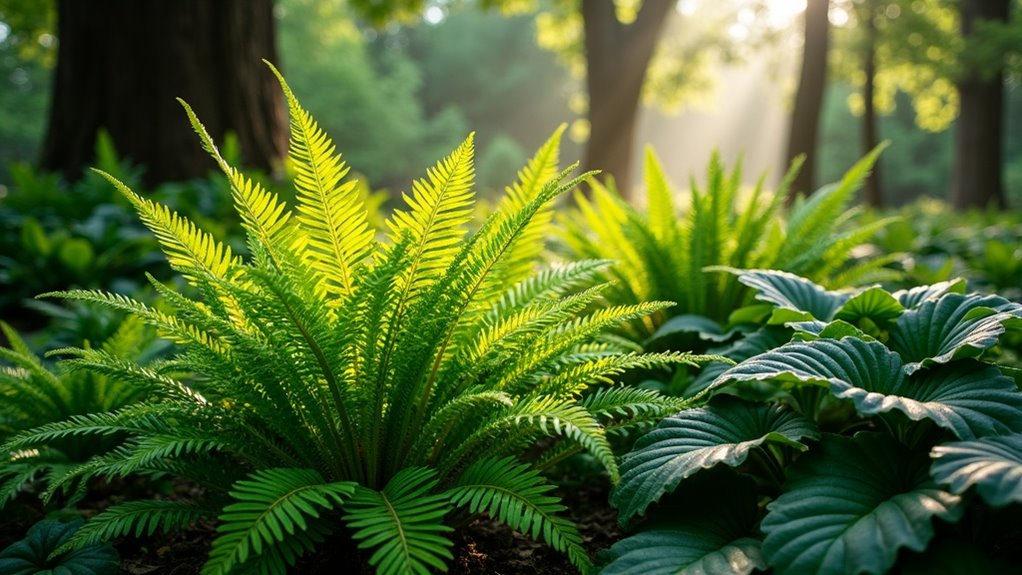
If you need plants that thrive in full shade during hot summers, consider ferns, hostas, begonias, and impatiens. These plants flourish in low light and can withstand heat while providing vibrant colors and lush foliage. Japanese yew is a great evergreen option, while unique hardy plants like blue liverleaf and hardy begonias add interest to your garden. Proper care guarantees their success in shaded areas, and you can discover more tips to enhance your shade gardening experience.
Key Takeaways
- Ferns thrive in full shade and provide lush greenery, making them ideal for hot summer environments.
- Hostas are low-maintenance, shade-loving plants that flourish without direct sunlight in warm conditions.
- Begonias add vibrant color to shaded areas, performing well even in the heat of summer.
- Impatiens offer bright blooms in low-light conditions, resilient against summer heat while needing full shade.
- Japanese Yew serves as a hardy evergreen, thriving in moderate shade and providing structure to shaded gardens in hot summers.
Understanding the Importance of Shade Plants
While you might think that all plants thrive in sunlight, understanding the importance of shade plants is essential, especially in hot summer climates.
Shade plants, like ferns and hostas, flourish under low light, creating cooler outdoor environments. By selecting these plants, you not only enhance your garden’s aesthetic but also support biodiversity by attracting pollinators.
Additionally, shade plants require less water than sun-loving varieties, making them ideal for drought-prone areas.
Top Shade-Tolerant Plants for Hot Summers
When selecting shade-tolerant plants for hot summers, you’ll discover a range of options that not only survive but thrive in lower light conditions.
Plants like ferns and hostas offer lush greenery and require minimal maintenance, while colorful blooms from impatiens and begonias add vibrancy to your shaded garden.
Incorporating these shade-loving varieties can greatly enhance your outdoor space while ensuring your garden remains visually appealing even during the hottest months.
Best Shade Plants
Creating a vibrant garden in areas with full shade during hot summers is entirely possible with the right shade-tolerant plants.
Consider incorporating Ferns for texture and moisture retention.
Hostas thrive in full shade, offering diverse leaf colors with minimal upkeep.
Begonias bring vibrant flowers to your shade garden, flourishing without direct sunlight.
Impatiens are another excellent choice, producing bright blooms that brighten dim spots while remaining resilient in heat.
Finally, the Japanese Yew serves as a lush evergreen backdrop, enduring moderate shade and enhancing the garden’s aesthetic throughout the summer.
Choose these plants for a flourishing shade garden.
Benefits of Shade Gardening
Shade gardening offers numerous benefits, particularly during hot summers, as it helps maintain cooler soil temperatures and reduces moisture evaporation.
By choosing shade-tolerant plants like ferns, hostas, and begonias, you can create a vibrant landscape that thrives in low-light environments. Incorporating vertical elements such as Japanese yew and Mahonia Soft Caress adds structure and interest.
Additionally, flowering plants like impatiens and caladiums enhance biodiversity while attracting pollinators. Utilizing these species not only conserves water but also supports the growth of other plants by providing essential shelter from intense sun exposure, making your garden a flourishing oasis even in the heat.
Unique Hardy Shade Plants to Consider
When exploring unique hardy shade plants, consider options like Blue Liverleaf and Astilboides, which thrive in varying degrees of shade and specific soil conditions.
These lesser-known plants not only add visual interest but also require minimal maintenance once established.
Understanding their ideal growing conditions will help you successfully integrate them into your shaded garden spaces.
Lesser-Known Hardy Plants
Although many gardeners gravitate toward popular shade plants, lesser-known hardy options can bring unique beauty and resilience to your landscape.
Consider Blue Liverleaf (Hepatica transsilvanica), thriving in partial shade with delightful blue flowers and drought tolerance.
Astilboides (Astilboides tabularis) shines with large, rounded leaves, flourishing in moist, humusy soil.
Rue Anemone (Thalictrum thalictroides) offers delicate white-pink flowers in early spring, adapting to average soil.
The Formosan Lady’s Slipper (Cypripedium formosanum) impresses with pale pink slippers, while Hardy Begonias, like ‘Heron’s Pirouette’, provide vibrant pink blooms.
These unique hardy plants can become your favorite additions in shaded areas.
Ideal Growing Conditions
To create a thriving garden with unique hardy shade plants, understanding their ideal growing conditions is essential.
Blue Liverleaf thrives in partial shade and rich soil, becoming drought-tolerant once established.
Astilboides prefers moist, humusy soil in partial to full shade, showcasing large foliage.
Rue Anemone flourishes in average, well-drained soil and adds seasonal interest with delicate blooms in partial to full shade.
The Formosan Lady’s Slipper thrives in partial shade with well-drained, alkaline soil, presenting charming flowers.
Hardy begonias, like ‘Heron’s Pirouette’, excel in shaded conditions, offering vibrant pink flowers, enhancing the visual appeal of your low-light garden.
Essential Care Tips for Shade Plants
Providing essential care for shade plants during hot summers is imperative for their well-being and longevity. Regularly assess soil moisture levels, ensuring these plants receive adequate water, especially during dry spells.
Apply a layer of organic mulch to retain soil moisture, suppress weeds, and regulate temperature. Prune dead or damaged foliage to encourage new growth and enhance air circulation, reducing disease risk.
Fertilize shade plants with a balanced, slow-release fertilizer to meet nutrient needs during the growing season. Ultimately, monitor for pests and diseases that thrive in humid, shaded environments, implementing management strategies as necessary to protect plant health.
Benefits of Planting in Shaded Areas
When you choose to plant in shaded areas, you not only create a cooler microclimate but also enhance the overall health of your garden.
Shade protects vulnerable plants from harsh afternoon sun, allowing them to thrive and bloom despite high temperatures.
Shade offers essential protection for delicate plants, enabling them to flourish and bloom even in the heat.
Additionally, shaded gardens typically require less water due to reduced evaporation rates, making them a sustainable choice in hot climates.
You’ll also notice increased biodiversity, as these cooler environments attract various wildlife, including birds and beneficial insects.
Ultimately, planting in shade enriches your landscape with diverse textures and colors, contributing to a more appealing and resilient garden.
Creative Ways to Incorporate Shade Plants in Your Garden
While designing your garden, incorporating shade plants can transform otherwise dull areas into vibrant, inviting spaces.
To maximize the impact of full shade, consider these creative ideas:
- Combine shade-tolerant flowering plants like Impatiens with hardy ferns for color and texture.
- Use ornamental plants such as Mahonia Soft Caress to add vertical height and structure.
- Integrate ground cover like Vinca to suppress weeds and retain moisture.
- Design pathways or seating areas surrounded by lush shade plants, creating cool retreats.
These strategies will enhance your garden’s aesthetic while ensuring your shade plants thrive in cooler, shaded environments.
Recommended Gardening Supplies for Shade Plant Success
Choosing the right gardening supplies is crucial for guaranteeing the success of shade plants, especially during hot summer months.
Start with high-quality potting soil, like E.B. Stone Organics Recipe 420, to provide essential nutrients and guarantee proper drainage. Incorporate mulch around your shade plants to retain moisture and regulate temperature.
Utilize shade cloth or garden fabric to shield delicate plants from intense sunlight while allowing airflow. Invest in efficient watering tools, such as drip irrigation systems, to maintain consistent hydration.
Regularly apply organic fertilizers to promote vibrant foliage and blooms, guaranteeing your shade plants thrive even in challenging conditions.
Local Resources for Shade Gardening Support
Finding local resources for shade gardening can markedly enhance your gardening experience and success.
Utilize these valuable resources to thrive in shaded environments:
- Local nurseries: Get expert advice on shade-tolerant plants suited for hot summers.
- Community gardening groups: Share experiences and strategies with fellow gardeners.
- Gardening workshops: Attend sessions on soil preparation and plant selection for shaded areas.
- Online forums: Connect with local enthusiasts for tailored tips and recommendations.





