
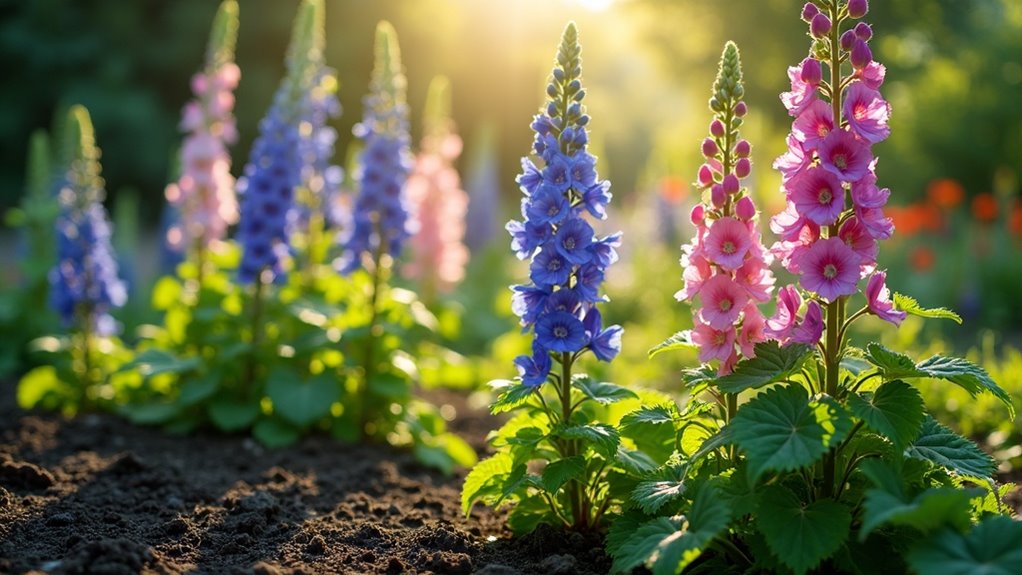
If you’re growing tall perennials like delphiniums, peonies, hollyhocks, and foxgloves, you need to stake them to prevent flopping under the weight of their blooms. Early installation of supports helps minimize root disturbance and allows plants to grow naturally. Use single stakes for individual plants and grid supports for multiple ones, ensuring you tie them loosely with soft materials to avoid damage. Explore more about effective staking techniques and support structures to enhance your garden’s stability and aesthetics.
Key Takeaways
- Tall perennials like delphiniums and hollyhocks often require staking to prevent flopping due to heavy flowers.
- Peonies benefit from circular grid supports or cages to maintain upright growth.
- Foxgloves need single stakes to support their tall stems effectively.
- Asters thrive with grid or tomato cage support to withstand adverse weather conditions.
- Regularly check and adjust ties on staked plants to ensure healthy growth and prevent damage.
Understanding the Need for Staking in Tall Perennials
When it comes to cultivating tall perennials, understanding the necessity of staking is essential for ensuring their health and stability.
Plants like delphiniums and hollyhocks often struggle with heavy flowers that lead to flopping, especially in adverse weather. Staking provides support to weak stems that develop rapidly, preventing damage from wind and rain.
Installing stakes early in the growing season allows these perennials to grow naturally through the supports, minimizing root disturbance.
Common Tall Perennials That Require Support
To maintain an aesthetically pleasing garden and promote healthy growth, several tall perennials require staking for support.
Delphiniums, with their heavy blooms, often flop without sturdy support. Peonies benefit from circular grid supports or grow-through cages to keep their stems upright.
Foxgloves, known for tall flower spikes, need single stakes to guarantee upright growth. Asters require grid or tomato cage support, especially during adverse weather, to prevent their bushy growth from collapsing.
Additionally, hollyhocks and rudbeckia are plants that need staking, as they’re prone to leaning and flopping, making early in the season the ideal time to provide necessary support.
Effective Staking Techniques for Tall Plants
As tall perennials grow, they often require effective staking techniques to guarantee their stability and health in the garden.
Early installation of supports, like single stakes for delphiniums or lilies, assures plants maintain a natural appearance while preventing leaning.
Installing supports early, such as single stakes for delphiniums or lilies, ensures stability and preserves a natural look.
Cages, such as tomato cages, provide circular support for bushy varieties, allowing them to grow through while resisting wind and heavy blooms.
Grid staking is ideal for multiple plants, distributing weight evenly.
Use tying techniques with soft materials to secure stems loosely, preventing damage while allowing for natural movement.
These methods collectively enhance the longevity and beauty of your tall perennials.
Choosing the Right Support Structures
Choosing the right support structures for your tall perennials is essential for their health and aesthetic appeal.
For multiple plants like asters and peonies, grid supports allow them to grow through while providing stability.
Single stakes work best for individual tall plants such as delphiniums and foxgloves, offering direct support without hindering growth.
Tomato cages are effective for bushy perennials like gayfeather, accommodating their spreading growth.
For fragile or top-heavy plants, hoop supports or twig stakes provide a natural aesthetic and stability.
Always install these structures early in the growing season to guarantee plants integrate seamlessly as they grow.
Best Practices for Maintaining Staked Plants
To maintain the health of your staked plants, regularly check and adjust the ties as they grow, ensuring they don’t constrict the stems.
Monitor growth conditions closely, as this will allow you to provide timely support and make necessary adjustments.
Keeping an eye on these factors will help your plants thrive and reduce the risk of damage.
Regular Tie Adjustment
Maintaining proper support for staked plants requires regular tie adjustments to prevent constriction and guarantee healthy growth. As your tall stems develop, check ties frequently to make sure they’re loose enough, allowing natural movement.
Use flexible tying materials, like jute or cotton fabric, to minimize injury while keeping plants aligned with their sturdy stakes. For extremely tall stems, incorporate multiple ties, positioning the uppermost ones below flower blooms for ideal support.
Periodically reassess both plant height and stability to avoid tipping or flopping, making certain your perennial gardens thrive with the necessary support they need throughout their growth cycle.
Monitor Growth Conditions
While you focus on nurturing your staked plants, it’s essential to closely monitor their growth conditions to guarantee they thrive.
Regularly check the stability of your staking supports, especially after heavy rain or wind. As stems grow, adjust the ties to prevent constriction, allowing for natural movement.
Consistently monitor soil moisture levels; overwatering can weaken roots, making them prone to toppling. Make certain your plants receive adequate sunlight and space, as overcrowded conditions can lead to lanky growth and require more frequent support adjustments.
Look for signs of stress, like drooping, to determine if environmental conditions need improvement.
Enhancing Garden Aesthetics With Staked Perennials
Staking your perennials, like delphiniums and peonies, brings visual balance to your garden by preventing unsightly drooping.
By supporting bloom visibility, these structures allow you to showcase fuller, more vibrant flowers that enhance your landscape’s appeal.
Additionally, staked plants promote natural growth patterns, ensuring that your garden remains both organized and healthy.
Visual Balance in Gardens
Creating visual balance in your garden often hinges on the strategic use of staked perennials, which introduce vertical lines that enhance overall aesthetics.
By incorporating tall plants into your design, you achieve a layered effect that captivates the eye.
Consider these aspects:
- Staking Process: Use various materials like bamboo or twigs for support.
- Air Circulation: Staked plants improve airflow, minimizing fungal diseases.
- Heavy Flower Support: Prevent flopping to maintain a tidy appearance.
- Compact Growth: Encourage healthy, vibrant blooms while adding visual interest.
This thoughtful arrangement creates a garden looking more organized and inviting.
Supporting Bloom Visibility
When you stake tall perennials like delphiniums and peonies, you not only prevent their vibrant blooms from drooping but also enhance their visibility in your garden.
Using effective support structures, such as grid stakes or tomato cages, maintains the aesthetic of flower arrangements while preventing messy flopping.
Employing staking methods like single stakes or plant rings elevates top-heavy blooms, improving air circulation and reducing disease risk.
This creates a neat, organized look, allowing plants to grow through supports, camouflaging stakes.
Strategically staked perennials become focal points, drawing attention to their colorful blooms and enhancing your garden’s overall beauty.
Natural Growth Enhancement
While many gardeners focus on the blooms themselves, staked perennials can greatly enhance the overall aesthetic of your garden. Proper staking techniques provide essential support for tall perennials, ensuring that heavy blooms remain upright and visible.
This not only improves visual appeal but also promotes better air circulation, reducing the risk of fungal diseases and resulting in healthier plants.
Consider these methods for effective staking:
- Use natural-looking supports, like bamboo stakes, to blend with your garden.
- Employ grids or cages for added structure.
- Arrange plants to create visually interesting patterns.
- Regularly check and adjust stakes as needed for ideal support.





