
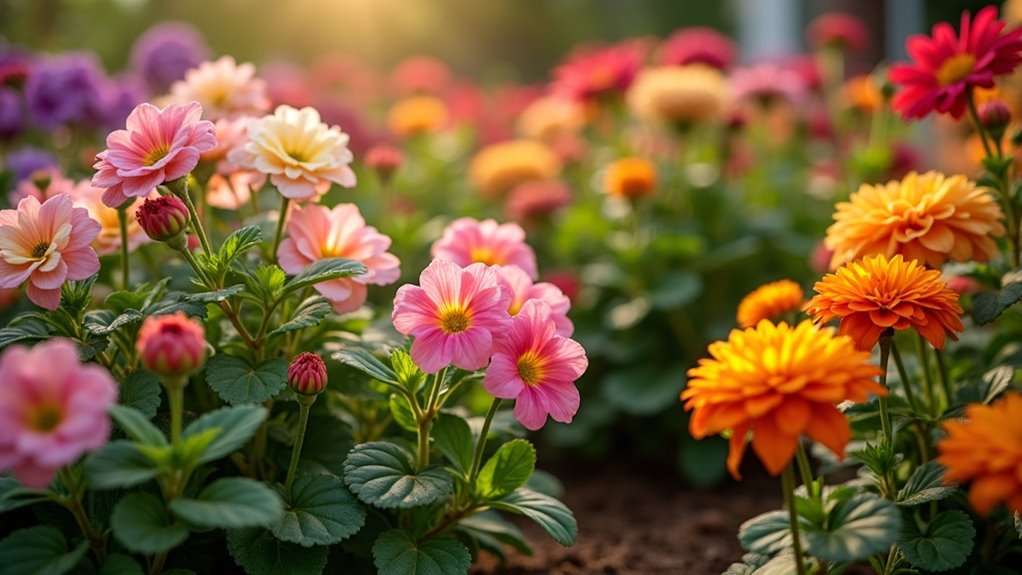
If you want repeat blooms, consider deadheading hybrid teas and floribunda roses, coneflowers, Shasta daisies, daylilies, and salvia. Removing spent flowers directs the plant’s energy to produce new blooms instead of seeds, promoting health and enhancing your garden’s appearance. Regularly monitor these plants, especially in spring and summer, for faded blooms. Proper deadheading can lead to a more vibrant garden, so keep an eye on your plants for ideal growth and flowering potential.
Key Takeaways
- Hybrid teas and floribundas roses benefit greatly from deadheading, leading to multiple blooms throughout the season.
- Coneflowers thrive with deadheading, extending their flowering period up to frost while allowing some spent blooms for birds.
- Shasta daisies produce longer blooming periods into fall when faded flowers are regularly removed.
- Daylilies gain energy for new blossoms by preventing seed production through deadheading.
- Salvia maintains its attractiveness and encourages new growth, benefiting pollinators with repeat blooms.
Benefits of Deadheading for Flowering Plants
When you deadhead your flowering plants, you’re not just tidying up; you’re actively promoting their health and vibrancy. This essential practice encourages the plant to direct energy toward producing new blooms instead of forming seeds, effectively elongating the flowering season.
By regularly removing spent flowers, you enhance the overall appearance of your garden, making it look tidier and more vibrant. For many species, like petunias and coneflowers, deadheading results in robust growth and larger flowers throughout the blooming season.
Additionally, it reduces disease risk by eliminating potential pests, further supporting the health of your plants and encouraging repeat blooms.
Techniques for Effective Deadheading
Effective deadheading techniques are crucial for maintaining the health and beauty of your flowering plants. Use clean, sharp pruning shears to cut back spent blooms just above healthy leaf nodes, encouraging new blooms.
For softer-stemmed flowering perennials, pinch off faded flowers with your fingers for a quicker, less invasive removal. Regularly monitor your plants for spent blooms, as timely deadheading right after the first flowering cycle can greatly extend the blooming period.
Always dispose of removed flowers to prevent pests and diseases, ensuring ideal health regrowth throughout the flowering season. This proactive approach enhances your garden’s overall vigor and aesthetics.
Top Perennials That Thrive With Deadheading
Deadheading isn’t just a maintenance chore; it’s an essential practice that can considerably enhance the performance of several perennial plants in your garden.
Roses, particularly hybrid teas and floribundas, flourish with deadheading, prompting repeat blooms and vibrant flowers.
Coneflowers benefit too, extending their flowering period up to frost while allowing some spent flowers for birdseed.
Shasta daisies thrive when you remove faded blooms, promoting long flowering into fall.
Daylilies gain energy for new buds by preventing seed production.
Regular deadheading also keeps salvia looking attractive with healthy leaves and encourages new growth, supporting pollinators in your landscape.
Seasonal Considerations for Deadheading
Although many gardeners might think of deadheading as a simple task, timing it according to the seasons can greatly impact your plants’ health and flowering potential.
In spring, deadhead faded blooms of peonies and daylilies to encourage more blooms. During summer, regularly check coneflowers and salvia for spent flowers; prompt deadheading can extend their blooming periods.
In fall, cease deadheading on plants like tickseed to allow seed production. Seasonal changes affect watering and fertilization needs, so adjust your practices accordingly.
Monitor temperature and environmental conditions, as excessive heat may necessitate more frequent deadheading to maintain plant vigor and appearance.
Encouraging Wildlife Through Deadheading
Maintaining a vibrant garden not only enhances its beauty but also plays a significant role in supporting local wildlife.
A vibrant garden enhances beauty while supporting local wildlife, creating a harmonious ecosystem.
Regular deadheading encourages continuous blooms, providing essential food sources for beneficial insects and pollinators. Here’s how you can make a difference:
- Extend blooming seasons for flowers like bee balm and coneflowers
- Create habitats by allowing seed production in plants like blanket flowers
- Attract bees and butterflies with healthy, robust blooms
- Improve your garden’s overall appeal while supporting local ecosystems





